
Review · HISTORICAL TOURS
The rise of Haarlem: Culture, History, Art and Architecture Walking Tour
Haarlem rewards slow walking. This 2.5-hour tour brings the city’s medieval streets, Golden Age buildings, art, and wartime stories together in one well-paced introduction. I especially like the small maximum of six people, which gives you room to ask questions, and the guide’s use of images on a tablet to make past buildings and events easier to understand. The tour also reaches places you could easily miss on your own, including a quiet Hofje and a secret viewpoint.
The strongest part is the guide, James Johnson, whose clear, friendly approach suits a subject that can otherwise become a blur of dates and architectural terms. I also like that the walk moves beyond postcard Haarlem to include Dutch resistance history and stories about residents such as Corrie ten Boom. The main consideration is practical: the route covers about 4 kilometers, and some of the most appealing Hofjes are closed on Sundays or after 5pm.
In This Review
- Key points at a glance
- Starting beneath the towers of Grote Markt
- Medieval streets and the making of Haarlem
- Grote Kerk and the civic heart of the city
- Art, Teylers Museum, and Haarlem’s creative side
- The quiet world of Haarlem’s Hofjes
- A serious look at Haarlem during the Second World War
- The Molen Adriaan and Haarlem’s working past
- The secret viewpoint and local advice
- Why the six-person limit matters
- Is $55 a fair price?
- Who will enjoy this Haarlem walk?
- Should you book this tour?
- FAQ
- How long does the Haarlem walking tour last?
- How far do you walk?
- Where does the tour begin?
- Where does the tour end?
- How many people can join the tour?
- Is the tour conducted in English?
- Can I visit a Hofje on a Sunday?
- Can I enter the Hofjes on a 5pm summer tour?
Key points at a glance
- A six-person maximum: Small groups make it easier to hear James, ask questions, and shape the discussion around your interests.
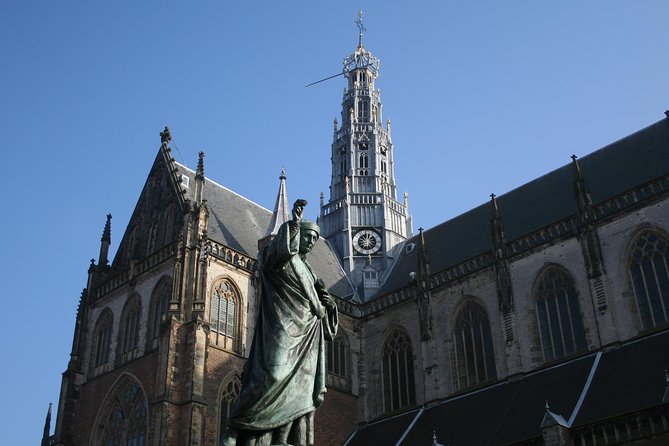
- Haarlem beyond the postcard: The route connects the Grote Markt, St. Bavo’s Church, Teylers Museum, windmill views, almshouses, and historic streets.
- Architecture with context: You learn how medieval, Golden Age, and later Dutch styles appear in Haarlem’s buildings.
- A strong wartime chapter: Dutch resistance stories and Corrie ten Boom’s connection to the city add serious depth.
- A useful first-day activity: The food, drink, and sightseeing advice can help you plan the rest of your stay.
- Important timing detail: Hofjes close at 5pm, and they are not open for public viewing on Sundays.
Starting beneath the towers of Grote Markt
The tour begins at Grote Markt 17, in Haarlem’s central market square. This is a sensible meeting point because it places you right among the city’s major sights instead of wasting your first minutes on a side street or outside the historic core.
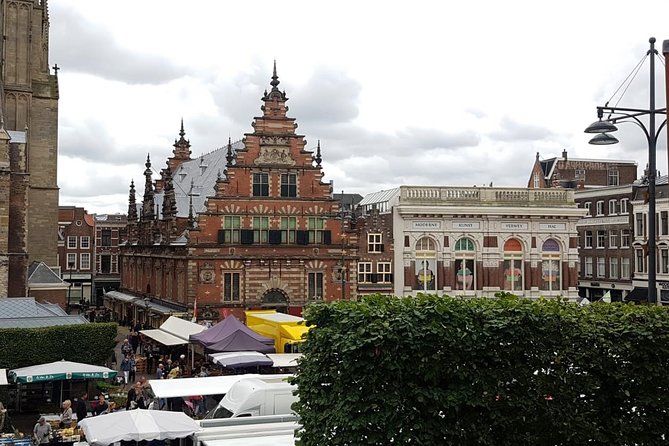
Grote Markt gives you an immediate lesson in Haarlem’s scale. The square gathers civic buildings, old commercial façades, and the Grote Kerk of Sint Bavo in one broad view. From here, James can explain how Haarlem grew as a North Sea trading port and how the center developed through the Middle Ages and later prosperous periods.
I like beginning here because the square provides a visual map for the rest of the walk. You can look up at the church, across toward the Town Hall and Gravenzaal, and then follow the surrounding streets into smaller corners of the old city. Instead of seeing isolated monuments, you start to understand how they relate to one another.
The church is an important landmark, but the walking tour does not include an interior visit to the cathedral. That is worth noting if you want to see the inside of St. Bavo’s. You can arrange that separately, leaving this tour to focus on the city around it.
More Walking Tours in Haarlem
- Haarlem: City Highlights Walking Tour
★ 4.5 · 32 reviews - Haarlem Old Town Private Walking Tour
★ 5.0 · 24 reviews - 2 Hours Walking Tour Throughout History & Highlights of Haarlem
★ 4.5 · 18 reviews
Medieval streets and the making of Haarlem
Haarlem’s story stretches back to the Middle Ages, and the walk uses its streets and buildings as the classroom. You will hear about the town’s early growth, its trade, civic life, and the changes that came with religious and political shifts.
The value here is not simply hearing a list of old dates. Good city walking tours help you notice why a street looks the way it does. A façade, courtyard, church, or public building can reveal who had money, what kind of work took place nearby, and how the city changed as Haarlem became more prosperous.
James has a particular focus on architecture, and that is one of the clearest reasons to choose this tour. His explanations cover architectural styles and the way they appear in Haarlem’s buildings. If you usually admire old Dutch streets without knowing what you are looking at, this can give you a more useful eye for details.
He has also been praised for bringing a tablet with photographs of historical points and objects. That is a practical touch. A current street can look very different from the same place decades or centuries ago, and a visual comparison helps connect the story to what is in front of you.
Grote Kerk and the civic heart of the city
The Grote Kerk of Sint Bavo dominates Grote Markt and gives the tour a strong architectural anchor. From the outside, you can consider its size and position in relation to the market square and civic buildings.
The nearby Town Hall and Gravenzaal add another part of the story. Churches show religious influence, while town halls point to local government, public authority, and the business of running a growing city. Looking at both together helps explain how Haarlem functioned as a community, not just as a collection of pretty façades.
I would not choose this experience if your main goal is a detailed interior tour of the church or a museum visit. The emphasis is on the city’s public spaces, buildings, and historical links. That makes it a good orientation walk, but you will need separate admission and time for the interiors that interest you most.
Art, Teylers Museum, and Haarlem’s creative side
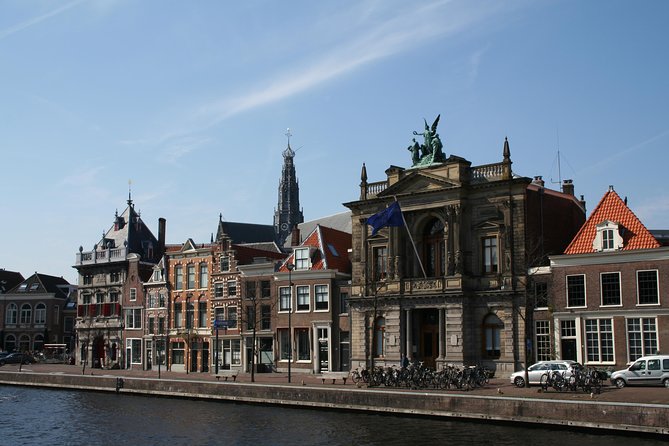
Teylers Museum is one of the major landmarks included in the route. The tour uses it as part of Haarlem’s wider art and culture story, rather than as a substitute for visiting the museum itself.
That distinction matters. You can learn why the museum belongs in Haarlem’s cultural picture, hear about the city’s artistic traditions, and then decide if you want to return for a longer visit. The same applies to the Frans Hals Museum, which is associated with Haarlem’s art scene but is not included as an interior visit on this walk.
I like this arrangement for a first look at the city. A guide can point out what deserves your attention, then you can spend your own time inside the places that match your interests. Art lovers may want to pair the walking tour with a separate museum visit, while architecture fans may find the exterior discussion more than enough for a first afternoon.
The tour is especially suited to people who enjoy connections between art and place. Haarlem is not presented only as a set of old buildings. The discussion brings together painting, design, civic life, religion, and the people who shaped the city.
A different kind of day out entirely:
- Haarlem: Sightseeing Canal Cruise through the City Center
★ 4.3 · 762 reviews - Haarlem: Sightseeing Boat Tour with Snacks and Drinks
★ 4.5 · 398 reviews - Haarlem: Guided Highlights Canal Cruise on Open Boat
★ 4.7 · 363 reviews - Haarlem: 50 minutes Boat Cruise
★ 4.5 · 272 reviews
The quiet world of Haarlem’s Hofjes
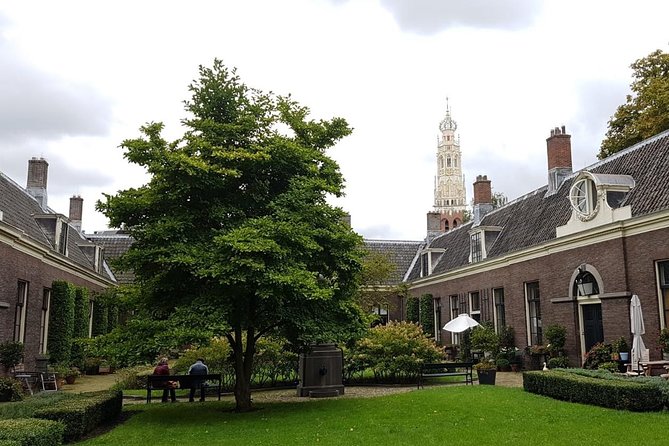
One of the most appealing parts of the route is a Hofje, an almshouse courtyard with a walled garden. These enclosed spaces offer a sharp contrast to the open market square. From busy central streets, you can pass into a quieter setting where the design is more intimate and domestic.
The Hofjes are valuable because they reveal a less grand side of urban history. Instead of churches and town halls, you see how charitable housing formed part of Haarlem’s social fabric. The courtyard layout also gives you a different view of Dutch architecture, with shared space, modest homes, and careful use of a small city site.
The word secret can make any stop sound more dramatic than it is, but this kind of courtyard really can be easy to miss without local direction. You may walk close by and never know what is behind the wall. That is exactly the sort of detail that gives a guided walk an advantage over following a basic map.
Plan this part carefully. Hofjes close daily at 5pm, so a summer tour beginning at 5pm does not enter them. On Sundays, all the Hofjes in Haarlem are closed for public viewing. If this is a priority, choose another day and an earlier start.
A serious look at Haarlem during the Second World War
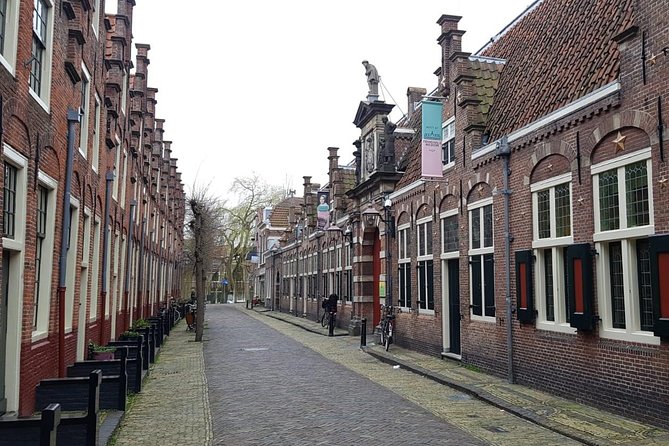
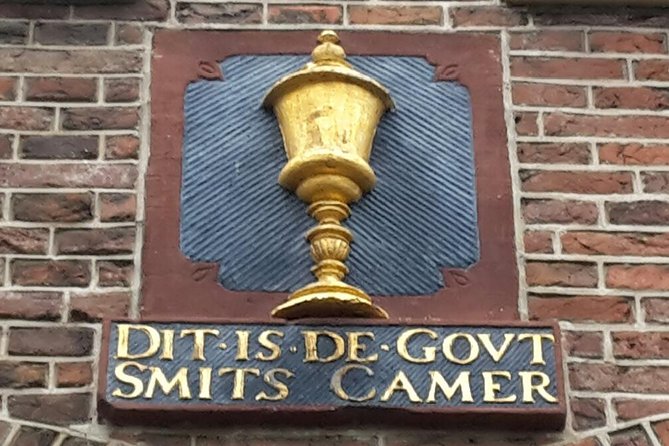
The wartime section gives the tour more weight. Haarlem’s past is not treated as a string of attractive old buildings. You also hear about the effect of Nazism on local people, Dutch resistance activity, and the choices residents faced during the Second World War.
The connection to Corrie ten Boom is particularly memorable. Her home and story are tied to Haarlem’s resistance history, and the tour helps place that story within the city rather than treating it as an isolated personal tale. The route also brings attention to historical resistance photographs and a women’s resistance museum.
I appreciate this part because it changes the mood in a useful way. A city center can look peaceful and timeless, but its streets have held fear, courage, compromise, and loss. A guide who can explain that past clearly gives you a fuller sense of Haarlem.
The subject is serious, and the amount of detail may vary with the group’s questions and the guide’s route. If wartime history is your main reason for visiting, treat this walk as an introduction and arrange a separate visit to sites that offer a longer, more focused presentation.
The Molen Adriaan and Haarlem’s working past
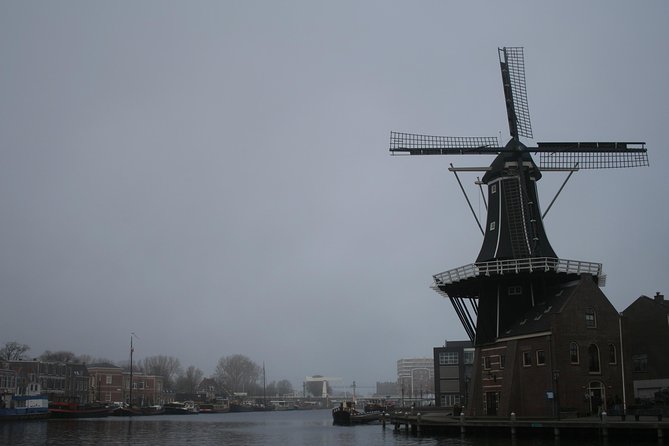
Molen Adriaan Windmill adds a recognizable Dutch image to the itinerary, but its value here goes beyond taking a photograph. The windmill helps connect Haarlem’s story to work, industry, trade, and the practical systems that supported city life.
This is one reason the tour suits photographers. You get a mix of broad views, water and street scenes, church architecture, courtyard details, and traditional Dutch forms. The guide can also help you see the difference between simply photographing a building and understanding why it belongs in the city’s story.
The exact amount of time at each landmark can depend on the group and the guide’s pacing. The total walk is about 4 kilometers, and the route is generally flat, but you should wear comfortable shoes and be ready to walk continuously for two and a half hours.
The secret viewpoint and local advice
A promised secret spot provides a change of pace from the historical explanations. It offers a fine view over Haarlem and gives you a chance to understand the city from above rather than street level.
The exact location is not specified in the tour details, which preserves some of the surprise. I would think of it as a bonus viewpoint, not the main reason to book. Weather will also affect how much you enjoy it, especially on a rainy day.
The practical tips at the end can be just as useful as the view. James has directed people toward places for a good beer and suggested Huis Barnaart, a 19th-century canal house in Empire style. That house requires a reserved time. Huis Bartolotti in Amsterdam, another historic canal home managed by the same monument organization, also requires advance booking.
Advice like this is where a small group helps. You can ask what to do next, where to eat or drink, and which sights deserve another hour. If you take the tour early in your stay, those suggestions can shape the rest of your time in Haarlem.
Why the six-person limit matters
A maximum of six people is a real benefit on a walking tour built around stories and questions. You are less likely to lose the guide’s voice in a noisy square, and you can stop to ask about a building without holding up a large crowd.
Small groups may also become nearly private tours. In one case, a booking for two people remained a two-person experience even in November. That does not guarantee a private tour, but the group limit creates the possibility of a much more personal walk.
James Johnson is repeatedly praised for being clear, friendly, patient, funny, and well informed across architecture, art, politics, religion, and local history. He also appears comfortable adjusting to questions, which is useful because Haarlem can interest people for very different reasons.
The guide makes a difference here. A tour this broad could become scattered in less capable hands. James’s strength appears to be linking subjects, so the church, market, museum, courtyard, windmill, and wartime stories feel like parts of one city rather than unrelated stops.
Is $55 a fair price?
At $55, this is not the cheapest way to see Haarlem, especially since entrance tickets to museums and the cathedral are not included. You are paying for a two-and-a-half-hour guided walk, a certified English-speaking guide, the small group format, and local advice.
I think the price is fair if you value interpretation. You could walk past Grote Markt, Teylers Museum, Molen Adriaan, and the Hofjes on your own, but you would miss much of the connection between them. The tour also saves you from having to research architectural styles, wartime events, and local figures before arriving.
The value improves if you take it early in your visit. You can use the guide’s suggestions for later museum visits, canal houses, restaurants, drinks, and independent exploring. If you already know Haarlem well and only want photographs, the price may feel high. If you want a clear framework for the city, it earns its keep.
All fees and taxes are included, but a tip for the guide is not. The cancellation policy allows a full refund if you cancel at least 24 hours before the start time. Cancellations or changes made within 24 hours are not refunded or accepted.
Who will enjoy this Haarlem walk?
I would recommend it most strongly to first-time visitors who want more than a quick look at the central square. It works especially well for people interested in:
- Dutch art and architecture
- Medieval and Golden Age history
- Local culture and civic life
- Second World War and resistance history
- Photography and historic streets
- Small-group tours with time for questions
The walk is also a good choice if you are staying in Amsterdam and want a fuller day outside the capital. Haarlem is easy to approach as a separate city visit, and this tour gives your time there a clear shape.
It is less suitable if you have difficulty walking. The route covers about 4 kilometers, and even a flat walk can feel long if you are not comfortable on cobblestones or standing for extended periods. Service animals are allowed, and the meeting point is near public transportation.
Should you book this tour?
Book it if you want Haarlem explained through its buildings, art, people, and difficult chapters, not just photographed from the market square. The best reasons are the six-person limit, James Johnson’s wide command of the subject, the Hofje visit when timing allows, and the attention given to Dutch resistance history.
Choose an earlier, non-Sunday departure if the Hofjes matter to you. Book it near the start of your stay so you can use the food, drink, museum, and architectural suggestions afterward. Skip it only if you prefer exploring entirely alone or need a shorter, less demanding walk.
For most first-time visitors, this is a strong introduction to Haarlem at a fair price, provided you understand that museum and church interiors are separate visits.
FAQ
How long does the Haarlem walking tour last?
The tour lasts approximately 2 hours and 30 minutes.
How far do you walk?
The route covers about 4 kilometers, or 2.5 miles.
Where does the tour begin?
It begins at Grote Markt 17, 2011 RG Haarlem, Netherlands.
Where does the tour end?
The activity ends at a different location from the starting point. The exact end point is provided in the booking details.
How many people can join the tour?
The maximum group size is six people.
Is the tour conducted in English?
Yes. The experience includes a certified English-speaking guide.
Can I visit a Hofje on a Sunday?
No. The Hofjes are closed for public viewing on Sundays.
Can I enter the Hofjes on a 5pm summer tour?
No. The Hofjes close daily at 5pm, so summer tours beginning at 5pm do not go inside them.
More History Tours in Haarlem
- Haarlem: Personalized Private tour Highlights & History
★ 4.9 · 13 reviews - Cultural and Historical Audio guided walking tour Tour of Haarlem
★ 3.5 · 13 reviews - Haarlem Self-Guided Taste, Culture & History Walk
★ 5.0 · 7 reviews - Amsterdam Food and Cultural Tour with Tastings
★ 5.0 · 2,442 reviews
Just added in Haarlem
- Walking Tour of Haarlem with a Local Guide★ 4.5 · 4 reviews
- Private Transfer from Haarlem to cruise port in Amsterdam★ 5.0 · 1 review
- e-Scavenger hunt Haarlem: Explore the city at your own pace★ 4.5 · 12 reviews
- Highlight Bike Tours Haarlem★ 4.5 · 26 reviews
- Discover Haarlem with a self-guided Outside Escape city game tour★ 4.5 · 12 reviews
- Private Haarlem Canal Cruise with Captain (Electric Boat)★ 5.0 · 71 reviews
- Explore Highlights of Haarlem: Self-Guided GPS and Audio Tour★ 4.0 · 2 reviews
- Haarlem Old Town Private Walking Tour★ 5.0 · 24 reviews
Historical Tours, compared.
Amsterdam Food and Cultural Tour with Tastings
Read our review →
Kinderdijk UNESCO World Heritage Entry Ticket
Read our review →
Hop-on Hop-off Old-Fashioned Heritage Tram Tour
Read our review →


Amsterdam High-End Dutch Food & History Tour – Up to 8 guests
Read our review →
Cruise through the Historic City Center with Guide
Read our review →
Browse the lists this tour appears in