
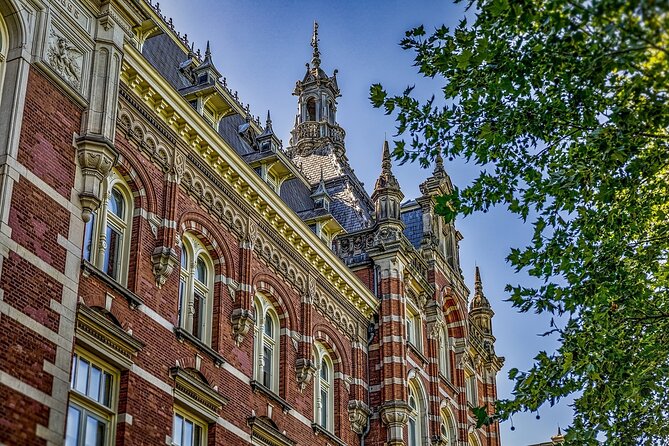
Review · WALKING TOURS
Utrecht Private Walking Tour With A Professional Guide
Utrecht rewards a closer look. I like the way this private walk links the Dom Church and Oudegracht with the larger story of Roman Traiectum, Christian power, trade, war, and rebuilding. I also like the freedom to shape the route with your guide, instead of being tied to a fixed group schedule. The main drawback is the price: at $313 per group, it is good value for a larger party, but costly for one or two people.
This is a two-hour introduction to one of the Netherlands’ major cities, beginning at Neude Square and ending there. Guides such as Willemijn, Giovanna, and Famke have earned praise for being warm, patient, clear, and passionate about Utrecht. Just remember that entrance fees are not included, and the pace can feel short if you want to linger inside every church.
In This Review
- Key points at a glance
- Starting at Neude Square
- Roman Traiectum and the city’s first chapter
- The Dom Tower and Domkerk
- Utrecht’s churches beyond the Dom
- Along the Oudegracht
- City Hall, Oudaen, and the old streets
- From independence to the modern city
- What the private format is worth
- What the guide adds
- Who should book this Utrecht walk?
- Should you book it?
- FAQ
- Where does the Utrecht private walking tour start?
- Where does the tour end?
- How long does the tour last?
- How many people can join the private tour?
- Is the tour offered in English?
- Are entrance fees included?
- Can the tour be canceled for a full refund?
Key points at a glance
- A private group of up to 15: You get your own guide, with no strangers joining your walk.
- A history-first route: The story runs from Roman Traiectum and the Carolingian Empire to Nazi occupation, liberation, and modern rebuilding.
- Utrecht’s most atmospheric sights: Expect the Dom Tower, Domkerk, Oudegracht, Neude Square, and several historic churches.
- A flexible two-hour format: You can ask your guide to adjust the walk on the spot to suit your interests.
- A strong guide record: Willemijn, Giovanna, and Famke are praised for clear explanations, friendliness, humor, and local pride.
- Useful meeting point: The walk starts and finishes at Neude, in central Utrecht, close to public transportation.
Starting at Neude Square
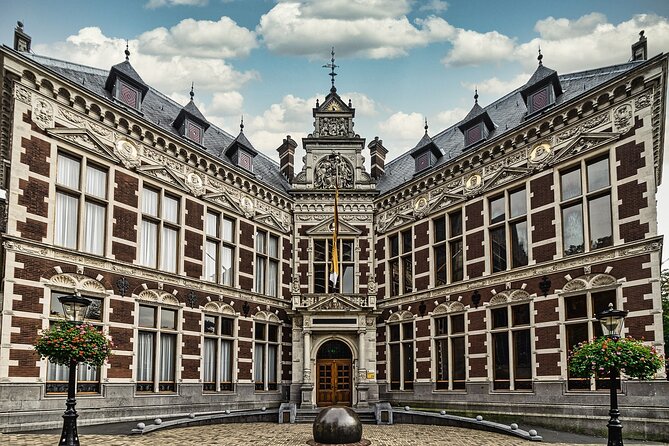
Neude is a smart place to begin. It gives you an immediate sense of Utrecht as a working city rather than a postcard set, with a central square, nearby streets, and easy access to the old center.
Your guide meets you here for the private walk. Since the tour is for your group only, you can ask for more history, more architecture, or a lighter overview depending on your interests. The company also allows possible changes to the route during the walk, which is helpful if one landmark captures your attention.
The meeting point is in Utrecht at Neude, 3512. The activity ends back there after roughly two hours. You should allow enough time to arrive before the start, since the tour is built around a walking route rather than a late-arrival window.
The starting location also makes the tour practical for a first visit. You can use it to get your bearings before exploring Utrecht on your own. Several people who took the walk found that a guide helped them notice parts of the city they might have passed without understanding.
More Walking Tours in Utrecht
- Utrecht 2-Hour Walking Tour | Discover The City With A Local
★ 5.0 · 138 reviews - Utrecht: Guided Highlights Walking Tour
★ 4.7 · 80 reviews - Utrecht Old Town: Medieval Monster Hunt & Walking Tour
★ 4.0 · 62 reviews
Roman Traiectum and the city’s first chapter
The historical story begins in the Roman period, with Traiectum and the origin of Utrecht’s name. This gives the walk a useful foundation. Instead of treating the old center as a collection of pretty buildings, your guide explains why this place developed where it did and how early Roman influence shaped the city’s identity.
From there, the story moves through the Germanic invasions and into the Carolingian Empire. These chapters help connect Utrecht to wider European power shifts. You are not simply hearing a list of dates. You are following the changes that affected the city’s role, faith, trade, and independence.
This kind of context is one of the tour’s strongest features. Without it, the Dom area, old streets, and churches can blur together. With it, each stop has a reason for being there.
The route also covers Utrecht’s rise as a center of Christianity in the north and as a trade hub. That pairing matters. Religious power brought major buildings and influence, while commerce helped make Utrecht an important urban center. The tour presents both sides of the city’s development rather than focusing only on church history.
The Dom Tower and Domkerk
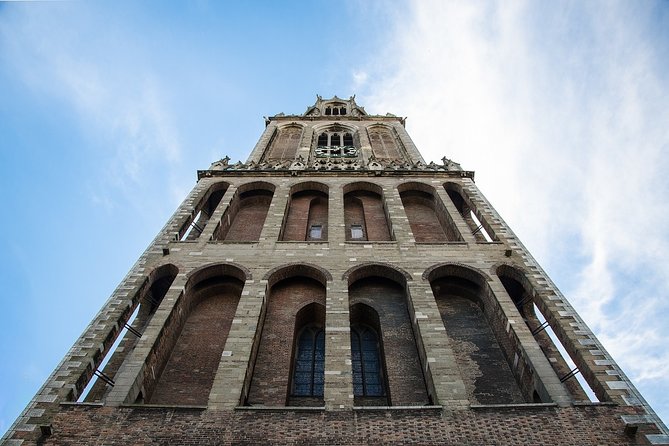
The Dom Tower is the most recognizable sight on the walk, and the nearby Domkerk gives the area its historical weight. You will see both as part of the route, with the guide explaining their place in Utrecht’s story.
The Dom area is likely to be the part of the tour that most visitors already expect, but the guide’s explanation is what makes it useful. You can ask about the church, the tower, Utrecht’s religious role, and the changes that affected the city over time.
One practical point matters here: entrance fees are not included. The tour includes the guided walk, not paid admission to attractions. The route does include the Domkerk as a sight, and one account specifically praised the chance to go into the cathedral, but you should confirm with your guide what is open and included on your date.
Do not expect a long architectural study. Two hours must cover many centuries and a sizeable list of landmarks. If you want a slower visit focused mainly on the Domkerk, tell your guide early so the route can be adjusted.
Utrecht’s churches beyond the Dom
The walk also includes Sint-Catharinakathedraal and Sint-Willibrordkerk. These stops broaden the religious picture and show that Utrecht’s Christian identity is not represented by one building alone.
You will also see Janskerk, another important historic church in the old center. The value here is comparison. Different churches can reveal different periods, styles, and religious roles, and a local guide can point out those changes as you move through the city.
The Oude Hortus is included as well. Its name refers to an old garden setting, giving the route a change of mood from streets and monumental churches. The supplied details do not promise a long garden visit or a separate admission, so think of it as one stop within the walking route rather than a full garden tour.
Since entrance fees are separate, you should treat these places mainly as guided exterior sights unless your guide confirms interior access. This is not a criticism of the tour. It is simply important to know that a sightseeing walk and a full museum or church visit are different experiences.
A different kind of day out entirely:
- Utrecht: City Canal Cruise
★ 4.3 · 2,895 reviews - Utrecht: De Haar Castle & Park Entry Ticket
★ 4.7 · 1,350 reviews - Utrecht: DOMunder Entry Ticket with Guide
★ 4.4 · 706 reviews - Utrecht: Dom Tower Entry Ticket and Guided Tour
★ 4.6 · 513 reviews
Along the Oudegracht
The Oudegracht is the scenic heart of the route. Walking beside this canal gives you the visual experience many people associate with Utrecht, but the guide adds the city story behind it.
The canal is not just a backdrop for photographs. It helps explain Utrecht’s role as a trade center and gives you a way to see how water shaped movement and commerce. The walk along the Oudegracht also breaks up the more formal church and civic stops.
This is where the leisurely pace praised by one guest matters. A good guide can let you enjoy the view while still explaining what you are seeing. Willemijn was specifically praised for a relaxed walk through the city, with more than two hours spent learning about Utrecht.
The exact pace will depend on your questions and group. A private tour is useful here because you can pause for photographs or ask for more detail without worrying about a larger party. Still, two hours passes quickly, especially with so many stops. You may need to choose between a broad overview and extended time at the canal.
City Hall, Oudaen, and the old streets
Stadhuis van Utrecht, the city hall, brings the civic side of Utrecht into view. After hearing about religious power and trade, you get a clearer sense of how the city was governed and how its public identity developed.
Oudaen adds another historic landmark to the route. Along with Janskerk and Voorstraat, it helps you see Utrecht as a lived-in city, not just a set of major monuments. Voorstraat in particular gives the walk a street-level feel, with the old center unfolding through ordinary routes as well as grand buildings.
Neude Square, Oudaen, Janskerk, and Voorstraat are useful parts of the experience for anyone who wants more than the standard Dom photograph. One of the strongest compliments given to the guides was that they showed parts of Utrecht people would have missed alone.
That is the real reason to consider a private guide. You are paying not only for a list of sights, but for help noticing connections between them. The value depends on how much you ask and how well you use the flexible format.
From independence to the modern city
The historical timeline continues into the sixteenth century, when Utrecht’s independence came to an end, followed by the Republic of the Netherlands. The tour then moves into the industrial age, showing how the city changed as the country entered a new economic period.
This broad sweep keeps the walk from becoming an old-town-only experience. You hear about medieval and religious Utrecht, but also about the forces that reshaped it later. For a first visit, that balance is useful because it gives you a basic map of the city’s past.
The final chapters cover the World War II blitz, Nazi rule, liberation, and modern reconstruction. These subjects give the city a more serious dimension. They also remind you that historic Utrecht is not frozen in one picturesque era.
A two-hour tour cannot provide a full wartime study, and it does not claim to. Instead, it places the occupation and liberation within the city’s longer story. If modern history matters most to you, say so when you meet your guide. The route can potentially be adjusted on the spot, though the exact changes depend on the guide and available time.
What the private format is worth
The price is $313 per group of up to 15 people. That is not a low-cost walking tour, but the calculation changes with group size.
For a group of 10 to 15, the cost works out to roughly $21 to $31 per person. For four people, it is about $78 per person. For two people, it is about $157 each. I would call it reasonable for a larger family or group of friends, but expensive for a couple unless you place a high value on a private guide.
The group limit is generous. You can keep the experience among your own party, ask direct questions, and request a different emphasis without slowing down strangers. That privacy is especially useful for families, multigenerational groups, and people with very specific interests.
The tour is offered in English and comes with a mobile ticket. It is near public transportation, and most people can participate. Service animals are allowed. These details make it easy to fit into a day in Utrecht, especially if you are arriving by train or connecting it with a wider Netherlands itinerary.
The tour is often booked well ahead, with an average booking lead time of 129 days. That does not guarantee every date will sell out, but it is a useful warning for travelers with fixed plans. Book early if you want a particular day or guide.
What the guide adds
The most praised part of this experience is the guide, not a single monument. Willemijn was described as friendly, patient, and clear, while Giovanna was praised for being informative and easy to talk with. Famke received warm praise for making Utrecht a favorite day during a Belgium and Netherlands trip.
Another account highlighted a guide’s humor, generosity, patience, and personal manner. That matters because a history walk can become dry if the guide only recites information. The best evidence here points to guides who explain the city in a human way and respond to questions.
You should still remember that guide quality can vary from person to person. The available rating is 4.9 from nine reviews, which is excellent, but it is a small sample. The named guides received especially warm comments, though you may not be assigned one of them.
Ask questions. Tell the guide what you already know. If you care about architecture, wartime Utrecht, Christian history, or canal life, say so at the start. The private format gives you a better chance of getting the kind of tour you want.
Who should book this Utrecht walk?
I would recommend it most to first-time visitors who want a clear introduction before exploring alone. It also suits people who prefer history explained in plain language rather than a self-guided walk with a phone in hand.
Families and small groups can make particularly good use of the private format. You can set the pace, keep the route within your own party, and ask for more or less detail. People who have already seen Amsterdam may also appreciate the chance to understand a different Dutch city without joining a large group.
It is less suitable if you want extensive indoor sightseeing, a museum visit, or a long stop at one church. The tour covers many locations in about two hours, and entrance fees are extra. If you want a slow architectural study, you may need a separate visit after the walk.
Free cancellation is available if you cancel at least 24 hours before the local start time. Cancellations or changes made later are not accepted for a refund.
Should you book it?
Book this tour if you want Utrecht’s main sights connected by a clear story, and if you are traveling with enough people to share the $313 group price. The guides appear to be the main strength, with repeated praise for their warmth, humor, patience, and ability to show details you could miss alone.
I would skip it if you are traveling solo on a tight budget or mainly want to enter churches and attractions. For everyone else, this is a useful, personal way to get oriented in Utrecht, especially at the beginning of a stay.
FAQ
Where does the Utrecht private walking tour start?
The tour starts at Neude, 3512 Utrecht, Netherlands.
Where does the tour end?
The activity ends back at the meeting point at Neude.
How long does the tour last?
The tour lasts approximately two hours.
How many people can join the private tour?
The price covers one private group of up to 15 people.
Is the tour offered in English?
Yes. The experience is offered in English.
Are entrance fees included?
No. Entrance fees are not included in the tour price.
Can the tour be canceled for a full refund?
Yes, if you cancel at least 24 hours before the experience start time. Changes or cancellations made less than 24 hours before the start are not accepted for a refund.
Just added in Utrecht
- Vecht River: Private Tour sightseeing Cruise with diner★ 5.0 · 5 reviews
- Utrecht Quiz Tour★ 3.2 · 31 reviews
- Utrecht Walking Tour with a local comedian as guide★ 4.8 · 5 reviews
- Utrecht: Museum Speelklok Entry Ticket★ 4.5 · 48 reviews
- Utrecht: Vegan Food Bike Tour – 6 Tastings (excl. bike)★ 5.0 · 7 reviews
- Utrecht or Amsterdam Sidecar Tour. City, rural or TAILORMADE★ 5.0 · 2 reviews
- Utrecht: Lofen Palace with Entry Ticket & Guide (Dutch)★ 4.4 · 41 reviews
- Utrecht: Ludwig’s Original Pub Crawl with VIP Club Entry★ 3.3 · 42 reviews
Walking Tours, compared.

Anne Frank’s Story – Guided Walking Tour through Amsterdam
Read our review →
Life of Anne Frank and World War II Walking Tour
Read our review →
Absolutely Amsterdam – the Essential Introductory Walking Tour
Read our review →
Anne Frank Walking Tour – Guided in EN/DE/IT/ES
Read our review →

Anne Frank Walking Tour Amsterdam Including Jewish Cultural Quarter
Read our review →Browse the lists this tour appears in