
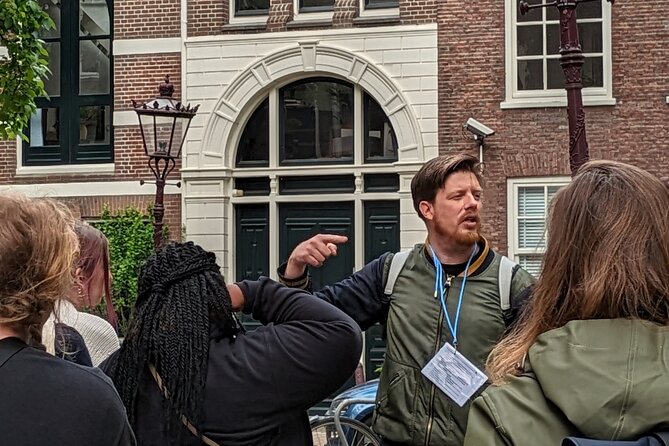
Review · HISTORICAL TOURS
Amsterdam 2 Hour History Walking Tour
Amsterdam makes the past part of every street. I like the small group of no more than 10 people and the way the guide mixes solid history with humor, rather than delivering a dry lecture. I also like the useful first-day advice, which helps you get your bearings quickly. The main drawback is the brisk schedule: ten stops in two hours means several places receive only a short explanation.
You meet at 11:00 a.m. at Prinsenstraat 13, close to the canal belt, and finish on Dam Square. The $30.04 price is fair for a local guide, a compact orientation, and tips that can shape the rest of your stay. Bring a refillable bottle, since bottled water is not supplied, and remember that poor weather can affect the outing.
In This Review
- Key things to know before you book
- Starting among Amsterdam’s canals
- De Wallen, beyond the headlines
- Dam Square and the Dutch struggle with water
- South Church and the religious break with Rome
- Jodenbreestraat and the city’s wartime memory
- The Dutch East India Company and global trade
- Stopera and the modern Amstel waterfront
- Begijnhof, a quiet courtyard in the center
- The Royal Palace and the color orange
- Groenburgwal and the Monet bridge
- What the $30.04 price really gets you
- The guide makes or breaks the experience
- Who should take this Amsterdam walk
- Practical advice for a better walk
- Should you book the Amsterdam 2 Hour History Walking Tour?
- FAQ
- How long is the Amsterdam 2 Hour History Walking Tour?
- What time does the tour start?
- Where does the tour begin and end?
- How many people can join the tour?
- Is admission to the Royal Palace included?
- Is bottled water provided?
Key things to know before you book
- Ten stops in two hours: You get a broad introduction to Amsterdam, but most locations are short story stops rather than full visits.
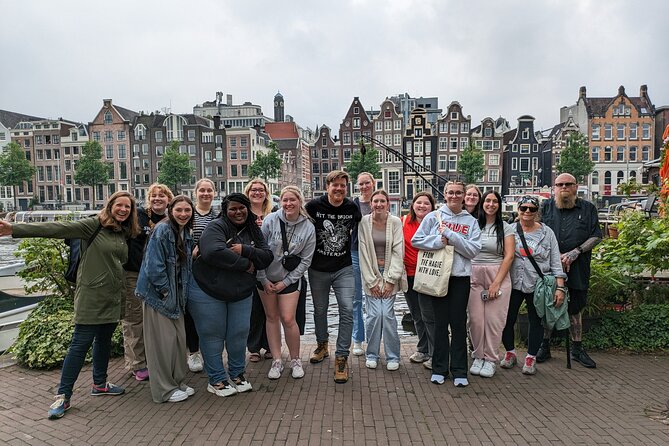
- A genuinely small group: The maximum of 10 people should make it easier to hear the guide and ask questions.
- History with a lighter touch: The tour covers water management, religion, empire, war, monarchy, and modern city life without taking itself too seriously.
- A useful first-day walk: Advice about getting around and making the most of Amsterdam is part of the experience.
- The Monet bridge photo stop: Groenburgwal provides a short, attractive pause for pictures.
- A central finish: Dam Square is close to public transport and only about two minutes from the starting area.
Starting among Amsterdam’s canals
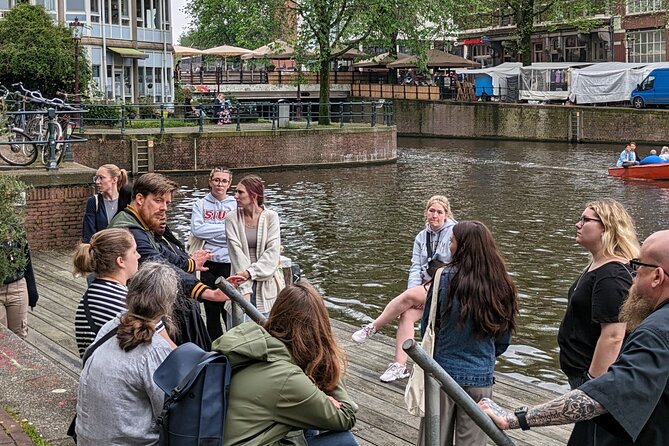
The tour begins at Hit the Bricks Walking Tours on Prinsenstraat, in the heart of Amsterdam’s canal belt. This is a good place to start because the canals are not just pretty scenery. They explain a great deal about how Amsterdam grew, traded, and learned to live with water.
Your guide sets the tone here by explaining how Dutch life has been shaped by the need to manage water. The point is not simply that the city has canals. It is that water affected planning, work, housing, trade, and the national mindset over many centuries.
I like this opening because it gives you a useful lens for the rest of the walk. After this stop, Amsterdam’s narrow streets and waterways feel less like a collection of postcard views and more like a city built through practical decisions. The scheduled stop is only about five minutes, so expect a sharp introduction, not an engineering lesson.
More History Tours in Amsterdam
- Amsterdam Food and Cultural Tour with Tastings
★ 5.0 · 2,442 reviews - Amsterdam: Haunted History and Ghost Walking Tour
★ 4.5 · 488 reviews - Amsterdam High-End Dutch Food & History Tour – Up to 8 guests
★ 5.0 · 482 reviews
De Wallen, beyond the headlines
The next stop is De Wallen, Amsterdam’s famous Red Light District. The guide explains why the area developed here, how it works, and how Dutch society views it.
This can be a valuable stop if you are new to Amsterdam and want something more thoughtful than a quick look at the windows. The district often gets reduced to stereotypes, while its place in the city is tied to Amsterdam’s long relationship with commerce, regulation, and personal freedom. A guide can also provide context that is difficult to pick up while walking alone.
You spend around 10 minutes here, one of the longer stops on the route. That gives the guide room to explain the subject with some care, though the short format still means you will not receive an exhaustive account of the neighborhood. Stay attentive and respectful. This is a working part of the city, not simply a stage set for photographs.
Dam Square and the Dutch struggle with water
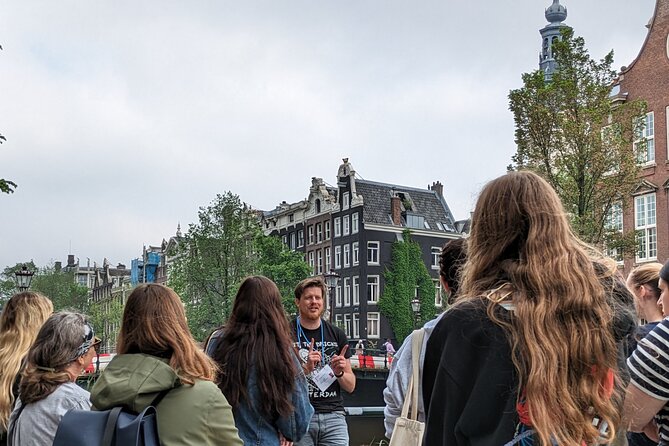
At Dam Square, Amsterdam’s central public space, the guide returns to the theme of water and the way it influenced Dutch culture and thinking. This is a useful connection, since the square is one of the city’s key meeting points and a natural place to discuss how Amsterdam developed.
The stop lasts about five minutes. That is enough to give you context before you return later on your own, but not enough for a full treatment of every building around the square. I would treat this as an orientation stop. It helps you understand why Dam Square matters and makes it easier to place other sights during the rest of your visit.
The tour ends here, which is practical. Dam Square connects with many forms of public transport, so you can continue to a museum, return to your hotel, or start another part of your day without a long transfer.
South Church and the religious break with Rome
At South Church, the guide uses the quiet inner courtyard beside the church to explain how and why the Dutch moved from Catholicism to Protestantism.
This is one of the route’s more appealing contrasts. Amsterdam can feel noisy and crowded in its central areas, so a calm courtyard gives the story room to breathe. You are not just hearing that the Reformation happened. You are learning how a major religious change affected the country and its people.
The stop lasts about five minutes. That makes it a concise introduction rather than a church tour, and admission is not included because the walk does not require a paid entry. If religious history interests you, you may want to note the location and return later with more time.
More Walking Tours in Amsterdam
- Anne Frank’s Story – Guided Walking Tour through Amsterdam
★ 5.0 · 11,619 reviews - Amsterdam: Life of Anne Frank and World War II Walking Tour
★ 4.8 · 10,467 reviews - Absolutely Amsterdam – the Essential Introductory Walking Tour
★ 5.0 · 3,629 reviews - Amsterdam: Anne Frank Guided Small Group Walking Tour
★ 4.8 · 2,722 reviews
Jodenbreestraat and the city’s wartime memory
At Jodenbreestraat, the tour reaches Amsterdam’s Jewish Quarter. The guide discusses the tens of thousands of Jewish people who lived in Amsterdam before and during the Second World War, along with the terrible Hunger Winter.
This is a serious part of the walk, and it needs to be handled with care. The short five-minute stop cannot cover every personal story or historical detail, but it places the neighborhood within the larger story of wartime Amsterdam. That matters because the city’s beauty can sometimes make it easy to miss the pain held in its streets.
I value the fact that this subject is included in a general city walk. You are not being shown only attractive canals and royal buildings. You are also asked to remember the people and communities affected by war. For a fuller account, you would need a dedicated museum or memorial visit, but this introduction can help you make better sense of those places later.
The Dutch East India Company and global trade
The former Bushuis and Oost-Indisch Huis headquarters provide the setting for a look at the Dutch East India Company. Here, the guide explains how a small country built a large empire and gained control over the spice trade while also fighting for independence.
This is an important stop because Amsterdam’s wealth and influence did not come from canals alone. Trade, shipping, military power, and overseas expansion all played a major role. The stop also gives you a chance to consider the less comfortable side of Dutch prosperity. Empire brought money and power, but it also involved domination and conflict.
The visit lasts about 10 minutes, making it one of the better places for a fuller explanation. You will not see the inside of a museum or company office, and there is no admission included. Still, the setting gives the story a strong sense of place, which is often more useful than hearing the same facts in a classroom.
Stopera and the modern Amstel waterfront
At the Stopera pier, the route moves to the Amstel River and modern Amsterdam. The guide explains the nickname Stopera, a blend of stadhuis, meaning city hall, and opera, and discusses why locals often consider the building unattractive while still feeling proud of it.
This is a nice change of pace. Many city tours rush from one old building to another, but Amsterdam is also a modern working city. The Stopera stop shows how local identity can include affection for a building people openly criticize.
You spend around five minutes here. The value is less about architecture and more about hearing how residents relate to their own city. The guide’s humor should work well at this point, especially if you enjoy local opinions rather than polished tourist descriptions.
Begijnhof, a quiet courtyard in the center
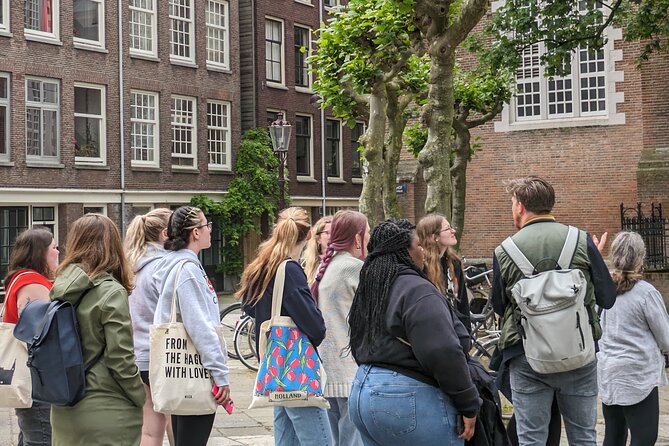
Begijnhof offers one of the route’s most peaceful settings. The guide introduces the beguine sisters who built and lived in this enclosed courtyard, giving you a glimpse of a very different form of urban life.
The stop lasts about 10 minutes, enough to appreciate the atmosphere and hear the basic story. I like this part because it breaks up the larger historical themes with a more intimate look at community and belief. In a city known for canals, shops, and busy streets, a secluded courtyard can feel like a welcome pause.
You should follow the guide’s instructions here and keep your voice low. The setting is not simply a sightseeing backdrop. Respect for the place makes the visit better for everyone.
The Royal Palace and the color orange
At the Royal Palace Amsterdam, you learn how the Dutch royal family came to be, what France had to do with that story, and why the national color is orange even though the Dutch flag is red, white, and blue.
This is a compact way to make Dutch politics and national identity more understandable. The five-minute stop will not cover every monarch or political change, but it gives you a few memorable facts to carry into the rest of your visit.
Admission to the palace is not included. The tour only explains the exterior and its place in Dutch history, so you do not need to buy a ticket to take part. If you want to see the interior, plan a separate visit and check the palace’s opening details independently.
Groenburgwal and the Monet bridge
The final photo stop is Groenburgwal, where you can see the bridge associated with Monet’s Amsterdam paintings. The pause lasts about three minutes, so this is a quick picture opportunity rather than a long art discussion.
Still, it is a smart ending for a walking tour. You get a pleasing view, a connection between Amsterdam and one of Europe’s best-known painters, and a chance to take a photograph for friends at home. The guide’s suggestion to have your camera ready is practical because the stop is brief.
From there, you finish at Dam Square. The end point is convenient for public transport and close to the starting area, making the tour easy to fit into a first full day in Amsterdam.
What the $30.04 price really gets you
At $30.04 per person, this is not the cheapest way to walk through Amsterdam, but it offers reasonable value if you want a human introduction rather than a self-guided route. You are paying for an expert local guide, a small group, historical context, humor, and practical tips for the rest of your trip.
The value comes from the range of subjects. In two hours, you touch on water, religion, prostitution, war, Jewish life, empire, monarchy, modern architecture, and art. You could read about each topic alone, but the guide connects them to actual places.
The limitation is time. Ten stops in roughly two hours leaves little room for long questions, interior visits, or unplanned discoveries. I would book this as an orientation walk, not as the only historical experience of your Amsterdam visit.
Discount codes for other tours are available upon request. That may be useful if you are considering another activity from Hit the Bricks, but I would ask about the discount before booking anything else.
The guide makes or breaks the experience
The strongest part of this tour is the guide’s role. The walk works best with someone who can move between serious subjects and light humor without making either feel trivial.
Axel received especially warm praise for giving first-time visitors an engaging overview of Amsterdam and modern Dutch culture. Mark also helped create a good experience in an unexpected situation. One booking problem left a scheduled walking tour without a guide, and the operator arranged a 90-minute canal tour instead. That replacement was enjoyed, but the incident shows why you should keep your booking confirmation handy and verify the meeting details before you set out.
The smaller group should help the social side of the experience. One guide was described as personable and funny, with a relaxed atmosphere that made it easy to participate. That matters if you are traveling alone or prefer not to speak up in a large crowd.
If you arrive early, the operator’s office may have a cat named Koko. That is not a tour feature, but it is a charming little detail if you happen to be waiting near the meeting point.
Who should take this Amsterdam walk
I think this tour suits first-time visitors especially well. The route covers major areas and gives you practical advice, so you can spend the next few days exploring with more confidence.
It also suits people who prefer a broad view of a city. You will hear enough about many subjects to decide what deserves more of your time, from the Jewish Quarter to the Royal Palace and canal belt.
You may want something else if you prefer long museum visits, detailed architectural study, or a slow photographic walk. The pace is relaxed in a social sense, but the schedule itself is full. Some stops last only three or five minutes.
The tour is offered in English and uses a mobile ticket. Service animals are allowed, the route is near public transport, and most people can participate. Since the activity requires good weather, check for any weather-related changes. If poor weather cancels the tour, you are offered another date or a full refund.
Practical advice for a better walk
Wear comfortable shoes and arrive before the 11:00 a.m. start. The meeting point is Prinsenstraat 13, 1015 DA Amsterdam, and the finish is Dam Square, 1012 Amsterdam.
Bring a refillable water bottle. Bottled water is not included, but there are several places to refill during the walk.
Use the guide’s advice to plan the rest of your day. The tour covers enough ground and subject matter to help you choose what to revisit. I would avoid scheduling a timed attraction immediately afterward, since the exact pace can vary with questions, street conditions, and the group.
The tour has a maximum of 10 people, which is a useful feature at this price. If you need to cancel, you can receive a full refund when you cancel at least 24 hours before the local start time. Changes made inside that window are not accepted, and late cancellations are not refunded.
Should you book the Amsterdam 2 Hour History Walking Tour?
Book it if you want a friendly, compact introduction to Amsterdam before exploring on your own. The mix of major landmarks, difficult history, local humor, and practical advice gives you more than a simple photo walk.
I would be especially comfortable recommending it to first-time visitors, solo visitors, and anyone who likes learning through stories tied to real streets. The $30.04 cost is sensible for a small-group experience, though the brief stops mean you should not expect detailed sightseeing at every location.
Skip it if you want a slow tour with interior admissions or a single subject covered at length. For a first look at Amsterdam, however, this walk offers a useful map of the city’s past and present, with the Monet bridge and Dam Square providing memorable bookends.
FAQ
How long is the Amsterdam 2 Hour History Walking Tour?
The tour lasts approximately two hours.
What time does the tour start?
The tour starts at 11:00 a.m.
Where does the tour begin and end?
It begins at Hit the Bricks Walking Tours, Prinsenstraat 13, 1015 DA Amsterdam, Netherlands. It ends at Dam Square, about two minutes on foot from the starting area.
How many people can join the tour?
The tour has a maximum of 10 participants.
Is admission to the Royal Palace included?
No. Admission to the Royal Palace is not included. The tour covers its historical importance from the outside.
Is bottled water provided?
No. You should bring a refillable water bottle. Several stops allow you to fill it during the walk.
Just added in Amsterdam
- Private Tour Zaanse Schans Windmills and Volendam in Jaguar★ 5.0 · 10 reviews
- Zaanse Schans and Giethoorn Unique Day Trip with Boat Cruise★ 4.5 · 17 reviews
- Windmills-Volendam-Giethoorn Private Tour in Jaguar★ 5.0 · 2 reviews
- Half-Day Private Guided Sightseeing Tour of Zaanse Schans★ 5.0 · 14 reviews
- Best of Netherlands: Zaanse Schans Mills, The Hague & Rotterdam★ 4.5 · 10 reviews
- Zaanse Schans Private Tour Windmills★ 5.0 · 18 reviews
- Zaanse Schans Windmills Edam Volendam and Marken from Amsterdam★ 5.0 · 1 review
- Zaanse Schans Edam Volendam Private Day Tour from Amsterdam★ 5.0 · 3 reviews
Historical Tours, compared.
Amsterdam Food and Cultural Tour with Tastings
Read our review →
Kinderdijk UNESCO World Heritage Entry Ticket
Read our review →
Hop-on Hop-off Old-Fashioned Heritage Tram Tour
Read our review →


Amsterdam High-End Dutch Food & History Tour – Up to 8 guests
Read our review →
Cruise through the Historic City Center with Guide
Read our review →
Browse the lists this tour appears in