
Review · WALKING TOURS
Rotterdam 2-Hour Grand Walking Tour
Rotterdam rebuilds itself in plain sight. This two-hour walk makes sense of the city’s bold mix of post-war planning, modern architecture, port history, and new development. I like the clear route from Central Station through the center to the River Maas, and I like that the tour brings you inside the Markthal rather than simply pointing at it from outside.
The main consideration is the pace and distance. You cover about 3 to 4 kilometers on foot, often outdoors, and the tour runs in rain and snow. That is a fair amount of walking for two hours, especially for young children, although kids ages 0 to 12 can join free. Guide Tania has earned especially warm praise for being kind, punctual, informative, and good at spotting details you might otherwise miss.
In This Review
- Key things to know before you book
- Why this short walk works in Rotterdam
- Starting beneath Rotterdam Central Station’s new gateway
- Groothandelsgebouw and the first look at post-war Rotterdam
- Lijnbaan: shopping, planning, and everyday city life
- City Hall and Timmerhuis: old civic style beside new ideas
- Markthal, Rotterdam’s indoor marketplace
- Cube Houses and Rotterdam’s playful side
- Along the Maas toward the Head of South
- Is $53 a fair price for two hours?
- Practical details that affect your day
- Who will enjoy this Rotterdam walk most?
- Should you book the Rotterdam Grand Walking Tour?
- FAQ
- Where does the Rotterdam walking tour begin?
- Where does the tour end?
- How long is the walking tour?
- How far do you walk?
- What language is the tour conducted in?
- Is the tour wheelchair accessible?
- Can children join the tour?
- Does the tour visit the Markthal?
- Can I cancel for a refund?
Key things to know before you book
- Rotterdam Central Station is the starting point: Meet outside by the main entrance, at the city’s striking modern gateway.
- The route explains reconstruction: You learn how Rotterdam developed after wartime destruction and why its center looks so different from older Dutch cities.
- Markthal is a major stop: You visit the indoor marketplace and then see the nearby Cube Houses.
- The walk covers 3 to 4 kilometers: Wear comfortable shoes and dress for the season.
- The finale is by the River Maas: The tour ends at Boompjeskade, with views across to the developing south bank.
- English is the standard language: A private group is available, and another language may be possible by arranging it in advance.
Why this short walk works in Rotterdam
Rotterdam is not the easiest Dutch city to understand at first glance. Amsterdam gives you canals, old houses, and a fairly clear visual story. Rotterdam gives you broad streets, towers, post-war blocks, daring new buildings, and a working port that has shaped almost everything.
That is why a guided introduction can be useful here. The buildings are not simply decoration. They tell the story of a city forced to rebuild and then willing to experiment with new forms. On this tour, you move through several eras in a sensible order rather than seeing disconnected sights.
You begin at Rotterdam Central Station, walk through the city center, visit the Markthal and Cube Houses, and finish beside the Maas. The route links the city’s past, present, and plans for the future. In two hours, you will not see every corner of Rotterdam, but you should come away with a clearer idea of how the city works.
The tour also has a useful balance between famous sights and easy-to-miss places. Michelle, who joined with a group of four, particularly appreciated being taken to places she would not have noticed alone. That is an important point in a city where architecture often rewards you for looking up, behind, and around corners.
More Walking Tours in Rotterdam
- Rotterdam: Architectural Highlights Guided Walking Tour
★ 4.8 · 215 reviews - Rotterdam Walk: Hilights, Gems, Architecture & WWII | 2 or 3hrs
★ 5.0 · 149 reviews - Rotterdam: Highlights & Gems Walking Tour with Dutch Local
★ 5.0 · 133 reviews
Starting beneath Rotterdam Central Station’s new gateway
Your meeting point is outside Rotterdam Central Station by the main entrance. This is a practical place to begin because the station is easy to identify, and the building itself introduces the city’s modern character before the walk even starts.
The station is described as Rotterdam’s spectacular new gate, and it functions as more than a transport hub. Its bold design prepares you for the city’s preference for large gestures and fresh ideas. Your guide uses the area to introduce Rotterdam as a port city and to explain the chronology of its post-war reconstruction.
That context matters. If you only see the station as a place to catch a train, you miss the way Rotterdam presents itself to the rest of the Netherlands and to visitors arriving from abroad. Starting here gives you an immediate sense that this is a city looking forward, even while it explains what came before.
Arrive ready to walk. The tour does not begin with a long vehicle transfer or a museum visit. You are on foot from the start, and the station area can be busy, so checking the exact meeting instructions before you arrive is sensible.
Groothandelsgebouw and the first look at post-war Rotterdam
From the station, the route moves into the city center and introduces the Groothandelsgebouw. This building helps explain Rotterdam’s recovery after the war and the practical needs of a city rebuilding its business life.
The value here is not just seeing a large historic structure. Your guide places it within the city’s wider development, showing how Rotterdam had to make room for commerce, transport, housing, and modern urban planning. You begin to see that the city’s unusual appearance is not random. It is the result of decisions made during a demanding period of renewal.
This is one of the tour’s strongest features for first-time visitors. You get a timeline to follow. Instead of treating each building as an isolated photo stop, the guide connects the structures to Rotterdam’s changing identity.
The route is conducted in English, with other languages possible by contacting the provider. If architectural history is not normally your favorite subject, the short format should help. The walk keeps moving, and the information is tied to the buildings around you rather than delivered as a long classroom talk.
Lijnbaan: shopping, planning, and everyday city life
The Lijnbaan shopping area brings a different side of Rotterdam into the walk. Here, you see how post-war planning shaped daily life, not only grand public buildings.
A shopping street can seem less important than a monument, but it gives you a better feel for how the rebuilt center was intended to function. The tour connects the area to Rotterdam’s wider reconstruction story, helping you understand the relationship between open pedestrian space, commerce, and the new city center.
This stop also breaks up the architecture with a more ordinary urban setting. You are not only looking at ambitious structures. You are walking through a place used for shopping and getting around, which makes the city feel lived-in rather than arranged solely for sightseeing.
I would pay attention to the transitions between the major stops. Rotterdam’s character often appears in the contrast between a clean modern shopping zone, an older civic building, and a daring contemporary project only a short walk away. You may notice more when the guide explains what to compare.
A different kind of day out entirely:
- Rotterdam: Harbor Sightseeing Cruise
★ 4.3 · 7,599 reviews - Rotterdam: 1-Hour Sightseeing Splash Tour
★ 4.5 · 3,299 reviews - Rotterdam: Rotterdam Zoo Blijdorp Entry Ticket
★ 4.6 · 2,754 reviews - Rotterdam: Euromast Lookout Tower Ticket
★ 4.4 · 2,549 reviews
City Hall and Timmerhuis: old civic style beside new ideas
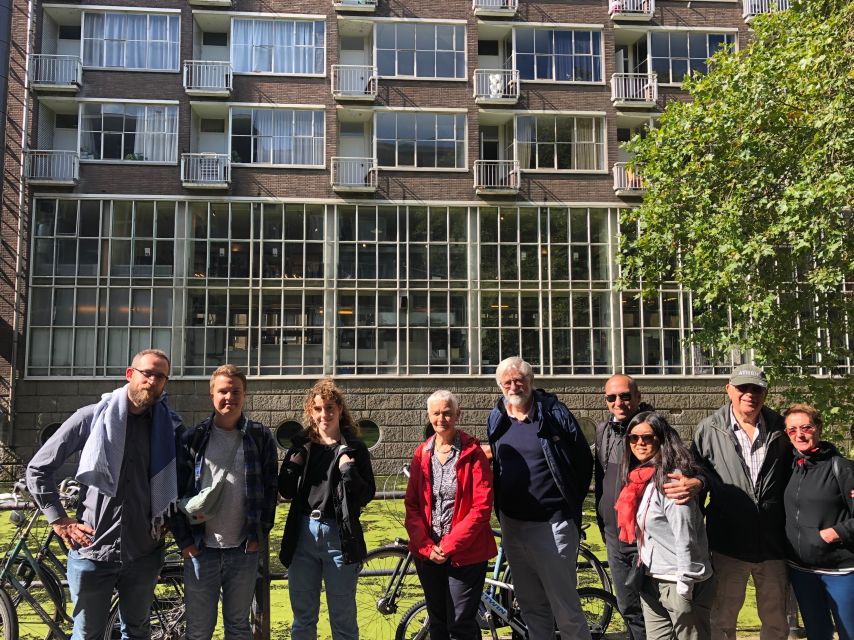
The route includes Rotterdam’s neo-classical City Hall, followed by the contemporary Timmerhuis. These buildings make an effective pair because they show two very different ideas of what a civic city center can look like.
The City Hall gives you a more traditional architectural reference point. Its neo-classical design connects Rotterdam to familiar European civic traditions, even though much of the city around it has a newer feel. Then Timmerhuis shifts the conversation toward contemporary design and the city’s continuing willingness to test new forms.
This contrast is one reason the tour works well for people who are curious about buildings but do not want a specialist architecture lecture. You can understand the basic story through what is directly in front of you: formal civic architecture on one side, a more current approach on the other.
Tania’s style has been described as both informative and kind, and that combination matters on a walking tour. Good guiding is not only about facts. It is also about helping you notice why a place matters without making every stop feel like an exam.
Markthal, Rotterdam’s indoor marketplace
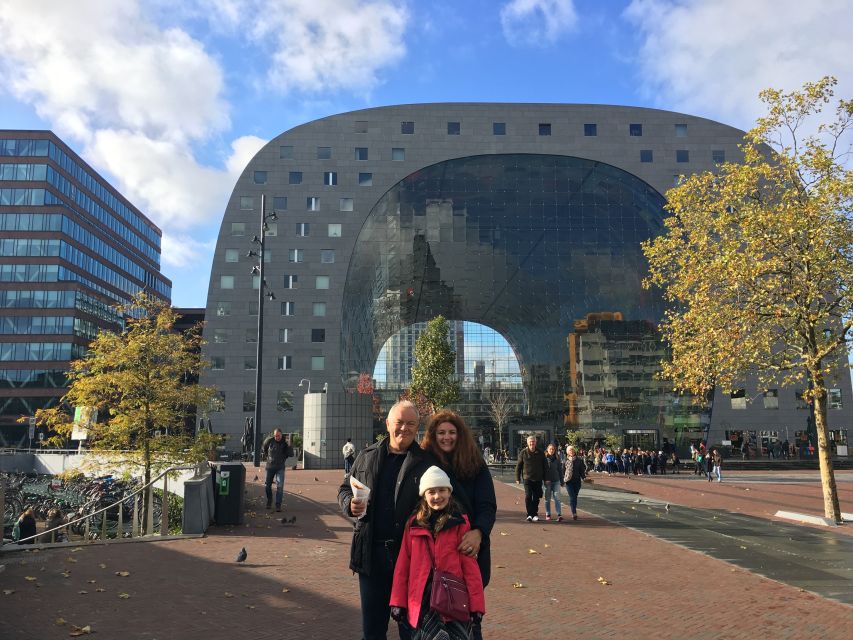
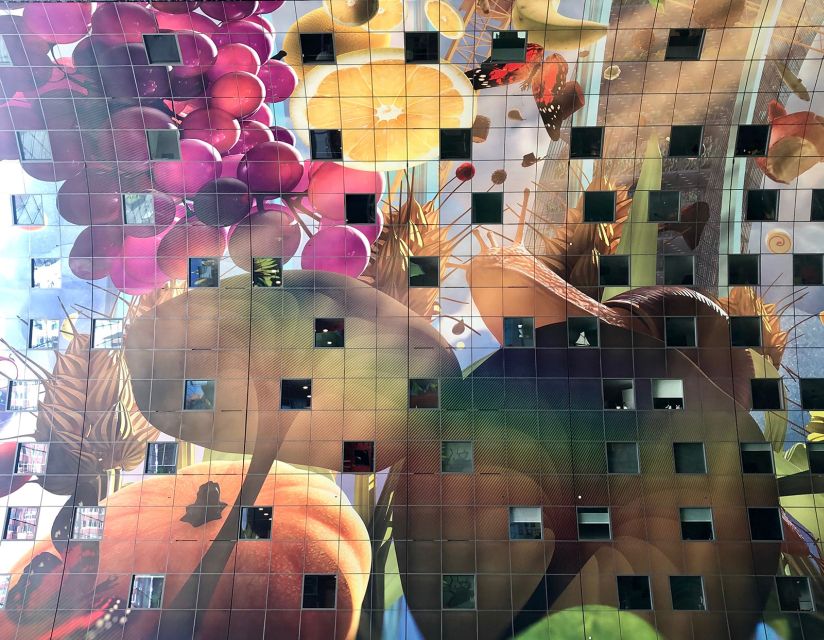
The Markthal is the tour’s most obvious crowd-pleaser. You go inside Rotterdam’s spectacular indoor marketplace, which gives you a pause from the weather and a change of pace after the outdoor streets.
The building is worth seeing as architecture, but the marketplace also adds a more everyday layer to the route. You are not looking only at a monument. You are entering a place built for food, shopping, and public activity. That makes the stop feel connected to current city life.
The tour’s timing gives you enough room to appreciate the space, but you should not expect a dedicated food tour or a long free period for shopping. The advertised experience is a guided walk, and the Markthal is one part of a larger route. If you want to browse every stall at leisure, you may prefer to return on your own after the tour.
Still, including the Markthal is a smart choice. It gives you an indoor sight, a well-known Rotterdam landmark, and a chance to experience the city’s newer architecture in a social setting. It also prevents the tour from becoming a continuous sequence of exterior building explanations.
Cube Houses and Rotterdam’s playful side
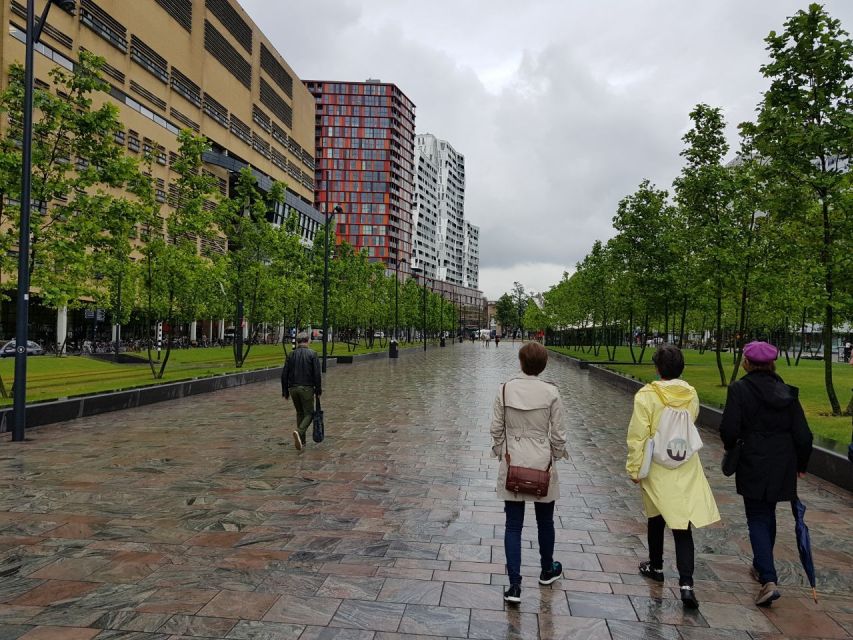
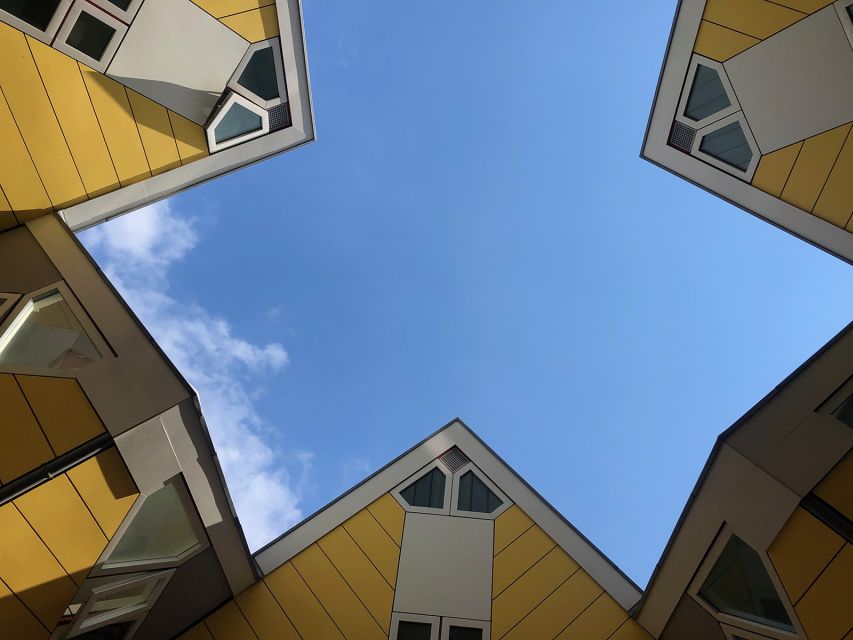
After the Markthal, the walk introduces the iconic Cube Houses. These homes are among Rotterdam’s most recognizable architectural projects, and they make the city’s experimental side easy to see.
The Cube Houses are useful on a first tour because they prompt an obvious question: how do people actually use such an unusual design? Even without turning the stop into a long technical lesson, the buildings show Rotterdam’s interest in challenging standard ideas about streets, homes, and urban space.
This is also a good place to keep your camera ready, but do not let the photo stop distract you from the setting. The cubes are part of a larger urban area, not an isolated sculpture. Seeing them in relation to the Markthal and surrounding center helps you understand the scale of Rotterdam’s architectural experiments.
The route does not suggest an extended interior visit to a Cube House, so plan on viewing and discussing the complex from the walking route. If you want a more detailed look inside, you would need to arrange that separately.
Along the Maas toward the Head of South
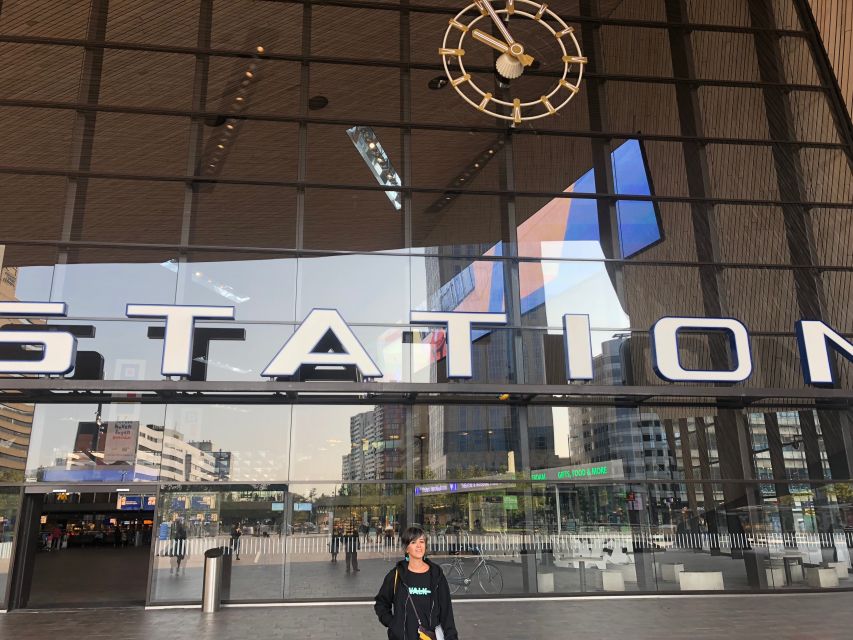
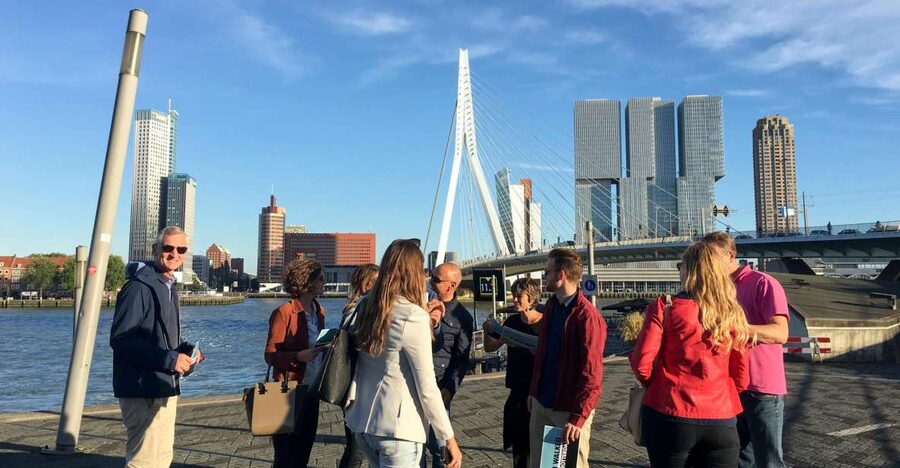
The final stretch takes you to the River Maas, where the city opens up and you can admire views toward the Head of South, a newer development on the south bank.
This is a strong ending because it shifts your attention from individual buildings to the city as a whole. From the riverside, Rotterdam’s relationship with the water becomes easier to understand. The Maas is not just a scenic backdrop. It helps explain the city’s port identity and its continuing development.
The views across the river also give you a chance to consider Rotterdam’s future. Earlier stops focus on reconstruction and present-day architecture. Here, the guide points toward new growth on the south bank, showing that the city’s building story is still in progress.
The tour ends at Boompjeskade, beside the river. That is useful if you want to continue walking along the waterfront afterward, though the tour itself does not include onward transport or additional activities. You finish with an open view rather than being returned to the station, so consider your plans for the rest of the day.
Is $53 a fair price for two hours?
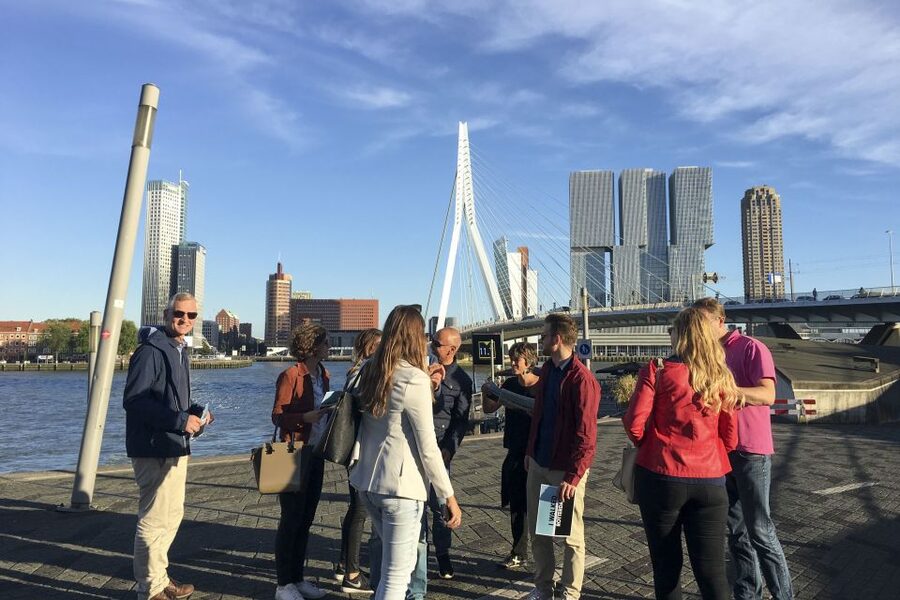
At $53 per person, this is not the cheapest way to walk around Rotterdam. You can see many city-center buildings independently for little or no cost. The price makes more sense if you value a guide who explains the connections between them.
You are paying for a two-hour route, live English commentary, and a planned introduction to several major sights. The tour covers Central Station, Groothandelsgebouw, Lijnbaan, City Hall, Timmerhuis, Markthal, Cube Houses, and the Maas waterfront. That is a solid amount for a short orientation walk.
The strongest value comes at the beginning of your Rotterdam stay. After the tour, you should know which areas deserve more time and which buildings you want to revisit. The guide can also point out details that are easy to overlook, a benefit Michelle specifically highlighted after visiting places she would not have found alone.
The value is weaker if you already know Rotterdam’s architecture well or prefer to explore at your own pace. You may also find the price harder to justify if you mainly want photographs and do not care about the city’s reconstruction story.
Kids ages 0 to 12 can join free, which improves the value for families. Parents should think honestly about the 3 to 4 kilometer route, the two-hour duration, and the amount of architectural content. A child who enjoys buildings and city walks may do well. A very young child who needs frequent breaks may find the pace tiring.
Practical details that affect your day
The tour is wheelchair accessible, but it remains a walking experience covering several kilometers. If you use a wheelchair or have limited mobility, it is sensible to confirm the exact route and current conditions before booking, especially since the tour operates outdoors in all seasons.
Wear comfortable shoes. This is not the time for footwear chosen only for photographs. Seasonal clothing is also important because the walk continues in rain and snow. A light rain layer can make the difference between enjoying the riverside finish and simply waiting for it to end.
The standard language is English. If you need another language, contact the provider before booking rather than assuming it will be available on the day.
You can cancel up to 24 hours in advance for a full refund, and the reserve now, pay later option keeps your plans flexible. Starting times vary, so check availability for your date.
Private groups are available. That may suit families, friends, or anyone who wants a more personal pace. The supplied information does not state the size of regular groups, so ask if group size is important to you.
Who will enjoy this Rotterdam walk most?
I would recommend this tour to a first-time visitor who wants a firm introduction before exploring alone. It suits you if you like architecture, city planning, modern history, and walking routes that connect several central sights.
It is also a good match if Rotterdam is one stop in a larger Netherlands trip. The tour gives you a quick sense of how this city differs from places known mainly for older buildings and canals. You get the basic story without spending half a day in a museum.
Families can benefit from the free child policy, provided everyone is comfortable with the distance. The Markthal and Cube Houses add visual variety, while the river views give the route a change of scene.
I would be less likely to recommend it to you if you want a slow food experience, a long shopping break, or entry into several museums and buildings. It is also not ideal if you dislike walking in poor weather. The route is outdoors for much of its length, and Rotterdam’s riverfront can feel exposed.
Should you book the Rotterdam Grand Walking Tour?
Book it if you want Rotterdam explained rather than merely photographed. The tour’s best feature is its sequence: Central Station introduces the new city, the center reveals reconstruction, the Markthal and Cube Houses show architectural risk-taking, and the Maas points toward the future.
Guide Tania appears to be a major part of the experience, with praise for her preparation, punctuality, warmth, and ability to reveal overlooked places. Still, your decision should depend on your walking ability and interest in urban design. At $53, the tour is a reasonable orientation service, not a bargain sightseeing loop.
If you have two hours available near the start of your visit, I would book it, wear practical shoes, and use the final riverside location as a springboard for your own Rotterdam exploration.
FAQ
Where does the Rotterdam walking tour begin?
It begins outside Rotterdam Central Station by the main entrance.
Where does the tour end?
The walk ends beside the River Maas at Boompjeskade.
How long is the walking tour?
The tour lasts two hours.
How far do you walk?
The route covers about 3 to 4 kilometers.
What language is the tour conducted in?
The tour is conducted in English. Another language may be possible if you contact the provider.
Is the tour wheelchair accessible?
Yes, the activity is listed as wheelchair accessible.
Can children join the tour?
Yes. Children ages 0 to 12 can join free. Parents should consider the distance, content, and two-hour duration.
Does the tour visit the Markthal?
Yes. The route includes a visit to Rotterdam’s indoor Markthal.
Can I cancel for a refund?
Yes. You can cancel up to 24 hours in advance for a full refund.
Just added in Rotterdam
- e-Scavenger hunt Dordrecht: Explore the city at your own pace★ 4.5 · 24 reviews
- Escape the City – Interactive city walk in Dordrecht★ 5.0 · 1 review
- Discover the best spots in Dordrecht with Outside Escape★ 4.5 · 11 reviews
- Historical Dordrecht: Private Tour with Local Guide★ 5.0 · 1 review
- The Netherlands: WW2 Private Day Trip★ 5.0 · 4 reviews
- Rotterdam: Guided Food Tour★ 4.4 · 16 reviews
- Rotterdam: Trompenburg Botanical Gardens Entry Ticket★ 4.1 · 77 reviews
- Rotterdam: UNESCO Van Nelle Factory Guided Tour★ 4.5 · 94 reviews
Walking Tours, compared.
Anne Frank’s Story – Guided Walking Tour through Amsterdam
Read our review →
Life of Anne Frank and World War II Walking Tour
Read our review →
Absolutely Amsterdam – the Essential Introductory Walking Tour
Read our review →
Anne Frank Walking Tour – Guided in EN/DE/IT/ES
Read our review →
Anne Frank Walking Tour Amsterdam Including Jewish Cultural Quarter
Read our review →Browse the lists this tour appears in