
Review · WALKING TOURS
Rotterdam: 2-Hour Guided Walking Tour
Rotterdam rewards curious walkers. This two-hour tour links the city’s rebuilt center with its bold modern buildings, giving you a clear introduction to the harbor city without taking up a full day. I like the mix of major sights and ordinary city life, especially at the Markthal, where the tour moves beyond postcard views. I also like that guides such as Edwin, Michel, Susan, and John have added personal stories and practical context to the walk.
The main tradeoff is time. Two hours is enough for a useful orientation, but not enough for a detailed look inside every sight or a long stop at the Erasmus Bridge. If you want a broad first look at Rotterdam, the price of $25 per person is appealing. If you want extensive history, more time for questions, or a slower pace, you may prefer a longer tour.
In This Review
- Key points to know before booking
- Starting at Rotterdam Central Station
- Why Rotterdam has so much modern architecture
- Town Hall, St. Lawrence Church, and the first high-rise
- The Timmerhuis and Rotterdam’s bold building style
- The Markthal, where design meets daily life
- The Cube Houses and a lesson in unusual design
- The Erasmus Bridge and the wider city view
- What the guides add to the walk
- Is two hours long enough?
- What you receive for $25
- Who should book this Rotterdam walk?
- Final verdict: a useful first look at Rotterdam
- FAQ
- How long is the Rotterdam walking tour?
- Where does the tour begin?
- Which languages are available?
- What sights are included?
- Are food and drinks included?
- Can I book a private group?
- What is the cancellation policy?
Key points to know before booking
- The route begins at Rotterdam Central Station: You start beside one of the city’s most striking modern buildings, then walk into the historic and commercial center.
- The WWII bombing explains much of Rotterdam’s appearance: The guide connects the city’s wartime destruction with its unusual collection of new architecture.
- The Cube Houses and Markthal are major stops: You see two of Rotterdam’s most recognizable modern projects and learn how they fit into daily city life.
- The tour includes older landmarks too: Town Hall, St. Lawrence Church, and Europe’s first high-rise building add needed context to the modern skyline.
- Guides bring different strengths: Edwin has been praised for history and art, Michel for personal Rotterdam stories, and Susan for making buildings, food, and culture come alive.
- A private group is available: This can make the walk more personal, especially if you want plenty of time for questions.
Starting at Rotterdam Central Station
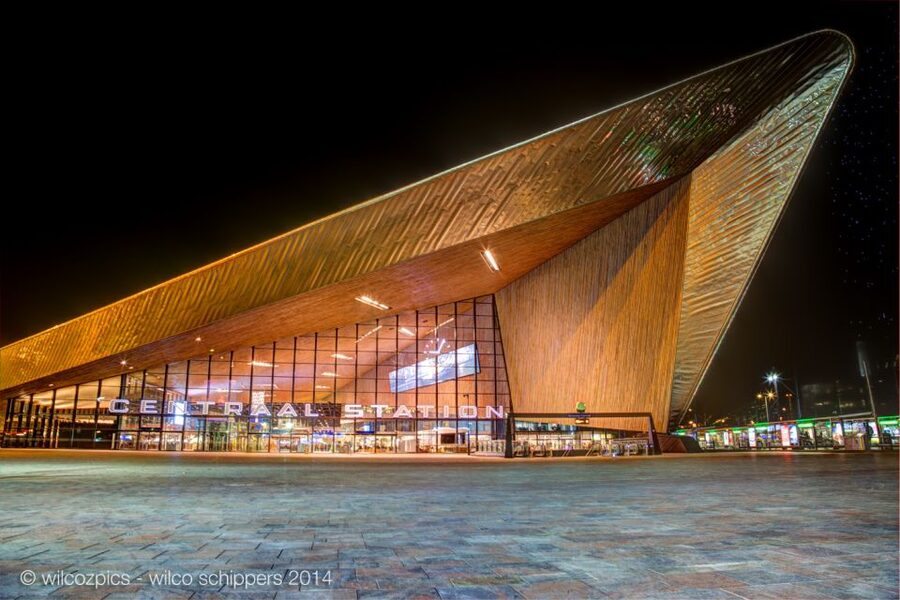
The meeting point is at Rotterdam Central Station, although the exact place can vary with the option you book. That makes it important to check your confirmation rather than simply waiting anywhere in the station.
Beginning here is smart. The station is not just a transport stop. It introduces you to Rotterdam’s taste for large, modern design before the walk moves through the rest of the center. You get your bearings quickly, then set off with a guide who can explain how the city changed after the Second World War.
I like this start because Rotterdam can feel less immediately familiar than Amsterdam or Delft. Its streets and buildings do not follow one neat old-city pattern. A local guide helps you understand what you are seeing instead of leaving you to treat every unusual building as a separate curiosity.
The tour is conducted in English, Dutch, or German. That choice matters because the walk depends on explanations, questions, and conversation. A guide who can speak comfortably with your group can make the difference between simply looking at buildings and understanding why they are there.
More Walking Tours in Rotterdam
- Rotterdam: Architectural Highlights Guided Walking Tour
★ 4.8 · 215 reviews - Rotterdam Walk: Hilights, Gems, Architecture & WWII | 2 or 3hrs
★ 5.0 · 149 reviews - Rotterdam: Highlights & Gems Walking Tour with Dutch Local
★ 5.0 · 133 reviews
Why Rotterdam has so much modern architecture
The story of Rotterdam’s architecture begins with the World War II bombing. The destruction reshaped the center, leaving the city with room to rebuild in a very different way. Your guide explains what happened and why Rotterdam now has such a strong collection of modern buildings.
This context is one of the best reasons to take the walk. Without it, the city can seem like a collection of ambitious projects placed side by side. With it, the contrast between older surviving buildings and new construction becomes easier to read.
The route also brings up the city’s harbor and its role in Rotterdam’s identity. The experience is not only about design. It connects architecture with trade, rebuilding, local life, and the way people use the center today.
I would listen closely during this section, especially if you are interested in city planning. Rotterdam is a useful place to see how a city responds to destruction and then chooses a modern direction instead of trying to recreate everything exactly as it was.
Town Hall, St. Lawrence Church, and the first high-rise
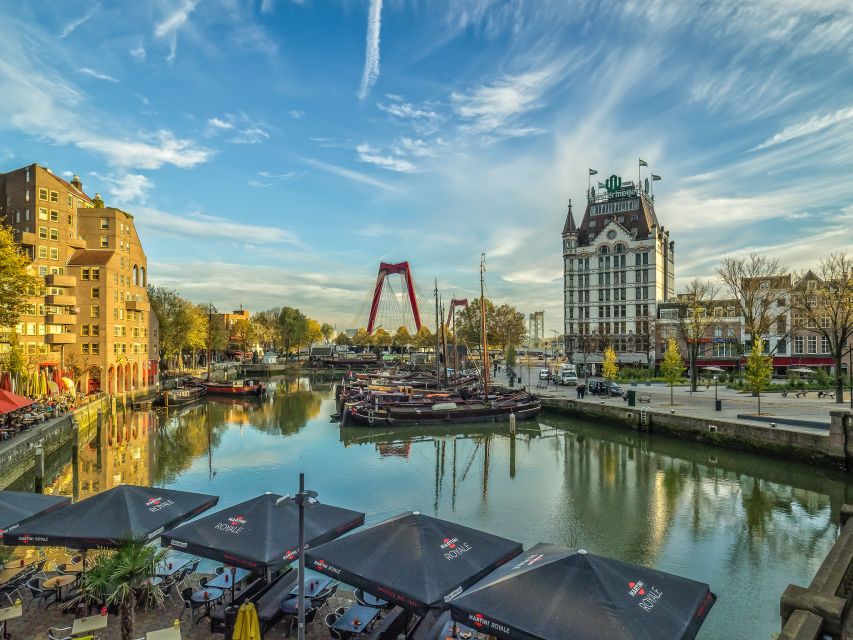
The walk includes several older or historically important sights, including Rotterdam’s Town Hall and St. Lawrence Church. These stops give the tour a needed counterpoint to the glass, steel, and concrete that dominate much of the city center.
St. Lawrence Church is particularly useful in the story of Rotterdam because it represents the older city that survived the wartime damage. Seeing it alongside newer buildings helps you notice the layers of Rotterdam rather than assuming the city is entirely modern.
The tour also points out Europe’s first high-rise building. This detail helps explain that Rotterdam’s interest in vertical construction is not new. The city has a long connection with ambitious building projects, even if today’s structures are more experimental and visually dramatic.
You should think of this part as a guided reading of the city. The guide is not just naming buildings. The aim is to show you how the older center, wartime damage, postwar planning, and current architecture fit together.
The Timmerhuis and Rotterdam’s bold building style
The Timmerhuis, designed by the internationally known architecture firm OMA, is another important stop. Its design gives you a direct example of Rotterdam’s willingness to try forms that would look out of place in a more traditional Dutch city.
A guide adds value here because modern buildings can be hard to understand from the outside. You might notice the shape, materials, or scale, but miss the ideas behind the design. The explanation can turn a quick photo stop into a better lesson in how Rotterdam thinks about work, housing, and public space.
The tour does not promise an interior visit, so you should expect to admire the building from the route rather than spend a long time inside. That is typical of a two-hour orientation walk. You see a lot, but each stop remains fairly brief.
If you are mainly interested in architecture, this part may be one of the strongest sections. If you prefer museums or historic interiors, you may find the pace and outdoor focus less satisfying.
A different kind of day out entirely:
- Rotterdam: Harbor Sightseeing Cruise
★ 4.3 · 7,599 reviews - Rotterdam: 1-Hour Sightseeing Splash Tour
★ 4.5 · 3,299 reviews - Rotterdam: Rotterdam Zoo Blijdorp Entry Ticket
★ 4.6 · 2,754 reviews - Rotterdam: Euromast Lookout Tower Ticket
★ 4.4 · 2,549 reviews
The Markthal, where design meets daily life
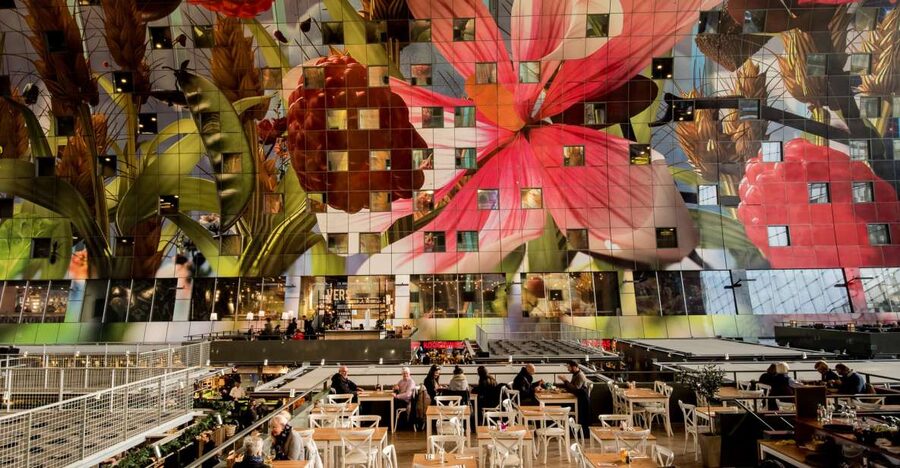
The Markthal is one of the tour’s headline stops, and it gives you a change of mood. Instead of looking only at offices, bridges, and public buildings, you see a place tied directly to food and everyday activity.
The covered market is known for its striking design, and the guide explains why it has become such a recognizable part of Rotterdam. At the same time, the useful thing about stopping here is that you can watch the city function. People shop, eat, meet, and pass through the building as part of normal life.
Food and drinks are not included, so budget separately if you want to buy something during or after the tour. The walk is not presented as a food tour, and you should not expect a meal or a series of tastings. Still, the Markthal can help you decide where you might return later.
I like this stop because it keeps the experience from becoming a march between famous buildings. You get a look at how Rotterdam’s design affects ordinary routines. The market is a sight, but it is also a working public place.
The Cube Houses and a lesson in unusual design
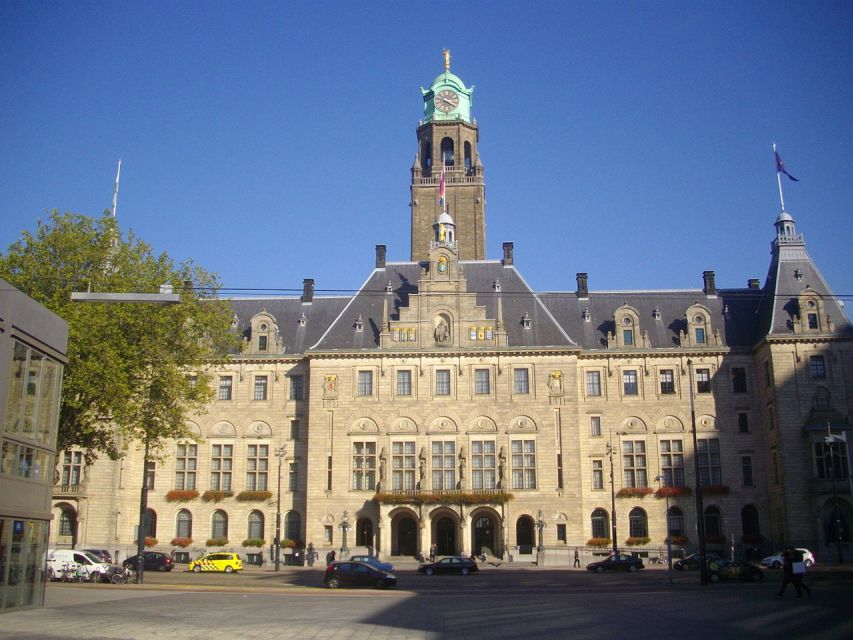
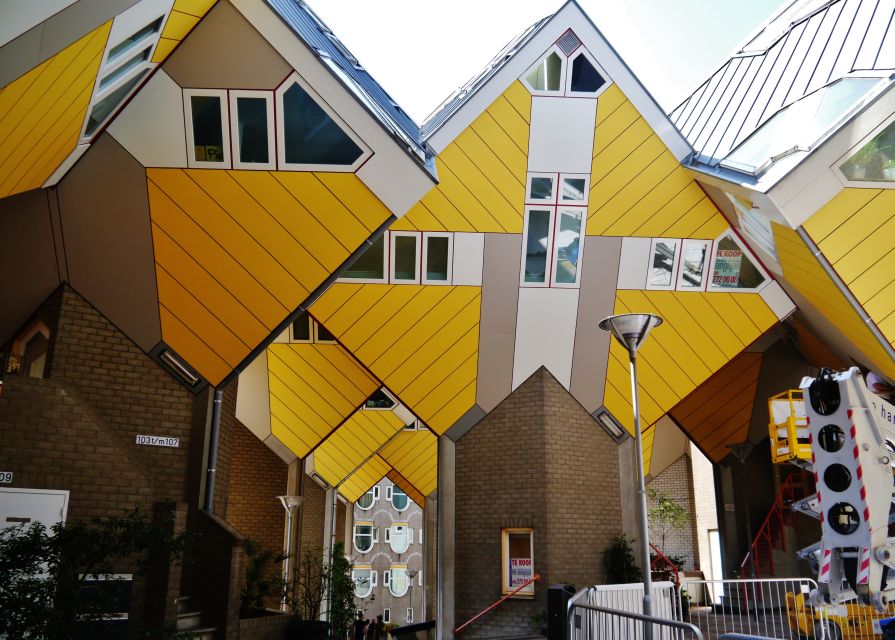
The Cube Houses are likely to be one of the most memorable stops. Their tilted forms make them instantly recognizable, and they show Rotterdam’s interest in rethinking what a home can look like.
A guide can help you notice the practical question behind the visual trick: how do people actually live in such a structure? Even if the tour does not include a special interior visit, the outside view invites that question and gives you a better understanding of the project.
This is also a good place to ask questions. The tour encourages conversation, and the Cube Houses naturally prompt practical curiosity about rooms, windows, space, and daily use. If you are walking with a small group or booking privately, you may have more room to pursue those questions.
Do not expect the Cube Houses to represent all of Rotterdam. They are an unusual project, not a complete picture of the city. Their value on this route is that they show one clear example of the playful and experimental side of local architecture.
The Erasmus Bridge and the wider city view
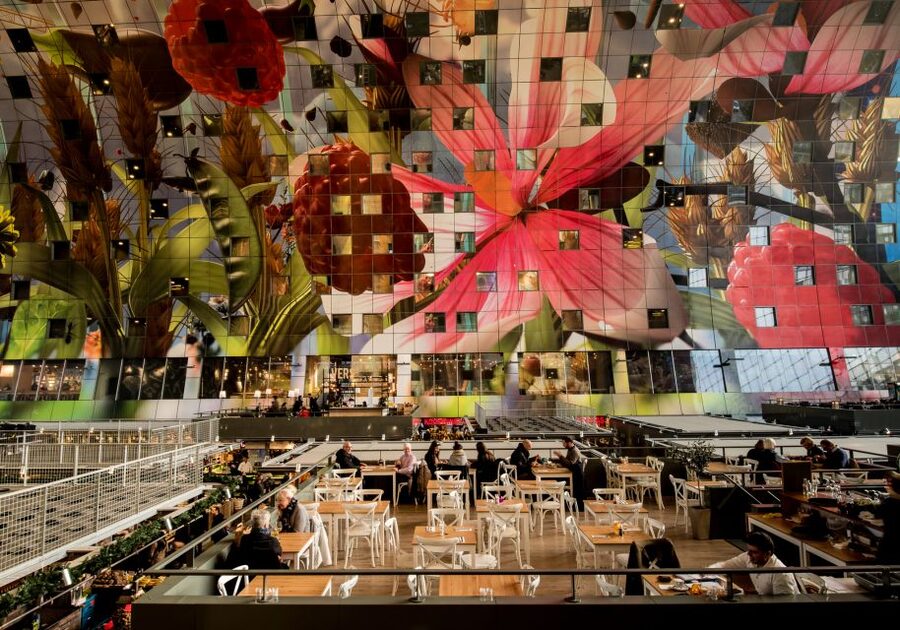
The route includes the Erasmus Bridge, one of Rotterdam’s best-known structures. The bridge gives the tour a larger view of the city and its connection to the water and harbor.
Because the activity lasts only two hours, the amount of time spent at the bridge may be limited. You should see it as part of the walking route rather than as a dedicated bridge photography session. If you want long pauses for pictures, plan to return on your own.
Even a short stop is useful. The bridge helps connect the central architecture with Rotterdam’s wider waterfront identity. It also shows how the city’s modern style continues beyond the central streets.
The itinerary includes beautiful shopping streets as well. This section lets you see the modern Rotterdam lifestyle in a less formal setting. Instead of only viewing buildings as works of architecture, you watch how people move through shops, streets, and public spaces.
What the guides add to the walk
The strongest praise for this experience centers on the guides. Susan has been singled out for explaining buildings, history, culture, and food in a way that brought the city to life. Edwin has received praise for answering questions, explaining Rotterdam and the Netherlands, and pointing out details that are easy to miss.
Michel brings another useful approach. His personal stories about Rotterdam made the walk feel more connected to the city, and a small group gave the experience a very individual feel. John has been appreciated for knowing efficient ways to walk through the city while covering the requested sights.
These details tell you what kind of tour this is at its best. It is not a recorded audio route or a fixed list of facts. The quality depends partly on the guide’s ability to respond to your interests and make the stops feel connected.
Guide quality can naturally vary from one departure to another. Still, the feedback points to a consistent strength: the tour works well when you ask questions. Before starting, think of two or three things you want to understand, such as the bombing, the harbor, local food, or the purpose of the Cube Houses.
Is two hours long enough?
For a first look, yes. You can cover the station, central historic sights, Timmerhuis, Markthal, Cube Houses, shopping streets, and the Erasmus Bridge in a compact route. The walk gives you a map in your head and helps you choose where to spend more time afterward.
For detailed sightseeing, no. You should not expect long visits at each building, extended shopping time, or a full treatment of Rotterdam’s history. The tour is designed to introduce the city, not replace several days of exploring.
One German-language review described the length as exactly right for a general overview, while also suggesting a longer tour for people who want more information. That is a fair way to judge it. Choose the two-hour option if you want a focused start. Choose more time if architecture or history is the main reason for your visit.
Wear comfortable shoes and keep your attention on the route. This is a walking tour through city streets, not a coach ride with a panoramic view. You will get the most from it if you are ready to keep moving and pause when the guide has something important to show you.
What you receive for $25
At $25 per person, the tour offers good value if you want local interpretation at the main sights. You are paying for two hours with a live guide, not for entrance tickets or food. The price is especially reasonable for a first afternoon in Rotterdam, when you want to understand the center before exploring alone.
The value rises if you use the guide well. Ask about places to eat, buildings you want to revisit, and the best way to connect the central area with the harbor. The guide may save you time by showing how the sights relate to one another.
Food and drinks are extra. There is no indication that entry to attractions is included, so plan on viewing the named sights from the walking route unless your booking option says otherwise. The Markthal is the obvious place to return for food after the tour.
A private group is available. The cost and exact arrangement may depend on the option you select, but the format can suit families, couples, or small groups that want a more personal pace. Several small-group experiences have felt almost private when attendance was low, which can make it easier to ask questions.
You can cancel up to 24 hours before the activity for a full refund, and the reserve-now, pay-later option keeps you from paying at the time of booking. Check the meeting point attached to your selected option, since it can vary.
Who should book this Rotterdam walk?
I would recommend it to a first-time visitor who wants a clear introduction without giving up an entire morning or afternoon. It also suits anyone curious about architecture, especially if you want to understand why Rotterdam looks so different from many other Dutch cities.
The tour can work well for a short city break, a stop before a longer harbor visit, or the first day of a Rotterdam stay. It gives you useful orientation and several ideas for independent exploring afterward.
Families may appreciate the variety. The Cube Houses, Markthal, bridge, shopping streets, and dramatic station provide changing subjects, rather than one long lecture about a single period. Still, the walking pace and two-hour length may be less suitable for anyone who needs frequent long breaks.
I would be more cautious if you have already spent considerable time in central Rotterdam or want detailed access to buildings. The tour is strongest as an overview. It is less suitable as a specialist architecture course or a food-focused outing.
Final verdict: a useful first look at Rotterdam
Book this tour if you want Rotterdam to make sense quickly. The combination of wartime history, older landmarks, modern architecture, the Markthal, Cube Houses, and Erasmus Bridge gives you a well-shaped introduction for $25.
I especially like the chance to learn from guides who bring personal stories and answer questions, rather than simply point out buildings. Pick the two-hour walk for orientation and context. If you want long stops, extensive history, or more time for architecture, choose a longer option if available.
The best plan is to take this walk early in your visit, then return to the places that catch your eye. That way, the tour does what a good city walk should do: it helps you see Rotterdam with sharper eyes.
FAQ
How long is the Rotterdam walking tour?
The tour lasts two hours.
Where does the tour begin?
It meets at Rotterdam Central Station, although the exact meeting point may vary depending on the option booked.
Which languages are available?
The live tour guide can conduct the experience in English, Dutch, or German.
What sights are included?
The route includes Rotterdam Central Station, Town Hall, St. Lawrence Church, Europe’s first high-rise building, the Timmerhuis, Markthal, Cube Houses, shopping streets, and the Erasmus Bridge.
Are food and drinks included?
No. Food and drinks are not included in the tour price.
Can I book a private group?
Yes. A private group option is available.
What is the cancellation policy?
You can cancel up to 24 hours in advance for a full refund. You can also reserve now and pay later, depending on the booking option.
Just added in Rotterdam
- e-Scavenger hunt Dordrecht: Explore the city at your own pace★ 4.5 · 24 reviews
- Escape the City – Interactive city walk in Dordrecht★ 5.0 · 1 review
- Discover the best spots in Dordrecht with Outside Escape★ 4.5 · 11 reviews
- Historical Dordrecht: Private Tour with Local Guide★ 5.0 · 1 review
- The Netherlands: WW2 Private Day Trip★ 5.0 · 4 reviews
- Rotterdam: Guided Food Tour★ 4.4 · 16 reviews
- Rotterdam: Trompenburg Botanical Gardens Entry Ticket★ 4.1 · 77 reviews
- Rotterdam: UNESCO Van Nelle Factory Guided Tour★ 4.5 · 94 reviews
Walking Tours, compared.
Anne Frank’s Story – Guided Walking Tour through Amsterdam
Read our review →
Life of Anne Frank and World War II Walking Tour
Read our review →
Absolutely Amsterdam – the Essential Introductory Walking Tour
Read our review →
Anne Frank Walking Tour – Guided in EN/DE/IT/ES
Read our review →
Anne Frank Walking Tour Amsterdam Including Jewish Cultural Quarter
Read our review →Browse the lists this tour appears in