
Review · WALKING TOURS
Rotterdam: Art and Architecture Highlights Walking Tour
Rotterdam turns rebuilding into an art form. This 2.5-hour walking tour links the city’s boldest buildings, public art, and postwar story, beginning at Central Station and ending inside the spectacular Markthal. I like the clear route through major sights, and I like that the guide connects architecture with the bombing and rebuilding of Rotterdam rather than treating each building as an isolated photo stop. The main consideration is pace: you will cover a lot on foot, often outdoors, with no food, drinks, transportation, or entry tickets included.
The tour also gives you a useful first look at the Museum Quarter, Witte de Wit street, the Cube Houses, and several large art works. Guide Diana received especially strong praise for explaining Rotterdam’s postwar planning and architecture in a clear, visual way. If you want a slow museum visit or detailed access inside every building, this is not that tour. It is a lively city walk and a strong orientation to modern Rotterdam.
In This Review
- Five Things to Know Before You Go
- Starting Under Rotterdam Central Station’s Clock
- The Calypso Building and Theater Square
- The Museum Quarter: Kunsthal, New Institute, and Boijmans Depot
- Public Art and the Memory of the Bombed City
- Witte de Wit, Rotterdam’s Artsy Street
- The Cube Houses: A Famous Rotterdam Photo Stop
- Markthal: An Eye-Catching Finish
- What $65 Buys You
- Walking Conditions and Practical Planning
- Who Should Book This Walk?
- Should You Book the Rotterdam Architecture Tour?
- FAQ
- Where does the tour meet?
- How long does the walking tour last?
- What language is the tour in?
- Does the price include museum entry?
- Are food and drinks included?
- Is transportation included?
- What should I bring?
- Is the tour wheelchair accessible?
- Can I cancel the booking?
Five Things to Know Before You Go
- The route begins under Central Station’s clock: Meet beside Rotterdam Central Station’s main entrance, making the start easy to find.
- You see architecture and public art together: The tour links the Kunsthal, New Institute, Boijmans Depot, street art, and outdoor works by artists including Henry Moore, Rodin, Picasso, and Joep van Lieshout.
- The walk ends at Markthal: You finish where architecture, food stalls, and a huge interior artwork come together, though food is not included.
- The postwar story gives the buildings meaning: The route includes art connected to the bombed city and explains how Rotterdam developed its modern look.
- Plan for weather and walking: The tour runs rain or shine, lasts 2.5 hours, and calls for comfortable shoes and seasonal clothing.
- You can book a private group: The standard experience is guided in English, with a private group option available.
Starting Under Rotterdam Central Station’s Clock
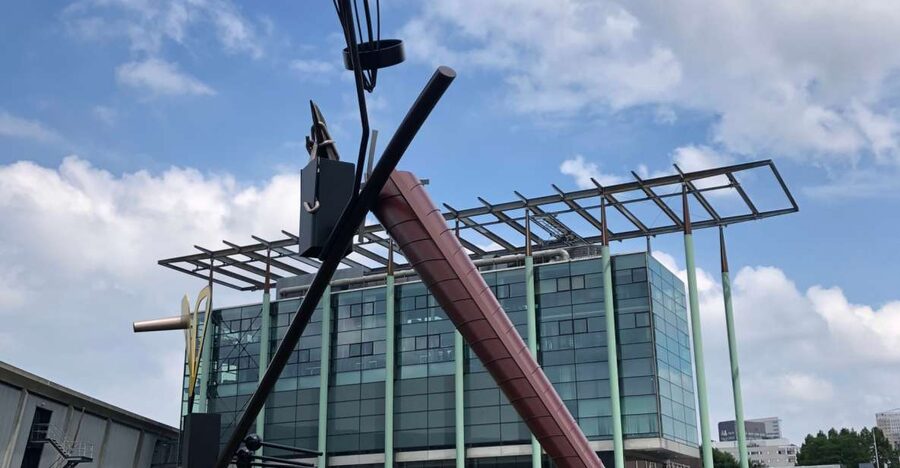
Your meeting point is beside the main entrance of Rotterdam Central Station, under the station’s clock. That is a practical place to begin because the station is one of the city’s major architectural statements and a useful landmark for anyone arriving by train.
Central Station sets the tone immediately. Rotterdam is not a city of one old center filled with traditional buildings. Its identity comes from bold rebuilding, sharp angles, new materials, and a willingness to try something different. Starting here lets you see that attitude before the walking route moves into the central streets.
The station is also a good place to get oriented. If you are arriving in Rotterdam for the first time, you can meet the guide without searching through a smaller side street. I would still arrive a little early, especially if you are coming by train and need to find the main entrance.
The tour is conducted in English. One highly praised guide, Diana, was noted for explaining the city’s postwar planning and architectural development from this starting point. That detail matters because Rotterdam’s buildings make more sense once you know why the city looks so different from older Dutch centers.
More Walking Tours in Rotterdam
- Rotterdam: Architectural Highlights Guided Walking Tour
★ 4.8 · 215 reviews - Rotterdam Walk: Hilights, Gems, Architecture & WWII | 2 or 3hrs
★ 5.0 · 149 reviews - Rotterdam: Highlights & Gems Walking Tour with Dutch Local
★ 5.0 · 133 reviews
The Calypso Building and Theater Square
From the station, the route follows several central architecture icons, including the Calypso building and Theater Square. These stops show Rotterdam’s taste for large-scale modern design in everyday city spaces.
The Calypso building is part of the city’s contemporary central fabric. Theater Square adds another layer, placing architecture in a setting shaped by performance and public life. You are not simply looking at buildings from a distance. The guide helps you consider how these structures shape the streets around them.
This section is useful if you enjoy cities as works in progress. Rotterdam’s architecture can look startling at first, especially beside the more familiar brick-and-canal image many people associate with the Netherlands. The tour gives you a way to read those contrasts instead of deciding too quickly that the city is either beautiful or strange.
You should expect an outdoor explanation rather than a visit inside every building. Entry tickets are not included, and the value here comes from the guide’s interpretation, the route, and the chance to see several landmarks in one connected walk.
The Museum Quarter: Kunsthal, New Institute, and Boijmans Depot
The tour then presents Rotterdam’s Museum Quarter, including the Kunsthal and the New Institute. These institutions help explain why the city is important not only for architecture, but also for modern art, design, and experimental culture.
The Kunsthal is one of the area’s key buildings, while the New Institute adds a focus on architecture, design, and digital culture. Together, they show how Rotterdam uses museums as part of its public identity. You get an outside view and a broader explanation of the district rather than a full museum tour.
The Boijmans Depot is the newest major visual stop on this portion of the walk. It is described as the first accessible museum depot in the world, and its mirrored exterior gives it an immediate presence. A museum depot normally stores art away from public view. Here, the idea itself becomes part of the attraction.
You should keep your expectations clear. The tour includes the depot as part of the route, but it does not include an entry ticket. If you want to go inside, you would need to arrange that separately. The walking tour still gives you a useful introduction to why the building matters and how it changes the Museum Quarter.
This part is especially valuable for visitors who want more than a checklist of famous structures. The guide links the buildings to Rotterdam’s modern artistic character, helping you see the district as a connected cultural zone.
Public Art and the Memory of the Bombed City
Rotterdam’s modern appearance did not happen by accident. The walking route includes a series of art works dedicated to the drama of the bombarded city, giving the city’s rebuilding a human and emotional layer.
That context is one of the strongest reasons to choose this tour. Without it, the futuristic buildings can look like a collection of unrelated design experiments. With it, you begin to understand the choices made after destruction and the way public art keeps memory in the city.
The route also includes outdoor works connected with major artists such as Henry Moore, Rodin, Picasso, and Joep van Lieshout. Seeing art in streets and public squares changes the experience from a standard museum visit. You encounter the works as part of daily urban life, with buildings, traffic, and pedestrians around them.
I like this mix because it gives you several ways to see Rotterdam. You look up at architecture, pause for sculpture, notice street art, and hear about the city’s difficult past. The result is more useful than a tour focused only on façades.
The tradeoff is that outdoor art stops depend on the guide’s explanation and the conditions on the day. You will not receive the controlled setting or long viewing time of a gallery visit. If a particular sculpture matters to you, make a note of it and return later at your own pace.
A different kind of day out entirely:
- Rotterdam: Harbor Sightseeing Cruise
★ 4.3 · 7,599 reviews - Rotterdam: 1-Hour Sightseeing Splash Tour
★ 4.5 · 3,299 reviews - Rotterdam: Rotterdam Zoo Blijdorp Entry Ticket
★ 4.6 · 2,754 reviews - Rotterdam: Euromast Lookout Tower Ticket
★ 4.4 · 2,549 reviews
Witte de Wit, Rotterdam’s Artsy Street
The route continues to Witte de Wit, presented as Rotterdam’s most vivid and artsy street. This is where the city’s younger, more informal cultural side comes forward.
The street is known here for its avant-garde art scene and fresh mix of street art. That gives the tour a welcome change of mood after the formal museum buildings and memorial works. You move from major institutions into a street where art is part of the atmosphere rather than contained behind museum walls.
I would pay attention to the contrast. Rotterdam’s cultural life is not limited to large buildings with famous names. The street gives you a sense of how art appears in the city’s everyday spaces, and it is a good place to understand why Rotterdam feels experimental.
The description does not promise time for dining or shopping, and food and drinks are not included. If you want to stop for a meal or spend time in a venue along the street, plan that separately. The tour’s job here is to show you the character of the area and keep the walking route moving.
For first-time visitors, this stop can be particularly helpful. It gives you an area to revisit after the tour if you want a slower look at the street’s art, cafés, and venues.
The Cube Houses: A Famous Rotterdam Photo Stop
The futuristic Cube Houses are one of the tour’s most recognizable stops. Their tilted forms make them instantly different from ordinary residential blocks, and they explain why Rotterdam has such a strong reputation for unusual architecture.
The complex is more than a quick photograph. It raises a practical question: how do people live in buildings shaped more like abstract sculptures than conventional homes? The guide can place the houses within Rotterdam’s wider habit of testing new ideas in the built environment.
This is a good point in the route to consider the difference between architecture made to impress and architecture made to function. The Cube Houses are famous because they look striking, but their design also invites you to think about rooms, windows, streets, and private space in a new way.
The available information does not state that you enter a Cube House, so plan to view the complex as part of the walking route. Entry tickets are not included. If you want an interior visit, check separately before booking.
The Cube Houses also lead naturally toward the final stop, Markthal. Both places use strong visual design, but they serve different purposes. The Cube Houses create a residential experiment, while Markthal combines food, retail, public space, and art under one large roof.
Markthal: An Eye-Catching Finish
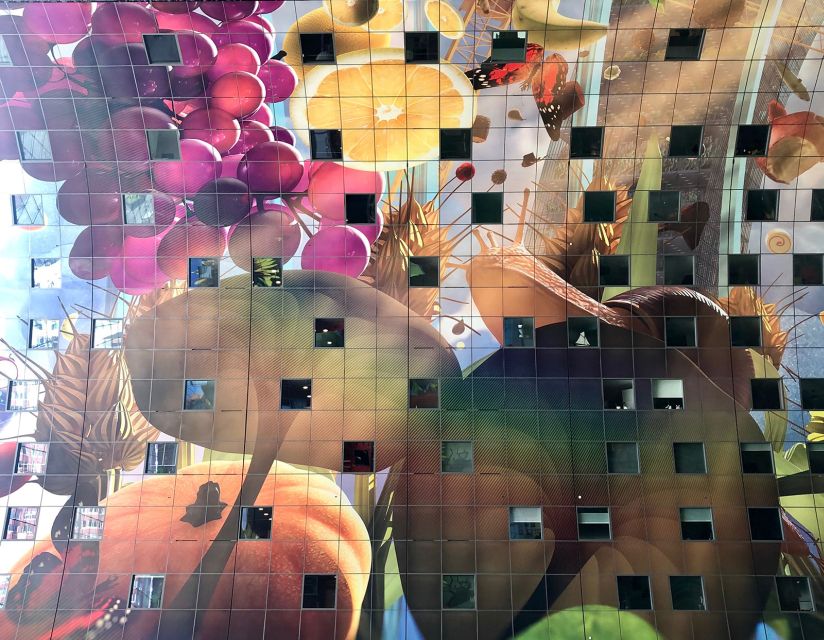
The tour ends at Markthal, where architecture and art meet in a spectacular way. The building’s large interior artwork makes the final stop feel more like an event than a simple endpoint.
Markthal is also practical. It is a place connected with food, so you can continue your visit after the guide finishes. Keep in mind that food and drinks are not part of the tour price. You can browse or eat afterward, but you pay for anything you choose to buy.
Ending here works well because the building brings together several themes from the walk. It is bold, public, commercial, and artistic. Rotterdam’s modern design is not presented only in museums or monuments. It also appears in places where people shop, meet, and eat.
I would use the final stop as a chance to review the route in your mind. You have moved from the station to theaters, museums, public art, an artsy street, unusual homes, and a market hall. The city’s architecture begins to feel less like a series of surprises and more like a consistent choice.
What $65 Buys You
At $65 per person, this is not the cheapest way to walk around Rotterdam. The value depends on how much you want a guide to connect the sights and explain the city’s postwar development.
You are paying for a live English-language guide and a focused 2.5-hour route through several major areas. You do not pay extra for transportation because none is used, and you do not need to arrange separate transfers between the stops. That keeps the experience simple, but it also means the tour requires steady walking.
The price makes more sense if you are interested in architecture, public art, urban planning, or modern European cities. It is less compelling if you mainly want interior museum visits, a food tour, or a relaxed stroll with long breaks.
The strong scores attached to the experience reflect its main strength: clear information during a well-planned walk. One French participant described it as a good first visit and a way to gain the right perspective on Rotterdam’s modern city, architecture, and relationship with art. That is a useful way to judge the value. This tour gives you context you might miss while moving between sights on your own.
Walking Conditions and Practical Planning
The tour lasts 2.5 hours and takes place rain or shine. Wear comfortable shoes and clothing suited to the season. Rotterdam can feel exposed in open urban areas, so a rain layer is a sensible choice even if the forecast looks uncertain.
No transportation is included. You walk between the stops, which is part of the point. You see how the buildings relate to one another rather than viewing them through a vehicle window.
Hotel pickup and drop-off are not included. You need to make your own way to Central Station and arrange your return from Markthal or continue sightseeing from there.
Oversize luggage is not allowed, so leave large bags at your accommodation or use an appropriate storage option before arriving. Unaccompanied minors are not permitted.
The tour is wheelchair accessible, but it is not suitable for people with visual or hearing impairments according to the stated restrictions. A private group is available if you prefer a more personal setting or want to keep the walk within your own party.
The cancellation policy is flexible: you can cancel up to 24 hours ahead for a full refund, and you can reserve now and pay later. Those terms help if your Rotterdam plans may change.
Who Should Book This Walk?
I would recommend this tour to a first-time visitor who wants a clear introduction to Rotterdam’s modern identity. It also suits anyone who enjoys architecture but wants the story behind the buildings, not just a list of names and photo stops.
Art lovers will appreciate the open-air collection and the links to Henry Moore, Rodin, Picasso, and Joep van Lieshout. Visitors interested in postwar Europe will find the memorial art and rebuilding story especially useful.
This is also a good choice if you have limited time. In 2.5 hours, you cover several central districts and finish at a place where you can continue eating or sightseeing.
I would choose something else if your priority is a long museum visit, a food-focused outing, or an easy route with minimal walking. The tour is also not suitable for unaccompanied minors, or for people with visual or hearing impairments under the stated conditions.
Should You Book the Rotterdam Architecture Tour?
Book it if you want Rotterdam to make sense quickly. The route brings together Central Station, the Calypso building, Theater Square, the Museum Quarter, public art, Witte de Wit, the Cube Houses, and Markthal without requiring you to plan the sequence yourself.
The best reason to go is the connection between architecture, art, and the city’s wartime destruction. That story gives the modern buildings a human setting. At $65, the tour is a fair choice for visitors who value interpretation and a strong overview, though you should budget separately for food and any museum entry.
Wear good shoes, arrive at the station’s main entrance, and expect weather rather than shelter. If you want a smart first look at Rotterdam’s boldest ideas, this walk earns its place on your itinerary.
FAQ
Where does the tour meet?
The meeting point is beside the main entrance of Rotterdam Central Station, under the station’s clock.
How long does the walking tour last?
The tour lasts 2.5 hours.
What language is the tour in?
The live tour guide conducts the experience in English.
Does the price include museum entry?
No. Entry tickets are not included.
Are food and drinks included?
No. Food and drinks are not included in the $65 price.
Is transportation included?
No. The experience is a walking tour, and transportation is not included.
What should I bring?
Bring comfortable shoes and clothing suitable for the weather and season.
Is the tour wheelchair accessible?
Yes, the activity is listed as wheelchair accessible. It is not suitable for people with visual or hearing impairments.
Can I cancel the booking?
Yes. You can cancel up to 24 hours in advance for a full refund. Reserve now and pay later is also available.
Just added in Rotterdam
- e-Scavenger hunt Dordrecht: Explore the city at your own pace★ 4.5 · 24 reviews
- Escape the City – Interactive city walk in Dordrecht★ 5.0 · 1 review
- Discover the best spots in Dordrecht with Outside Escape★ 4.5 · 11 reviews
- Historical Dordrecht: Private Tour with Local Guide★ 5.0 · 1 review
- The Netherlands: WW2 Private Day Trip★ 5.0 · 4 reviews
- Rotterdam: Guided Food Tour★ 4.4 · 16 reviews
- Rotterdam: Trompenburg Botanical Gardens Entry Ticket★ 4.1 · 77 reviews
- Rotterdam: UNESCO Van Nelle Factory Guided Tour★ 4.5 · 94 reviews
Walking Tours, compared.
Anne Frank’s Story – Guided Walking Tour through Amsterdam
Read our review →
Life of Anne Frank and World War II Walking Tour
Read our review →
Absolutely Amsterdam – the Essential Introductory Walking Tour
Read our review →
Anne Frank Walking Tour – Guided in EN/DE/IT/ES
Read our review →
Anne Frank Walking Tour Amsterdam Including Jewish Cultural Quarter
Read our review →Browse the lists this tour appears in