
Review · MUSEUMS
Royal Delft: Delftblue Factory and Museum
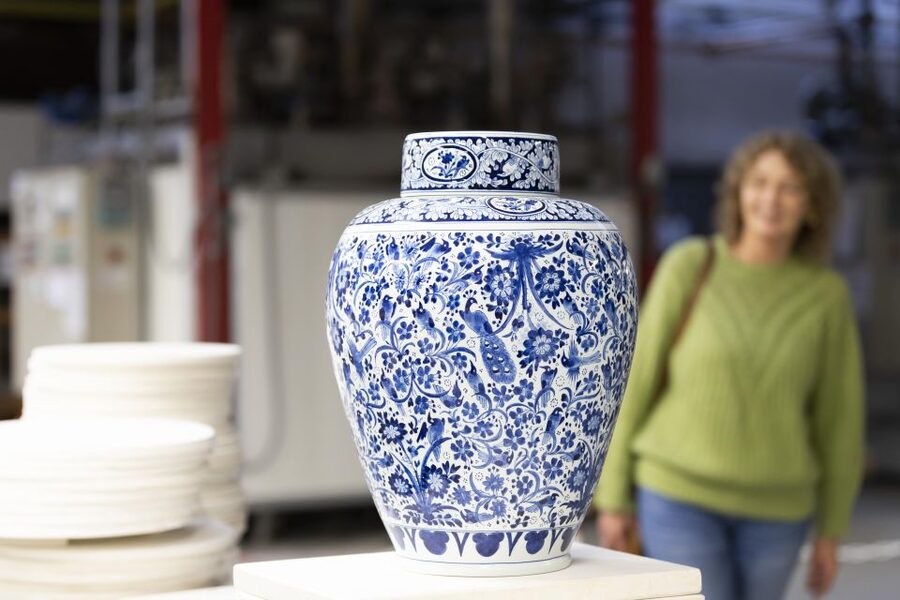
Blue and white pottery comes alive here. Royal Delft combines a working 17th-century factory, a well-presented museum, and a chance to watch craftsmen paint and shape Delft Blue by hand. I especially like the direct view into the production process and the audio guide, which lets you move at your own pace. The main drawback is that the basic visit is self-guided, and some demonstrations may be quiet or lightly staffed.
I also like the beautiful courtyard garden and the option to stop at Brasserie 1653 for coffee, high tea, or lunch. At $21 per person, the visit offers good value if you care about ceramics, Dutch design, or traditional crafts, though the price can feel high if you only want a quick look at pottery.
In This Review
- Key Points to Know Before You Go
- Why Royal Delft Is More Than a Souvenir Shop
- Entering the Historic Factory on Rotterdamseweg
- The Audio Tour Gives You Control
- Seeing How Delft Blue Is Made
- Antique Delftware and Modern Design
- The Craftsmanship Is the Main Reason to Visit
- Brasserie 1653 and the Courtyard Garden
- The Showroom: Beautiful, Useful, and Expensive
- Is $21 Good Value?
- Accessibility, Timing, and Holiday Hours
- Who Should Book Royal Delft?
- Should You Book Royal Delft?
- FAQ
- Where is Royal Delft located?
- How long does the Royal Delft visit take?
- Is an audio guide included?
- Is the visit guided by a person?
- Can I see pottery being made?
- Is Royal Delft wheelchair accessible?
- How do I reach Royal Delft from Delft’s train station?
Key Points to Know Before You Go
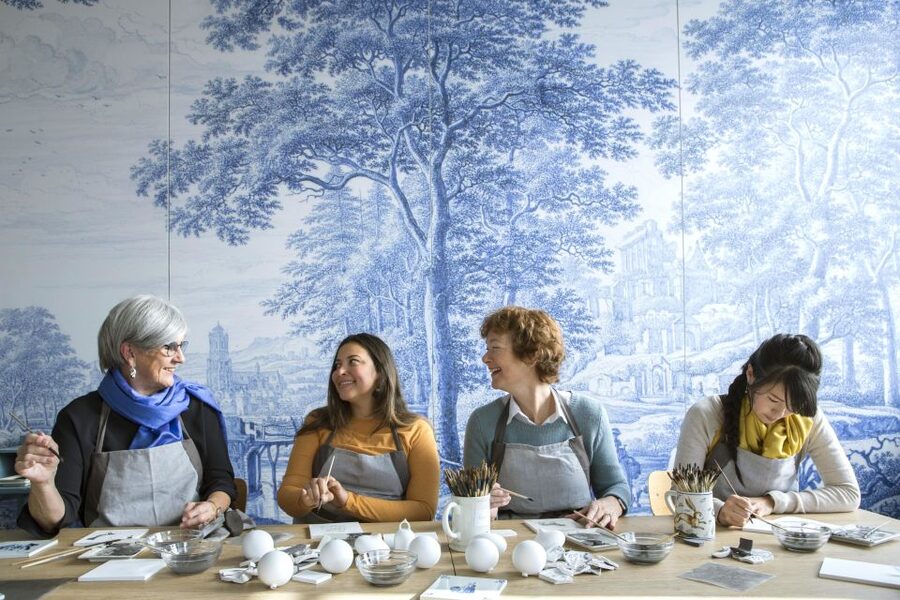
- Watch real Delft Blue production: See clay poured into handmade molds, pieces finished, and artists painting delicate designs by hand.
- Explore a factory founded in 1653: Royal Delft is the last original Delft Blue factory from the 17th century still producing pottery by hand.
- Use the flexible audio tour: The one-hour audio guide is available in English, Dutch, Spanish, Chinese, French, German, Italian, and Japanese.
- Allow time for the courtyard: Brasserie 1653 overlooks a pretty garden and gives you a pleasant place for coffee, tea, or lunch.
- Plan around working hours: Afternoon visits may show fewer craftsmen at work, and some demonstrations may be visual rather than explained live.
- Expect serious prices in the shop: The showroom has souvenirs and fine hand-painted pieces, but authentic Royal Delft pottery can cost far more than ordinary tourist ceramics.
Why Royal Delft Is More Than a Souvenir Shop
Delft Blue is one of those Dutch icons that can seem familiar before you understand how it is made. At Royal Delft, the familiar blue-and-white look becomes a careful process involving clay, molds, brushes, kilns, and many skilled hands.
The factory dates to 1653. That long working tradition gives the visit more weight than a standard display of old plates. You are not only looking at finished objects. You can also see how the objects take shape and why hand-painted Delftware costs more than mass-produced pottery.
The experience lasts about 1.5 hours, including roughly one hour with the audio guide. That makes it easy to fit into a day in Delft, especially if you combine it with the Markt, the historic center, or a canal outing.
I would not treat Royal Delft as a quick gift-shop stop. The best part is seeing the connection between the old pieces in the museum and the modern production happening nearby.
More Museum Tours in Delft
- Delft: Vermeer Centrum Delft Museum Entry Ticket
★ 4.6 · 189 reviews - Royal Delft: Delftblue Factory and Museum Admission Ticket
★ 4.5 · 145 reviews - Vermeer Centrum Delft Museum Admission Ticket
★ 4.0 · 45 reviews
Entering the Historic Factory on Rotterdamseweg
Royal Delft is at Rotterdamseweg 196, just outside Delft’s central sights. Delft train station is about a 15-minute walk away, while the Market Square takes about 20 minutes on foot. Public buses stop nearby, and free parking is available around the building.
You can also reach the factory from town by canal boat or Delft City Shuttle. That option is useful if you have already spent the morning walking Delft’s cobbled streets and want to save your legs for the museum.
From Amsterdam, the train journey takes about 1.5 hours. From The Hague or Rotterdam, the trip is around 30 minutes by train. If you are staying in one of those cities, Royal Delft works well as part of a half-day outing.
The building itself is part of the experience. You are visiting a historic industrial setting rather than a modern exhibition hall. The atmosphere helps explain why the factory feels connected to the craft, not just to the brand.
The Audio Tour Gives You Control
The standard visit includes a one-hour audio tour in eight languages: English, Dutch, Spanish, Chinese, French, German, Italian, and Japanese. You can listen as you move through the museum and factory areas, stopping when something catches your eye.
I like this format for a place with several different layers. You can spend more time on a painting technique or historic object without holding up a group. The audio guide also keeps the pace manageable for families and for anyone who prefers reading or listening rather than following a scheduled guide.
The English audio tour has generally been easy to follow, and the information comes at a comfortable pace. If you would rather read, informational placards are also available. That choice matters because the visit is not built around a live guide explaining every room.
You should set your expectations correctly. This is primarily a self-guided visit, not a continuous live tour. Staff and greeters are present, and there may be introductions or demonstrations, but you should not expect an ongoing conversation with a craftsperson.
One weakness is sound. If a live group is moving through at the same time, its guide may make it harder to hear your device. Using headphones, if permitted with the supplied equipment, or waiting a few minutes before starting a section could make the experience calmer.
Seeing How Delft Blue Is Made
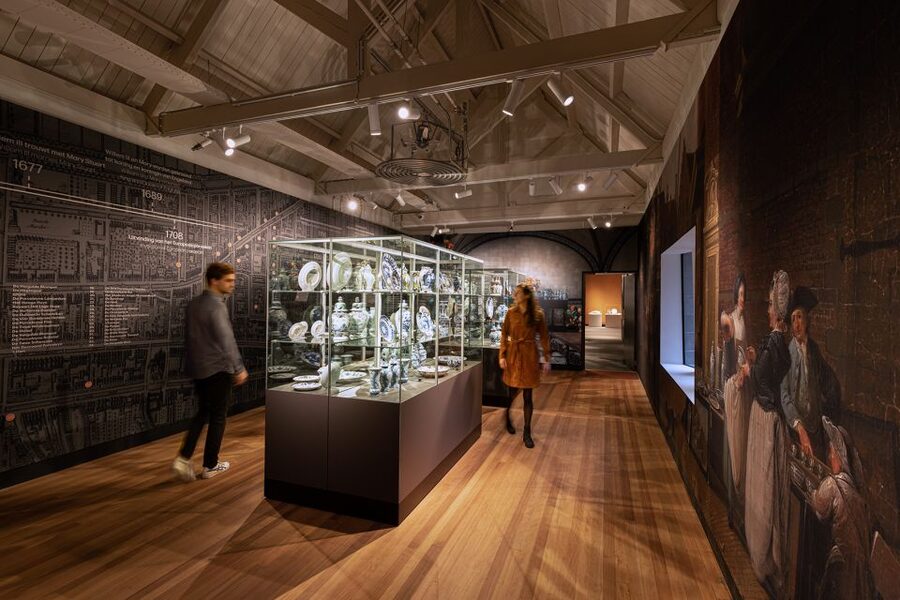
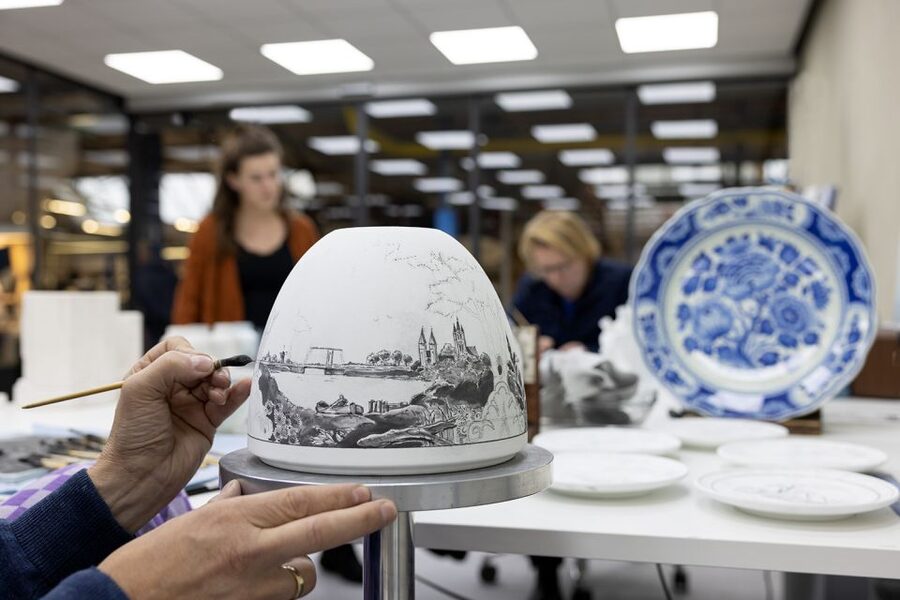
The factory floor is the heart of the visit. Here, you might see clay poured into handmade molds, newly formed pieces being finished, and artists working on the fine painted patterns that give Delft Blue its character.
The painting process is particularly impressive because the design is not simply printed onto the pottery. A painter carefully places lines and details onto white earthenware. The brushwork requires control, and the finished blue color has an unusual twist: the decoration is painted in black ink, which turns blue during firing in the kiln.
That detail helps you look at the pottery differently. A vase may appear simple from a distance, but up close you can see why the maker’s hand matters. A small curve, border, or figure can require patience and a steady technique that machines cannot fully replace.
The factory also shows the less glamorous steps. Pieces may be sanded and prepared before painting. Clay must be shaped, dried, decorated, and fired. The process is a useful reminder that traditional craft includes plenty of repetitive work before the final showpiece reaches the showroom.
How much you see depends on the timing of your visit. Some people have watched several workers and demonstrations, while others have found only one or two artists working. Morning may offer a better chance of seeing more activity, since fewer craftsmen may be at their stations in the afternoon.
Demonstrations can also vary. At times, an artist may simply sit and paint without speaking to the audience. That can still be interesting, especially if you want to observe the technique, but it may disappoint you if you expect a talk or question-and-answer session.
More Delft trips:
- From Amsterdam: Rotterdam, Delft & The Hague Guided Day Tour
★ 4.2 · 1,765 reviews - Delft: Canal Cruise with Guided Commentary
★ 4.4 · 990 reviews - Rotterdam, Delft, the Hague, Madurodam from Amsterdam
★ 4.0 · 793 reviews - Rotterdam, Delft and The Hague Small Group Tour from Amsterdam
★ 4.5 · 599 reviews
Antique Delftware and Modern Design
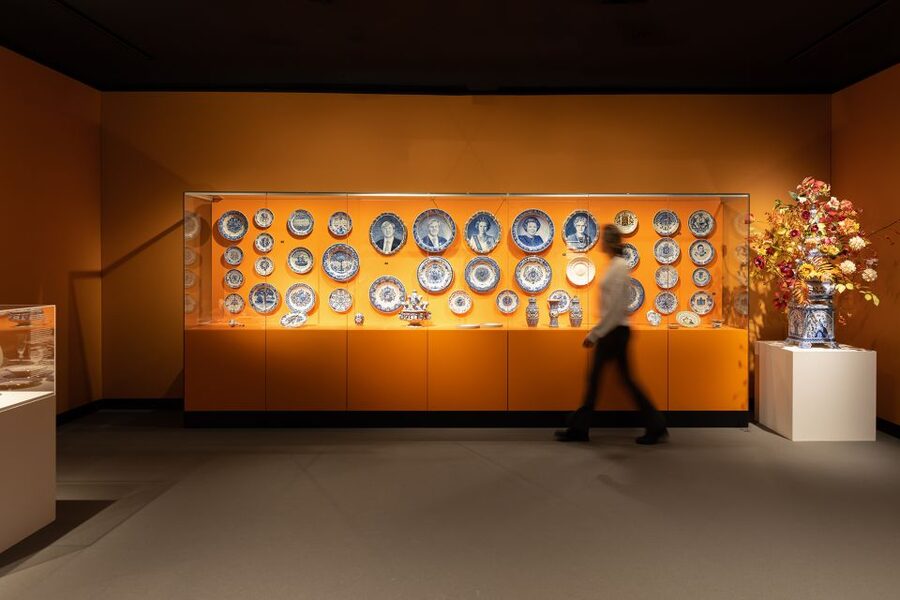
The museum section places Royal Delft’s work in context. You will see antique and modern pieces, allowing you to compare older styles with the company’s current designs.
The collection includes classic Delft Blue forms as well as more modern work. This makes the museum useful for two kinds of visitors: those who want traditional Dutch scenes and those interested in how an old craft continues to change.
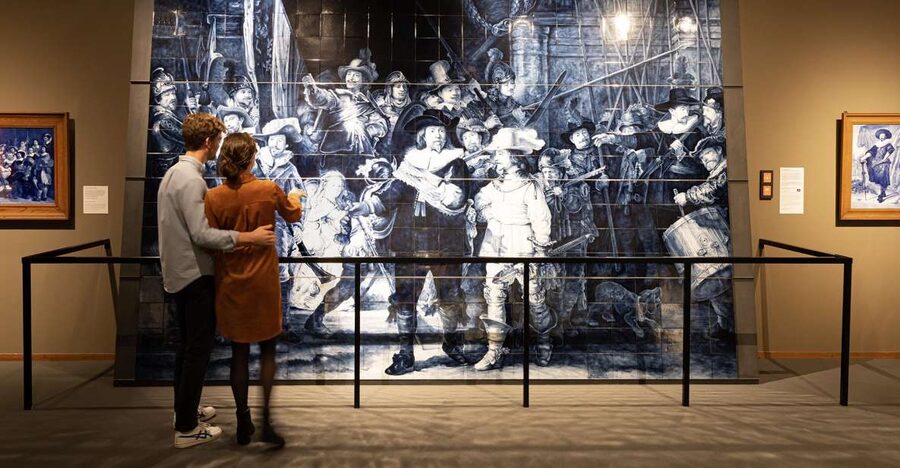
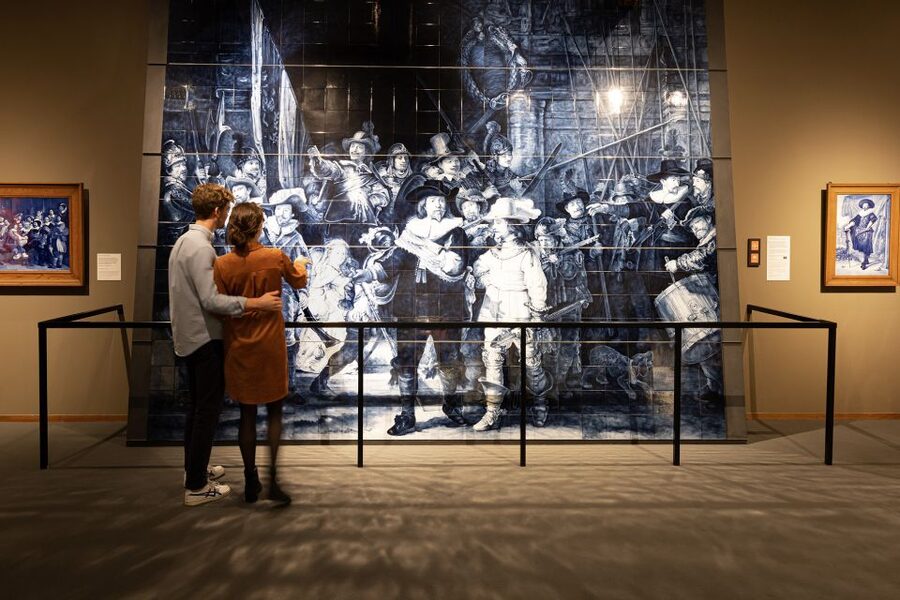
Large pieces can be especially striking. One memorable display is a life-sized tiled version of Rembrandt’s The Night Watch. You should allow time to look closely at works like this rather than simply walking from room to room. The scale and detail show how Delft tiles can function as serious art, not only as kitchen decoration.
The displays are clean and well organized, with clear information placed around the objects. If you enjoy museum labels and historical background, you will likely find enough to keep you occupied. If you prefer interactive exhibits, the museum may feel quieter and less engaging.
That difference is important. Royal Delft is strongest when it lets you see genuine objects and real production. It is less successful if you expect a hands-on technology center or a theatrical factory show.
The Craftsmanship Is the Main Reason to Visit
The most praised part of the experience is the chance to see real craftsmen at work. Watching a painter carefully decorate a vase or plate gives the visit a human focus that display cases alone cannot provide.
I like that the factory does not hide the work behind a polished sales message. You can see the practical stages of making pottery, including shaping and finishing. That makes the final pieces in the showroom easier to appreciate, even if you decide not to buy one.
The skill is most visible in the small details. Delft Blue designs often contain fine lines, repeated borders, and pictorial scenes. From a few steps away, the decoration looks effortless. From close range, you can see the control required.
Still, a factory visit is not guaranteed to look the same every day. Production schedules, working hours, and staff availability affect what you see. If watching painters is your top priority, arrive earlier in the day and ask at the entrance when the active demonstrations are expected.
Brasserie 1653 and the Courtyard Garden

After the museum and factory, Brasserie 1653 overlooks Royal Delft’s courtyard garden. You can stop for coffee, high tea, or lunch, although food and drinks are not included in the admission.
This is a useful addition because the visit can be visually dense. Blue-and-white pottery, historical labels, and production details require attention. A short break in the garden gives you a chance to slow down before continuing into the showroom or heading back into Delft.
The garden also makes Royal Delft feel less like a single-purpose museum. If you are traveling with someone who is not keen on ceramics, the café and outdoor space give that person a more relaxed part of the visit.
I would not build your entire day around the meal unless you have confirmed the current opening times. Think of Brasserie 1653 as a convenient pause, not the main reason to come.
The Showroom: Beautiful, Useful, and Expensive
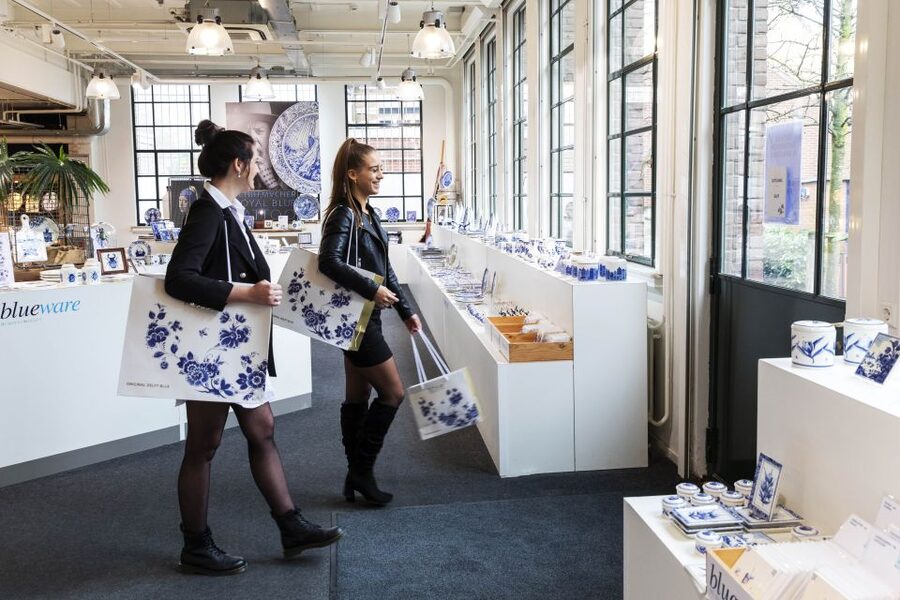
The showroom displays Royal Delft’s classic and modern Delftware, along with souvenirs. This is the point where the craft becomes a shopping decision.
You will find items at several levels, but authentic hand-painted pottery can be expensive. That price reflects the time, skill, materials, and Royal Delft production behind each piece. It is not the same as buying a factory-made blue-and-white souvenir elsewhere in the Netherlands.
The showroom is also practical for international shoppers. Staff can wrap and pack purchases, and shipping items home is available. That matters if you are tempted by a large plate, vase, or tiled work but do not want to carry fragile pottery through several train journeys.
I recommend browsing even if you have no intention of buying. The showroom helps you see the difference between standard souvenir designs and more detailed hand-painted pieces. It also gives you a final look at how the historic style is being used today.
If your budget is limited, set one before entering. The atmosphere can make a beautiful object feel like an essential purchase, and Royal Delft prices can rise quickly.
Is $21 Good Value?
At $21 per person, Royal Delft is fairly priced for a 1.5-hour visit if you value the factory access, museum collection, and audio guide. You are paying for more than a room of old pottery. The admission covers a working production site, the history of a company founded in 1653, and access to the collection.
The value is strongest for:
- Ceramics and design enthusiasts
- Visitors interested in traditional Dutch crafts
- Families who prefer flexible self-guided visits
- People who want a clear indoor activity in Delft
- Shoppers looking for authentic Royal Delft pieces
- Anyone curious about how hand-painted pottery is made
The value is weaker if you only want a quick introduction to Delft Blue or if you need a lively, interactive tour. Some people have found the museum quiet, and the basic ticket does not include a live guided tour, meals, or drinks.
One practical price tip is worth noting: some ticket holders have found that buying at the door can cost less than booking ahead. Check the current price before you commit, especially if you do not need the flexibility of reserving now and paying later.
Free cancellation up to 24 hours in advance adds useful flexibility. You can also reserve without paying immediately, which helps when your Delft plans depend on weather or train schedules.
Accessibility, Timing, and Holiday Hours
The site is wheelchair accessible, and a visit with a wheelchair has been described as comfortable, with friendly staff available to help. That makes Royal Delft a practical choice for visitors who may find Delft’s older streets more demanding.
The factory is closed all day on December 25, December 26, and January 1. On December 24 and December 31, it closes at 4 p.m. Check the day’s starting times before setting out.
The official duration is 1.5 hours, but you may want more time if you plan to shop, stop at the brasserie, or study the museum displays closely. The one-hour audio tour gives you the basic route, while the garden and showroom can extend the visit at an easy pace.
For the best chance of seeing active painters, morning is the safer choice based on how production activity can vary. An afternoon visit may still be worthwhile, but you might see fewer people working on the floor.
Who Should Book Royal Delft?
I would book this experience if you want to understand Delft Blue rather than simply photograph it. The combination of museum objects and a working factory gives you a better sense of the labor behind the familiar blue-and-white style.
It is also a good pick for families because the audio guide lets each person move at a comfortable speed. A young visitor who dislikes traditional museums may respond better to the factory floor, the clay molds, and the sight of an artist painting a real piece.
Art lovers should make time for the larger tiled works, including the life-sized Night Watch. Shoppers will appreciate the packing and shipping service, though they should plan for high prices.
I would be more cautious if you want a live guide who explains each step directly. The audio tour is solid, but it is still self-guided. Demonstrations may show the technique without offering much spoken explanation.
Should You Book Royal Delft?
Yes, if the idea of watching hand-painted pottery being made appeals to you. Royal Delft offers a genuine look at a long-running Dutch craft, not just a polished souvenir display. The museum, factory, garden, and showroom also make the visit feel varied for its modest 1.5-hour length.
Book it in the morning if seeing craftsmen is your priority. Choose the audio tour if you like independence, but do not expect a full live tour. At $21, the experience is good value for anyone interested in Dutch ceramics and design, while casual visitors may find the admission harder to justify if the factory is quiet.
FAQ
Where is Royal Delft located?
Royal Delft is at Rotterdamseweg 196, 2628AR, Delft, in the Netherlands.
How long does the Royal Delft visit take?
The stated duration is 1.5 hours, including a one-hour audio tour.
Is an audio guide included?
Yes. The audio guide is included and is available in Spanish, Chinese, Dutch, English, French, German, Italian, and Japanese.
Is the visit guided by a person?
The standard visit is self-guided with an audio tour. Guided tours are not included in the entry ticket.
Can I see pottery being made?
Yes. The factory route can show craftsmen painting, shaping, sanding, and working with clay molds. The amount of activity varies, and afternoon visits may have fewer workers on the floor.
Is Royal Delft wheelchair accessible?
Yes. The attraction is wheelchair accessible.
How do I reach Royal Delft from Delft’s train station?
The train station is about a 15-minute walk away. Public buses stop near the factory, and a canal boat or Delft City Shuttle can take you into town.
Just added in Delft
- Historical Private Tour of Delft and Leiden including Transfer★ 5.0 · 4 reviews
- Gouda Cheese and Delft Blue: Full-Day Private Tour★ 5.0 · 4 reviews
- Workshop ‘Paint your own Delft Blue Tile!’★ 5.0 · 54 reviews
- Amsterdam: Rotterdam, Delft and The Hague Private Tour★ 4.0 · 23 reviews
- Private transfer from Schiphol airport to The Hague or Delft★ 5.0 · 1 review
- Private tour to Kinderdijk windmills and Delft from Amsterdam★ 5.0 · 6 reviews
- Visit the Girl with the Pearl Earring, The Hague & Delft City★ 5.0 · 63 reviews
- Rotterdam, The Hague, Delft Private Tour from Amsterdam★ 5.0 · 44 reviews
Museums, compared.
Moco Museum Amsterdam Entrance Tickets with Banksy & More
Read our review →


Amsterdam’s Weirdest Museum: Believe It or Not!
Read our review →

Browse the lists this tour appears in