
Review · MUSEUMS
Royal Delft: Delftblue Factory and Museum Admission Ticket
Ceramics come alive when you watch them being made. Royal Delft combines a working Delftware factory, a compact museum, and displays tied to Dutch art and royalty, making it one of the most useful stops for understanding Delft Blue. I especially like the chance to watch a painter work by hand and the freedom to explore without being tied to a group schedule. The main drawback is that the visit is self-guided, so you need to read the panels or use the audio tour to get the full story.
At $20.52 per person, this is a fair buy if you care about Dutch craft, pottery, or museum displays. You can see the main collection in about an hour, but I would allow 90 minutes if you want time for the factory, shop, and cafe. The brasserie costs extra, and signed Royal Delft pieces can be expensive.
In This Review
- Key points to know before you go
- Why Royal Delft is more than a pottery shop
- Entering the museum and starting the audio tour
- Watching the Delft Blue production process
- Vermeer, royal ceramics, and the museum rooms
- The 480-tile Night Watch
- How much time should you allow?
- The brasserie and the showroom
- Price, value, and who will enjoy it
- Planning Royal Delft into your Delft day
- Is Royal Delft worth booking?
- FAQ
- How long does the Royal Delft visit take?
- Is a guide included?
- What are Royal Delft’s opening hours?
- Is food included in the ticket?
- Can children visit Royal Delft?
- Can I cancel the ticket for a refund?
Key points to know before you go

- Royal Delft dates from 1653: It is the only surviving Delftware factory in Delft from the roughly 32 potteries founded there in the 17th century.
- The painting is still done by hand: Watching an artist apply the familiar blue designs is the clearest reason to visit.
- The museum links pottery with Dutch culture: Rooms cover Delft Blue production, Johannes Vermeer, and ceramics made for the Dutch royal family.
- The visit is mostly independent: Your ticket includes a one-hour audio tour in eight possible languages, but not a live guide.
- Plan more than the advertised hour: Many people can see the museum in 60 to 90 minutes, though the cafe and shopping can extend your stay.
- The Night Watch tile panel is a surprise highlight: The famous image is made from 480 tiles.
Why Royal Delft is more than a pottery shop
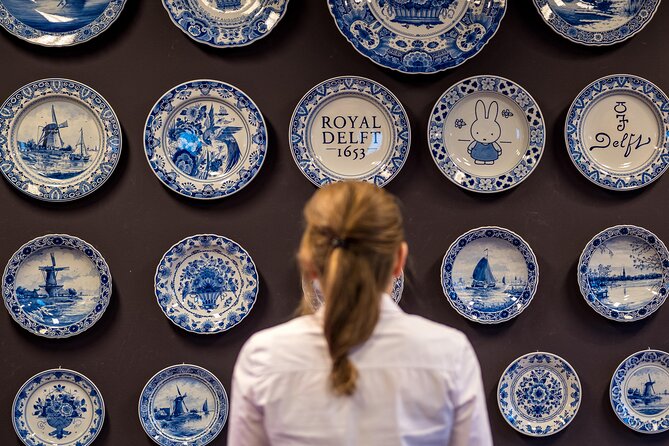
Delft Blue is easy to recognize. The white earthenware, painted with blue scenes, has become one of the visual symbols of the Netherlands. Royal Delft helps explain how that style developed and why it still matters.
The factory was founded in 1653, when Delft had about 32 potteries. Royal Delft is now the last of those original Delftware factories still operating in Delft. That fact gives the visit more weight than a standard museum display. You are not only looking at old objects behind glass. You are also seeing a living production tradition.
The company received the title Royal in 1919, reflecting its relationship with the Dutch royal family. The museum includes ceramics made for the House of Orange over the years, giving you a useful link between decorative pottery and Dutch public life.
I like this kind of museum because it answers practical questions. How does the clay become a finished plate? Why does painted decoration change during firing? What separates a handmade piece from a mass-produced souvenir? Royal Delft addresses these points through displays, screens, examples, and the working areas of the factory.
More Museum Tours in Delft
- Vermeer Centrum Delft Museum Admission Ticket
★ 4.0 · 45 reviews - Royal Delft: Delftblue Factory and Museum
★ 4.6 · 588 reviews - Delft: Vermeer Centrum Delft Museum Entry Ticket
★ 4.6 · 189 reviews
Entering the museum and starting the audio tour
The ticket is designed for an independent visit. You can skip the line and go inside without waiting for a scheduled group tour, which matters if you are fitting Royal Delft between other stops in Delft or a day trip from The Hague.
You receive access to a one-hour audio tour in one of eight possible languages. Free Wi-Fi is included. The audio guide follows the museum route and adds background to the objects and production methods.
You do not need to follow the audio guide for every stop. The museum also uses written panels and video screens, and some people may find that enough. One useful approach is to listen to the key sections about the factory process and royal ceramics, then move at your own pace through displays that interest you most.
Do not expect a live guide to lead you from room to room. The activity information lists no guide and no tour as included. One account describes the visit as completely self-guided, while another refers to a pleasant guide explaining the methods. To avoid confusion, plan on using the audio tour and museum displays rather than expecting a scheduled personal tour.
Watching the Delft Blue production process
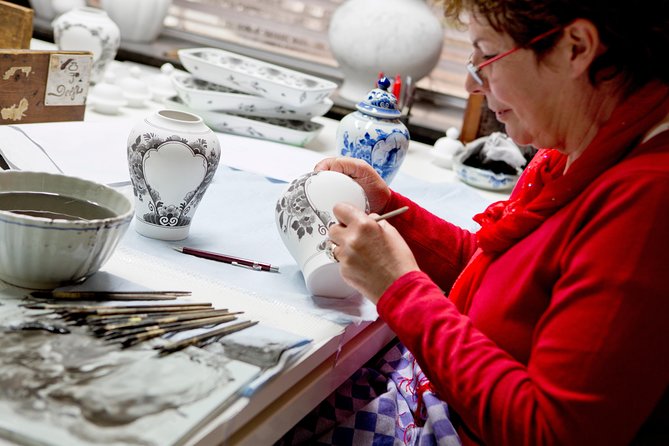
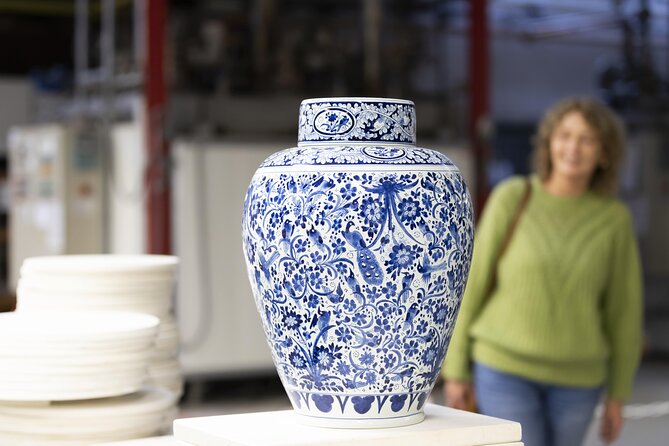
The factory section is the heart of the visit. You can watch how Royal Delftware is made and see craftspeople working with the pieces. The painting station is especially rewarding because the artist applies the design by hand, using a skill built over years rather than a simple printed pattern.
A useful detail is the change in color during firing. The dark painted color you see before firing becomes the familiar Delft Blue after the piece has been fired. Watching this process explained makes the finished plates and vases easier to appreciate.
You may also see more than one stage of the work, including someone shaping or handling pieces and someone painting them. The production area gives the museum a sense of motion and purpose. It is not just a row of old examples. The tradition is happening in front of you.
The painter at work is the most praised part of the experience, and I understand why. Pottery displays can blur together after a while. A person carefully building a design with a brush gives you something to watch and remember.
Still, the factory is not a theatrical demonstration created only for visitors. Your view may depend on what is taking place during your visit. If an artist is working, take your time and watch closely. This is the point where rushing would be a mistake.
Vermeer, royal ceramics, and the museum rooms
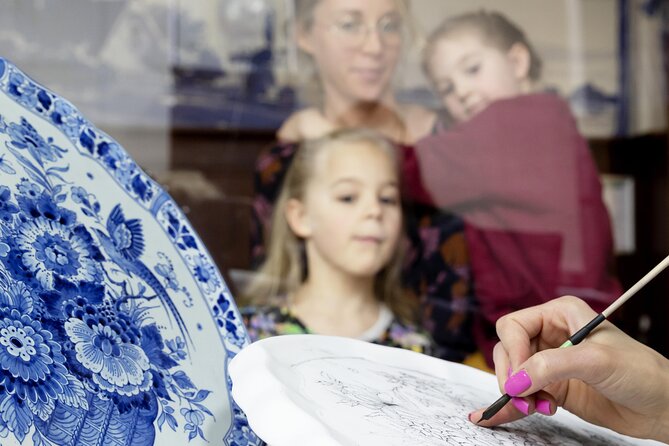
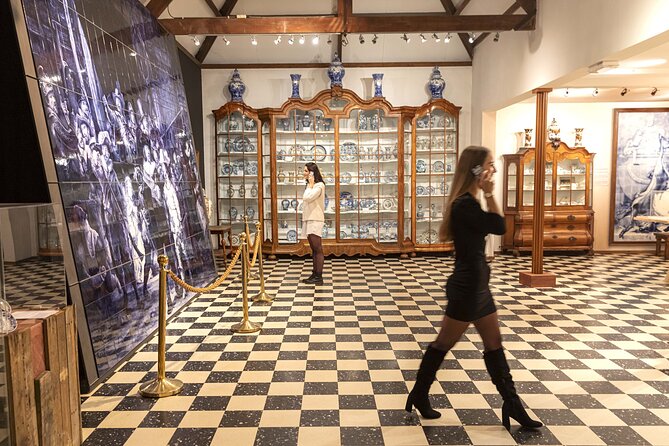
The museum places Delft Blue within a wider Dutch setting. One themed chamber recreates the dining room of Johannes Vermeer, the famous 17th-century painter from Delft. The connection is helpful because it places the pottery within the city’s art and domestic culture, rather than treating it as an isolated craft.
Another set of rooms focuses on the Dutch royal family. The Royal Chambers contain Orange Ceramics made for the royal household over the years. These pieces give you a look at how ceramics can serve ceremonial, decorative, and national purposes.
The antique and modern collections let you compare changing styles. Some objects show older Delftware traditions, while others point to newer design. If you enjoy pottery, you will probably want to spend time comparing the brushwork, shapes, and uses of the pieces rather than simply walking past each display.
The museum is fairly small. That is good news if you have limited time, but it also means you should not expect a full-day institution. Most people can cover the museum and factory in about one to one and a half hours. The visit works best as a focused stop, not as your only activity in Delft.
More Museum Tours in The Hague
- The Hague: Escher in The Palace Museum Ticket
★ 4.6 · 896 reviews - The Hague: Panorama Mesdag Museum Entry Ticket
★ 4.8 · 143 reviews - The Hague: Prison Gate Museum
★ 4.5 · 58 reviews - The Hague: Muzee Scheveningen History Museum Entry Ticket
★ 5.0 · 2 reviews
The 480-tile Night Watch
One of the more unexpected displays is a tiled version of Rembrandt’s The Night Watch. It is made from 480 tiles and gives you a different way to look at a famous Dutch painting.
The piece is worth seeking out even if you came mainly for Delft Blue. It shows how ceramic decoration can move beyond small plates and vases into large-scale image making. Take a moment to look at it from a little distance, then examine the individual tiles and the way the full image comes together.
This display also breaks up the rhythm of the pottery cases. The museum is strongest when it mixes production, royal objects, historic ceramics, and large decorative works.
How much time should you allow?
The advertised experience lasts about one hour, and that is enough for a brisk visit. You can move through the main rooms, listen to selected audio stops, watch the production area, and see the major displays.
I would allow 90 minutes for a more relaxed visit. That gives you time to read the panels, watch a painter, examine the royal collection, and browse the showroom. The cafe can add another half hour or more if you stop for tea, lunch, or a High Tea.
A simple timing plan looks like this:
- 10 minutes to enter and get oriented
- 20 to 30 minutes for the museum rooms
- 20 to 30 minutes for the factory and working artists
- 10 to 20 minutes for the showroom
- Extra time for the brasserie or a workshop, if arranged separately
The factory schedule and your arrival time may affect what you see in progress. Since the official opening hours are 9:30 a.m. to 5 p.m. daily for the 2026 period provided, you have a broad window, but arriving with enough time before closing is sensible.
The brasserie and the showroom
The brasserie overlooks a courtyard and serves coffee, tea, lunches, and High Teas. Food and drinks are not included in the admission price, but the cafe is a pleasant way to extend the visit.
Tea served in Delftware adds a small but memorable touch. It lets you use the objects rather than only view them. The cafe food receives good marks, so this is a practical place to pause if you are already spending time at the factory.
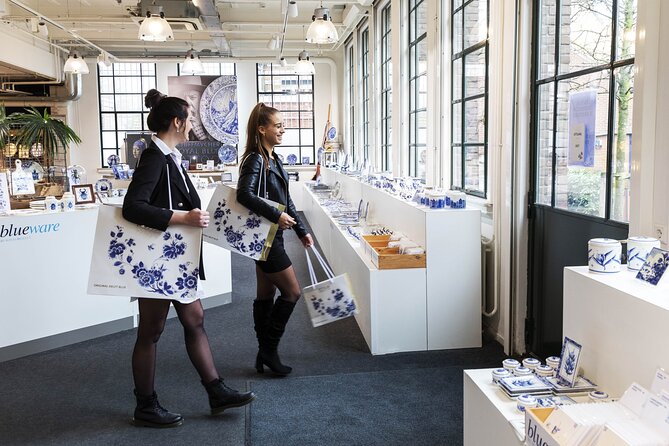
The showroom offers Royal Delft hand-painted earthenware along with souvenirs. This is where the price of the visit can quickly become less important than the price of the object you choose. Signed pieces may cost a large amount, so set your budget before browsing if you are tempted by the finest work.
The shop is useful even if you do not plan to buy an expensive piece. You can compare handmade Royal Delft objects with more affordable souvenirs and see the difference in finish and design. I would treat the showroom as part of the experience, not as a reason to feel pressured into buying.
Price, value, and who will enjoy it
At $20.52 per person, Royal Delft offers decent value for a short cultural visit. You are paying for access to a working historic factory, a museum collection, an audio tour, and the chance to see hand painting in progress.
The value is strongest for people who enjoy craft and process. If you want to understand how Delft Blue is made, the admission makes sense. If you are looking only for a large museum with dozens of rooms, the compact size may feel less satisfying.
The ticket also works well for an independent schedule. There is no need to wait for a guide, and the skip-the-line feature helps you make better use of your day. The maximum group size is listed as 15, but because the visit is self-guided, you should expect to move through the spaces at your own pace rather than as a tightly managed group.
I would recommend it for:
- Adults interested in Dutch art and design
- Pottery and craft enthusiasts
- Families with older children who can follow museum displays
- Visitors who want a quieter cultural stop outside the busiest city sights
- Anyone curious about the difference between handmade and factory-made ceramics
Children must be accompanied by an adult. Service animals are allowed, and the site is near public transportation. Most people can participate.
The experience may be less suitable if you want entertainment, a long guided talk, or a large museum with many major paintings. It also may not appeal to you if pottery does not hold your attention. The factory is the main attraction, so your enjoyment depends heavily on your interest in how objects are made.
Planning Royal Delft into your Delft day
Royal Delft is in Delft, while the supplied tour information also identifies The Hague as the location area. If you are staying in The Hague, check your transport plan before setting out. The site is near public transportation, but no specific route or travel time is provided.
Because the museum is open from 9:30 a.m. to 5 p.m., it can fit into a morning or afternoon plan. I would avoid arriving just before closing. You want enough time to watch the painter, use the audio guide, and see the royal rooms without turning the visit into a hurried walk.
Drivers have another useful option: a small parking lot beside the building. Spaces may be limited, but having parking directly beside the site can make the stop easier if you are touring by car.
The ticket is mobile, confirmation is received at booking, and free cancellation is available up to 24 hours before the start time. Changes or cancellations made less than 24 hours before the start are not accepted for a refund. The cut-off follows local time.
Is Royal Delft worth booking?
Book it if you want a focused look at Dutch pottery, hand painting, and the history of Delft Blue. The working artists, the royal ceramics, Vermeer-themed room, and 480-tile Night Watch give the visit more variety than a basic factory tour.
Allow 60 minutes at the very least, and closer to 90 minutes if you read carefully or stop at the brasserie. Choose the audio guide if you want more context, but do not expect a live guide to lead you.
Skip it if you are looking for a major art museum or dislike self-guided visits. For everyone else, the combination of working craft and museum displays makes Royal Delft a worthwhile addition to a Delft itinerary, especially for the simple pleasure of watching an artist turn a plain ceramic surface into Delft Blue.
FAQ
How long does the Royal Delft visit take?
The experience is advertised as approximately one hour. You can spend about 60 to 90 minutes seeing the museum, factory, and showroom, with additional time if you use the brasserie.
Is a guide included?
A live guide is not included. The ticket includes a one-hour audio tour available in eight possible languages, and you can also read the museum panels and watch presentation screens.
What are Royal Delft’s opening hours?
For the 2026 period provided, Royal Delft is open Monday through Sunday from 9:30 a.m. to 5 p.m.
Is food included in the ticket?
No. The brasserie is available at your own expense and serves coffee, tea, lunch, and High Tea.
Can children visit Royal Delft?
Yes, but children must be accompanied by an adult. Most people can participate, and service animals are allowed.
Can I cancel the ticket for a refund?
Yes. You can cancel up to 24 hours before the experience start time for a full refund. Cancellations or changes made less than 24 hours before the start are not accepted.
Just added in The Hague
- The Hague Walking Tour★ 4.5 · 16 reviews
- The Hague: Powerboat Tour Scheveningen★ 4.5 · 15 reviews
- The Hague Tower Guided Tour★ 4.5 · 45 reviews
- The Hague: Private Boattour up to 10 persons★ 4.9 · 37 reviews
- The Hague: Private Custom Walking Tour With A Local Guide★ 4.5 · 13 reviews
- The Hague: Prison Gate Museum★ 4.5 · 58 reviews
- The Hague: Ping Pong Table Rental at a Secret Ping Pong Bar★ 4.5 · 7 reviews
- The Hague: One Way Boat Ticket to or from Delft★ 4.5 · 52 reviews
Museums, compared.

Moco Museum Amsterdam Entrance Tickets with Banksy & More
Read our review →


Amsterdam’s Weirdest Museum: Believe It or Not!
Read our review →

Browse the lists this tour appears in