
Review · CRUISES & BOAT TOURS
8 hour Walking and Boat Tour to Rotterdam and Kinderdijk
Big-city design meets old-world water control. This private Rotterdam and Kinderdijk experience pairs a guided walk through Rotterdam’s bold architecture with a visit to the famous windmills outside town. I like the small maximum of four people, which should make it easier to ask questions and keep the pace personal. I also like that the guide, Alex, includes local touches such as patatje oorlog and explains both modern Rotterdam and Dutch water management.
The main drawback is the pace. The tour is advertised at about 7 hours 40 minutes, yet the listed stop times add up to far more than that. You should treat the timing as approximate and confirm the day’s order and length with Alex, especially if you want to linger at Kinderdijk.
In This Review
- Key points at a glance
- Why this makes sense for a first Rotterdam day
- Rotterdam Centraal and the city’s rebuilt identity
- Laurenskerk, Erasmus, and the Markthal
- Cube houses and the old harbor
- Witte Huis, Willemsbrug, and De Hef
- De Boeg and the open-air maritime museum
- Erasmus Bridge and the river crossing
- The bus to Kinderdijk and the 19 windmills
- Timing, comfort, and practical planning
- Who should book this Rotterdam day?
- Should you book it?
- FAQ
- Where does the tour start and finish?
- How long does the experience last?
- How many people can join the tour?
- Is Kinderdijk admission included?
- Is transportation to Kinderdijk included?
- What else is included?
- Can I cancel for a full refund?
Key points at a glance
- Rotterdam in a compact private group: Up to four people can explore the city with a guide rather than following a large crowd.
- Modern architecture and wartime survival: The route moves from Rotterdam Centraal and the Markthal to the medieval Laurenskerk and wartime memorials.
- A close look at unusual buildings: Kijk-Kubus, Witte Huis, De Hef, and the Erasmus Bridge give you a strong introduction to Rotterdam’s odd and inventive city design.
- Kinderdijk’s 19 windmills: You get about three hours at one of the Netherlands’ best-known water-management sites.
- Useful extras included: Bus tickets to Kinderdijk and back, coffee or tea, a Rotterdam snack, Kijk-Kubus admission, and guide service are included.
- Budget for one extra fee: Kinderdijk admission costs €19 per person and is not included in the tour price.
Why this makes sense for a first Rotterdam day
Rotterdam is unlike the postcard version of the Netherlands. It has canals and old buildings, but much of the city was rebuilt after the bombing of May 15, 1940. The result is a mix of glass, steel, experimental housing, surviving church towers, working waterways, and memorials.
This tour gives you that mix in one long day. You begin at Rotterdam Centraal, then walk through the central districts before reaching the river and the city’s maritime sights. Later, a bus takes you to Kinderdijk, where the urban setting gives way to a long-standing system of mills, dikes, and polders.
I especially like the contrast. Rotterdam shows you what a modern city can become. Kinderdijk shows you how the Dutch have managed water for centuries. Put together, they explain far more about the country than either stop could do alone.
The private format matters here. With only four people maximum, you can ask about a building, pause for a photograph, or request a little more explanation without holding up a busload of people. Alex is the named guide, and his response to one very positive experience suggests a friendly, engaged approach to the work.
More Boat Tours in Rotterdam
- Rotterdam: Harbor Sightseeing Cruise
★ 4.3 · 7,599 reviews - Rotterdam: Pancake Cruise
★ 4.4 · 1,986 reviews - Rotterdam: Harbor Cruise with Live Guide
★ 4.0 · 1,270 reviews
Rotterdam Centraal and the city’s rebuilt identity
The tour begins at Stationsplein 48, outside Rotterdam Centraal Station. This is a practical meeting point because the station is easy to reach by public transport and is itself one of the city’s major architectural sights.
About 170,000 passengers pass through the station each day, so it gives you an immediate sense of Rotterdam’s scale. Its sharp, modern form is a useful introduction to the city before you begin walking through older districts.
From there, the route moves to the former headquarters of Waterschap Schieland, a 17th-century building now associated with Rotterdam Partners. Its importance is not just architectural. Water boards helped manage water policy and drainage, a subject that will become central later at Kinderdijk.
The building also has a Napoleon connection. It once provided temporary accommodation for Napoleon Bonaparte. That small detail helps turn a plain-looking stop into a place with a wider European story.
Laurenskerk, Erasmus, and the Markthal
The Grote of Sint-Laurenskerk is one of the city’s most important survivors. Completed in late Gothic style in 1525, it is Rotterdam’s oldest building and one of the few structures to survive the bombing of 1940.
The stop here is listed at only 10 minutes, so expect an exterior-focused look rather than a long church visit. Even a short pause is worthwhile because the church gives you a physical link to the Rotterdam that existed before the modern rebuilding.
Next comes the Erasmus sculpture, dedicated to Desiderius Erasmus of Rotterdam. Erasmus was a 16th-century philosopher, theologian, scholar, and priest. His name appears across the city on public buildings, institutions, and educational centers.
This is a quick stop, but it places Rotterdam in an intellectual context. The city is not only about ports, cranes, and daring architecture. It also claims one of Europe’s major humanist thinkers.
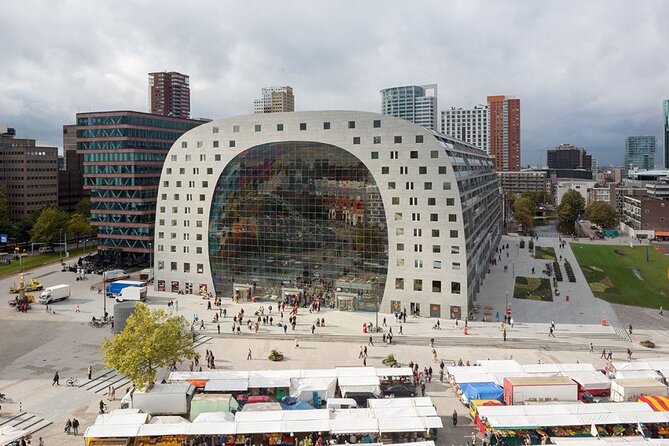
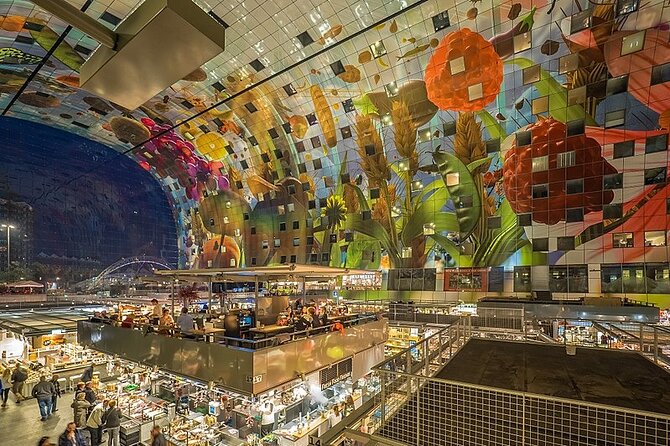
The Markthal then shifts the mood completely. This horseshoe-shaped building combines a covered market with apartments and other facilities. Its large interior artwork has earned it the nickname the Sistine Chapel of Rotterdam.
You receive around 20 minutes here. That is enough to see the structure and take in the ceiling, but it may not leave much time for a full meal or careful food shopping. If you want to sample more of the market, ask whether the schedule allows extra time.
Cube houses and the old harbor
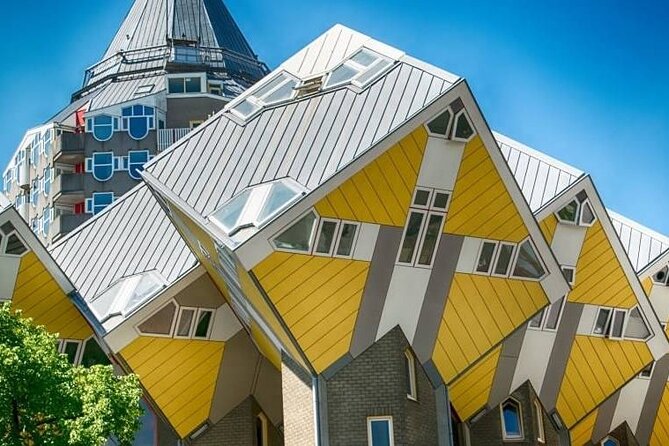
Kijk-Kubus is one of the tour’s most distinctive stops. These cube-shaped apartments sit at angles on supporting columns, creating a group of buildings that resemble an abstract tree forest.
The design is clever, but not every part of the interior works well as ordinary living space. Because of the unusual shape, only about three-quarters of the inside is suitable for common use. The included admission lets you see how the idea works from within, not just from the pavement.
I consider this a strong inclusion because Rotterdam’s architecture is best understood at close range. A photograph of the cube houses is fun. Walking inside one explains the tradeoff between bold design and practical living.
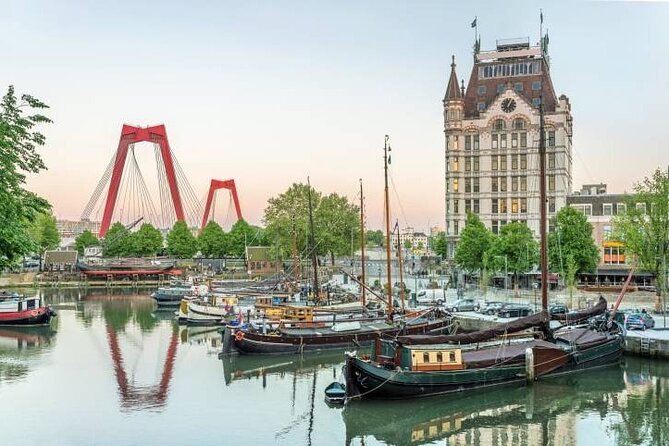
The route then reaches Oude Haven, one of medieval Rotterdam’s older ports. It was once the mouth of the River Rotte where it met the Nieuwe Maas. Today, the harbor area has coffee bars, restaurants, taverns, and clubs.
The scheduled hour here is useful. It gives you a chance to pause after the architecture-heavy first part of the walk. It is also the most natural place to ask about food or take a breather, though the included snack is described as patatje oorlog.
Patatje oorlog, or war fries, is a well-known Rotterdam snack. The name refers to the unusual combination of fries with sauces and toppings, though the supplied details do not specify the exact serving. It is a small but worthwhile local touch, and much more memorable than a generic packaged snack.
More Walking Tours in Rotterdam
- Rotterdam: Architectural Highlights Guided Walking Tour
★ 4.8 · 215 reviews - Rotterdam Walk: Hilights, Gems, Architecture & WWII | 2 or 3hrs
★ 5.0 · 149 reviews - Rotterdam: Highlights & Gems Walking Tour with Dutch Local
★ 5.0 · 133 reviews - Rotterdam 2-Hour Walking Tour | Discover The City With A Local
★ 4.5 · 111 reviews
Witte Huis, Willemsbrug, and De Hef
Witte Huis offers another quick lesson in Rotterdam’s building history. Completed in 1898, it was once the tallest building in Europe and is often described as the continent’s first skyscraper.
Like many older Amsterdam buildings, it rests on roughly 1,000 wooden pillars. That detail connects the building to the wider Dutch challenge of constructing cities on soft, wet ground.
The tour then continues toward Willemsbrug, known as the Red Bridge. It crosses the Nieuwe Maas and links the central and northern parts of Rotterdam with southern districts. The bridge is not just a transport link. It helps you understand how the river divides the city and how bridges shape its daily movement.
De Hef is another memorable piece of industrial infrastructure. Its name means the lift, and the huge steel structure once served as a lifting and rotating railway bridge over the river. It was used before a rail tunnel was built beneath the water.
The stop is brief, so you will probably view it from outside. That is enough to appreciate its scale and its role in the city’s former rail system. This section of the walk works well because it shows Rotterdam as a working port city, not simply an architectural showcase.
De Boeg and the open-air maritime museum
De Boeg is a war memorial on the right bank of the Nieuwe Maas. It honors the 3,500 people aboard Dutch merchant ships who lost their lives during World War II.
This is a quiet counterpoint to the bright bridges and playful cube houses. Rotterdam’s port made it economically important, but that same maritime role brought great danger during the war. The memorial gives the river a human meaning.
The route then reaches the Maritime Museum’s open-air section at Leuvehaven. The collection includes steamships, cargo-handling machinery, ship engines, docking equipment, and other objects tied to Dutch shipping from the middle of the 19th century through the 1970s.
The listed visit is about 20 minutes. That is enough for an introduction and a few good looks at the machinery, but not enough for a full museum visit. If maritime technology is your main interest, you may want to return independently.
Erasmus Bridge and the river crossing

The Erasmus Bridge is the city’s most recognizable modern symbol. Its tall white pylon has earned it the nicknames the Swan and the Harp. The bridge reaches 139 meters high and includes an 80-meter opening section, described as the largest and heaviest of its kind in Europe.
The 30-minute stop gives you time to see the bridge from useful angles and understand its place in Rotterdam’s skyline. It is also where the city’s modern identity comes together: engineering, river traffic, bold design, and a willingness to build on a large scale.
This is a good point to remember that the tour is a walking experience. The route includes bridges, harbor areas, and several urban stops. One direct warning is important: it would not suit someone with mobility concerns. The supplied information says most people can participate, but the amount of walking still matters.
The bus to Kinderdijk and the 19 windmills
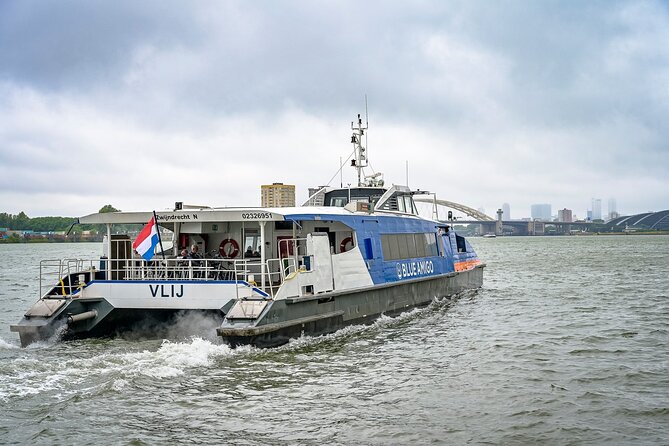
After Rotterdam, included bus tickets take you to Kinderdijk and back. The trip adds a second setting without requiring you to arrange another excursion or figure out local connections.
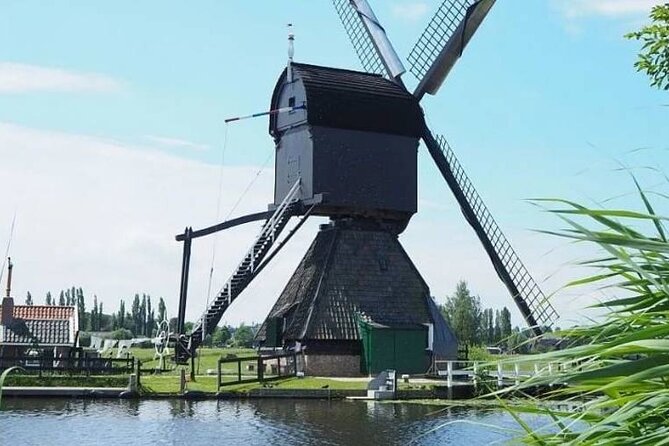
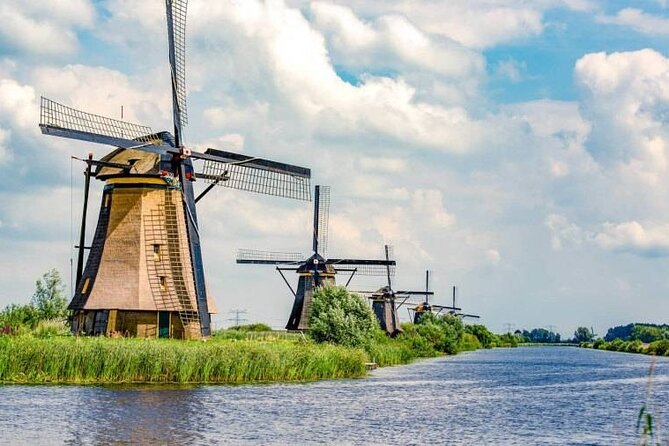
Kinderdijk lies about 25 kilometers from Rotterdam. Its 19 authentic polder windmills date from the first half of the 18th century. Their purpose was practical: helping control water in low-lying land.
That is why Kinderdijk is more than a scenic photo stop. The mills form part of a carefully organized system of Dutch water management. At Rotterdam’s former water-board headquarters, you hear about policy and drainage. At Kinderdijk, you see the machinery and the land it helped protect.
About three hours are allocated here, making it the longest part of the day. That balance is sensible. Rotterdam has many short stops, while Kinderdijk rewards a slower walk beside the water and mills.
Admission is not included. You should add €19 per person to the advertised cost. The tour price is $591.46 per group of up to four, so the base cost works out to about $147.87 per person if four people join. With the Kinderdijk fee added, the total is about $166.87 per person before any currency changes.
For a private guide, transport to and from Kinderdijk, coffee or tea, food, and Kijk-Kubus admission, that can be fair value for a small group. For one or two people, the per-person cost is much higher. I would compare it with the price of arranging separate transport and guiding before booking, but the convenience is a real part of the value.
Timing, comfort, and practical planning
The stated duration is approximately 7 hours 40 minutes. The experience operates from 8:00 a.m. to 6:00 p.m., and it ends back at the starting point.
There is one scheduling point you should not ignore. The individual stop durations supplied for the day total much more than 7 hours 40 minutes, even before adding transport between Rotterdam and Kinderdijk. This may mean the stop times are flexible estimates, or that some are intended as brief viewing points rather than fixed visits.
Ask Alex to confirm the expected schedule before the day begins. That is especially useful if you have a train to catch, a dinner booking, or a strong preference for more time at Kinderdijk.
Coffee or tea is included, as is the patatje oorlog snack. No other meal is specified, so plan around the long day rather than assuming the snack replaces lunch.
The tour accepts mobile tickets, starts and finishes at Stationsplein 48, and is limited to four people. Free cancellation is available if you cancel at least 24 hours before the start time. Changes or cancellations inside that window are not accepted for a refund.
Who should book this Rotterdam day?
I would choose this experience if you want a guided first look at Rotterdam and do not want to plan the Kinderdijk connection yourself. It suits people who enjoy architecture, bridges, port history, Dutch engineering, and a full day on foot.
The small group is particularly useful for couples, families, or a group of friends who want one guide for the whole day. Alex’s strong personal response and the high rating suggest that the guide’s explanations are one of the tour’s best features.
I would hesitate if you have mobility limitations, dislike long walking days, or want extended time inside museums and historic buildings. The schedule is broad, and several stops are short. You will see a lot, but you will not study every sight in depth.
Should you book it?
Book this tour if you want breadth, local explanation, and easy transport in one private day. The Rotterdam section gives you a sharp sense of the city’s rebuilding, its maritime past, and its playful architecture. Kinderdijk then supplies the quieter, older Dutch story of water control.
Skip it if you prefer to set your own pace or plan to spend serious time at the Maritime Museum, Markthal, or Laurenskerk. Before paying, confirm the timing with Alex and add the €19 Kinderdijk admission to your budget.
For a group of four, the value is strongest. You get a guide, transportation, a local snack, drinks, and several admissions without joining a large party. That combination makes it a practical choice for seeing two very different sides of South Holland in one day.
FAQ
Where does the tour start and finish?
It starts and ends at Stationsplein 48, 3013 AJ Rotterdam, Netherlands.
How long does the experience last?
The advertised duration is approximately 7 hours and 40 minutes. The activity operates between 8:00 a.m. and 6:00 p.m.
How many people can join the tour?
The maximum group size is four people.
Is Kinderdijk admission included?
No. Entrance to Kinderdijk costs €19 per person and must be paid separately.
Is transportation to Kinderdijk included?
Yes. Bus tickets from Rotterdam to Kinderdijk and back are included.
What else is included?
Coffee or tea, patatje oorlog, guide service, and admission to the Kijk-Kubus buildings are included.
Can I cancel for a full refund?
Yes, if you cancel at least 24 hours before the experience begins. Cancellations or changes made less than 24 hours before the start time are not accepted for a refund.
More Windmill Tours in Rotterdam
- Rotterdam: Kinderdijk UNESCO World Heritage Entry Ticket
★ 4.6 · 1,477 reviews - Rotterdam: Waterbus Ticket to Dordrecht and/or Kinderdijk
★ 4.6 · 542 reviews - All-Inclusive Private Windmill Tour to Kinderdijk from Rotterdam
★ 4.5 · 59 reviews - Kinderdijk Bike Tour
★ 5.0 · 35 reviews
Just added in Rotterdam
- e-Scavenger hunt Breda: Explore the city at your own pace★ 4.5 · 27 reviews
- Rotterdam: City Walk Audio Guide in 7 Languages on your Phone★ 3.5 · 6 reviews
- e-Scavenger hunt Rotterdam: Explore the city at your own pace★ 4.5 · 13 reviews
- Rotterdam Must Do Tour: Highlights, History, WW2 and Architecture★ 5.0 · 20 reviews
- Explore the Instaworthy Spots of Rotterdam with a Local★ 5.0 · 1 review
- Discover Rotterdam: Classic Highlights Bike Tour with a Local★ 5.0 · 22 reviews
- The Goldheist – Trilling Private City Escape Game Rotterdam★ 5.0 · 1 review
- Skip the Line: SS Rotterdam Steam Ship Entrance Ticket★ 4.5 · 18 reviews
Cruises & Boat Tours, compared.
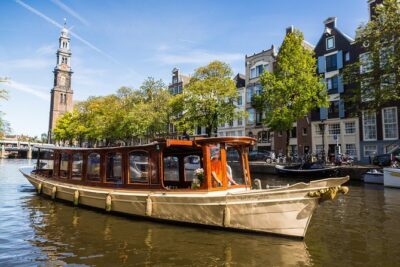
Amsterdam Classic Saloon Boat Cruise with Drinks and Cheese
Read our review →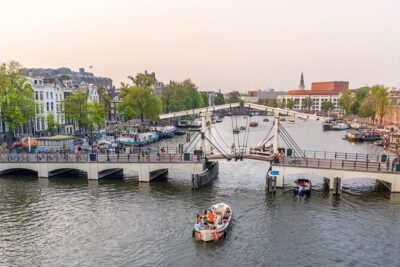
Amsterdam Luxury Canal Cruise + Unlimited Drinks & Bites option
Read our review →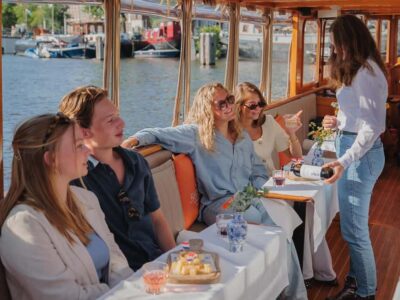
Classic Boat Cruise with Optional Cheese & Wine
Read our review →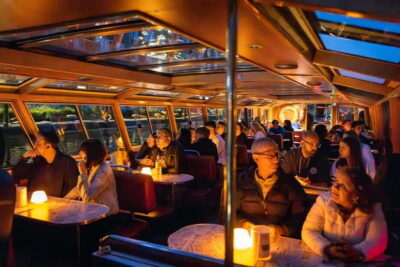
Evening Cruise with Optional Wine and Snacks
Read our review →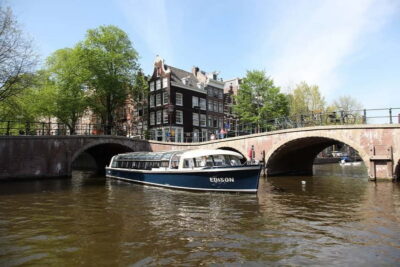
75 Minute City Canal Cruise with Audio Guide
Read our review →
Amsterdam All-Inclusive 90-Minutes Heated Cruise by Captain Jack
Read our review →
Open Boat Cruise option Unlimited Drinks & Bite
Read our review →
Browse the lists this tour appears in