
Review · MUSEUMS
Delft: Canal House Museum ‘Paul Tetar van Elven’ Ticket
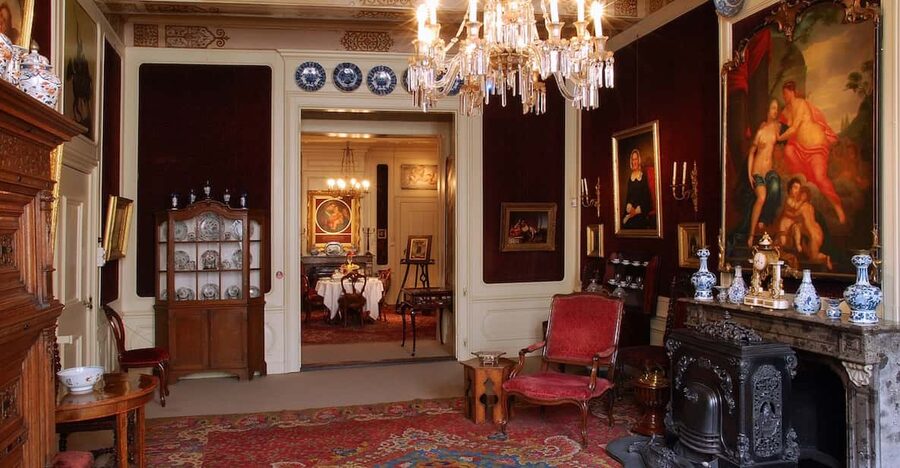
History lives indoors here. On Delft’s Koornmarkt, the Museum Paul Tetar van Elven gives you something many city museums cannot: a preserved 19th-century artist’s home, still packed with the furniture, paintings, books, and collecting habits of its former owner. I especially like the original interior and the chance to see Delft through the eyes of one particular resident, rather than through a broad city-history display. The lavish salon and porcelain collection are two more highlights.
The main consideration is scale. This is a small house museum, not a full-day attraction with a large number of galleries. At $14 per person, the price makes the most sense if you enjoy historic interiors, art, antiques, and personal stories. It may feel too narrow if you want a major museum with many famous works.
In This Review
- Key points at a glance
- Why this small Delft museum is worth your time
- Arriving on Koornmarkt in Delft
- The salon and its famous painted ceiling
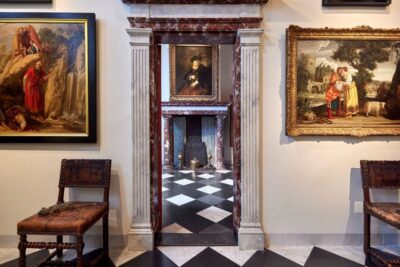
- Original furniture and the feeling of a lived-in home
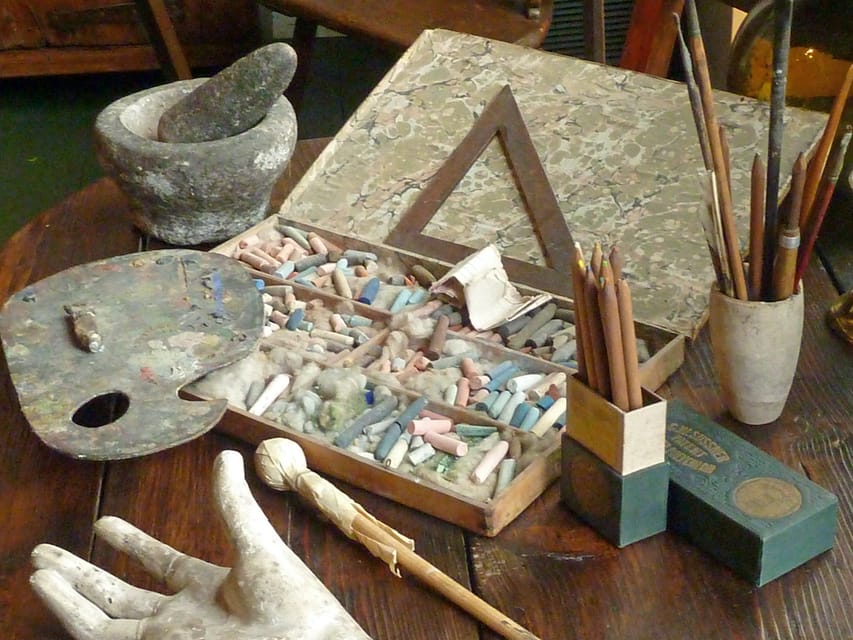
- The studio, library, and working life of an artist
- Delft blue pottery and porcelain from the Far East
- How the guided welcome shapes the visit
- How much value do you get for $14?
- Who should visit this canal house?
- Tips for getting more from the visit
- Should you book the Museum Paul Tetar van Elven?
- FAQ
- Where is the Museum Paul Tetar van Elven?
- How much does admission cost?
- What does the ticket include?
- Are food and drinks included?
- Which languages are available?
- Can I cancel my booking?
Key points at a glance
- An authentic 19th-century artist’s home: The house preserves Paul Tetar van Elven’s living rooms, studio, library, and personal possessions.
- A striking painted ceiling: The salon ceiling carries the names of old masters Tetar van Elven admired and copied, including Raphaël, Rubens, and Rembrandt.
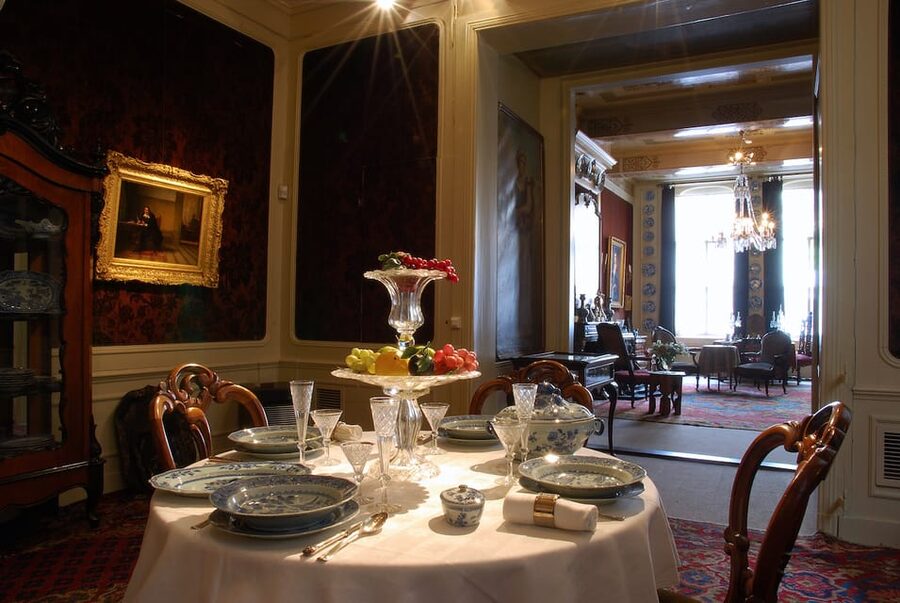
- Original furniture and porcelain: The collection includes Delft blue pottery, Far Eastern porcelain, antiques, and other objects gathered by the artist.
- A central Delft setting: The museum is located on Koornmarkt, in the historic center of Delft.
- A personal view of Dutch art life: Tetar van Elven was an artist and drawing-master at the Polytechnic School, now Delft University of Technology.
- A useful flexible booking policy: You can cancel up to 24 hours ahead for a full refund, and reserve now while paying later.
Why this small Delft museum is worth your time
Delft is famous for canals, blue-and-white pottery, and its connection with painters such as Johannes Vermeer. The Museum Paul Tetar van Elven adds a different layer. Instead of focusing only on the city’s most famous names, it lets you enter the home of Paul Tetar van Elven, a 19th-century artist and teacher.
That difference matters. A large museum can explain an era with labels and display cases. This house lets you read the era through rooms. You see how an artist arranged his salon, what he placed on shelves, which old masters he admired, and how collecting shaped his daily surroundings.
I like that the museum does not present Tetar van Elven only as a painter. He was also a drawing-master at the Polytechnic School, the institution now known as Delft University of Technology. He collected art, antiques, Delft blue pottery, porcelain from the Far East, and antique books. The result is a home that feels like both a residence and a working record of his interests.
The museum received this unusual preservation through Tetar van Elven’s will. He left the house and its contents so they could become a museum. That gives the visit a rare sense of continuity. You are not looking at a room assembled later from unrelated objects. You are seeing a house shaped by one owner and kept in place after his death.
More Museum Tours in Delft
- Royal Delft: Delftblue Factory and Museum
★ 4.6 · 588 reviews - Delft: Vermeer Centrum Delft Museum Entry Ticket
★ 4.6 · 189 reviews - Royal Delft: Delftblue Factory and Museum Admission Ticket
★ 4.5 · 145 reviews
Arriving on Koornmarkt in Delft
The museum is at Koornmarkt, in central Delft. The house originally dates from the 16th century, shortly after the Great Fire of Delft in 1536. In the centuries that followed, Koornmarkt became one of the wealthier parts of the city.
That background helps you read the building before you even reach the collection. The house is not a purpose-built museum. It is a canal house that changed over time, just as many Delft homes did. It carries the marks of several periods rather than presenting a single neat architectural style.
The building received a new front façade and major modernisation around 1800. Paul Tetar van Elven bought it in 1864 and did not carry out another major renovation. Instead, he adapted the interiors to the fashion of his own time.
That makes the house especially useful for understanding how an older Dutch home could be updated without losing its earlier structure. You get a 16th-century foundation, 19th-century decoration, and a collection that reflects the taste of one artist.
I would plan this visit as part of a walk through central Delft. The museum is not described as a full-day tour, but the ticket is valid for one day. That gives you room to fit it around other Delft sights rather than forcing your schedule around a long guided program.
The salon and its famous painted ceiling
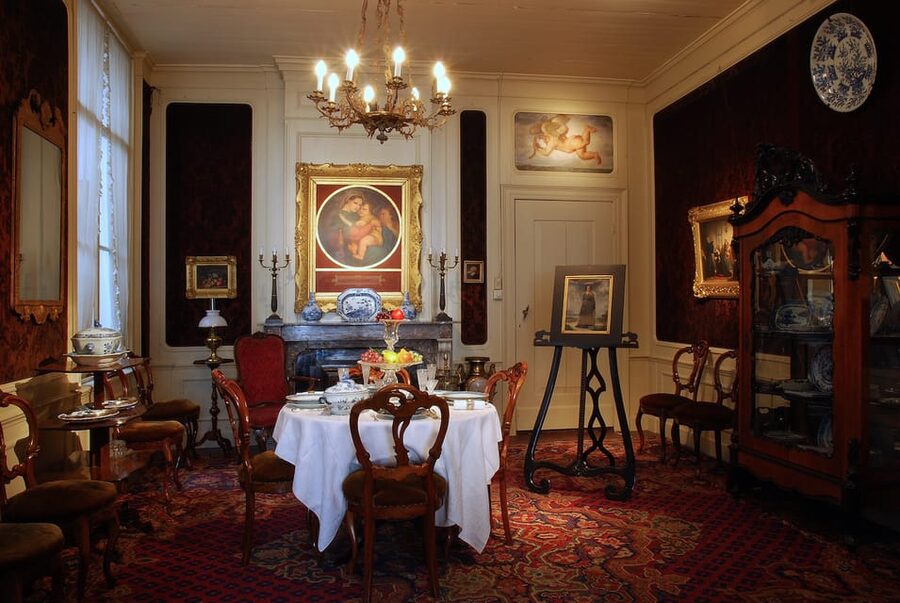
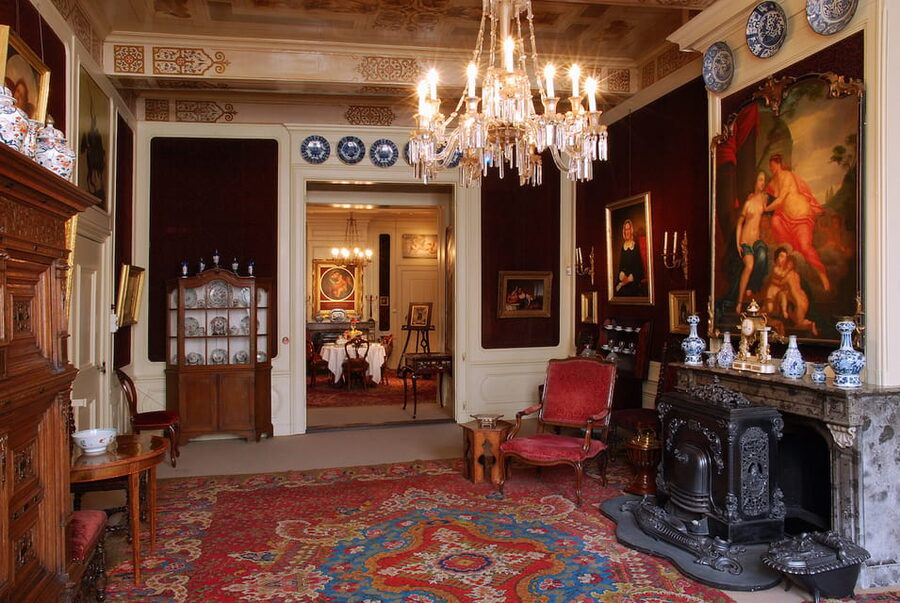
The salon is likely the emotional center of the visit. Its decoration shows how Tetar van Elven wanted to be surrounded by the artists he admired. He commissioned Abraham Gips to decorate the ceiling with the names of old masters, including Raphaël, Rubens, and Rembrandt.
This is more than a decorative flourish. It tells you how Tetar van Elven understood his own work. He was an artist who copied and studied earlier masters, and the ceiling turns that private admiration into a permanent part of the room.
Look up carefully. The painted ceiling is one of the details you could miss if you hurry through the rooms while focusing only on the furniture and paintings at eye level. It rewards a slower pace, especially if you enjoy artists’ studios and the habits behind their work.
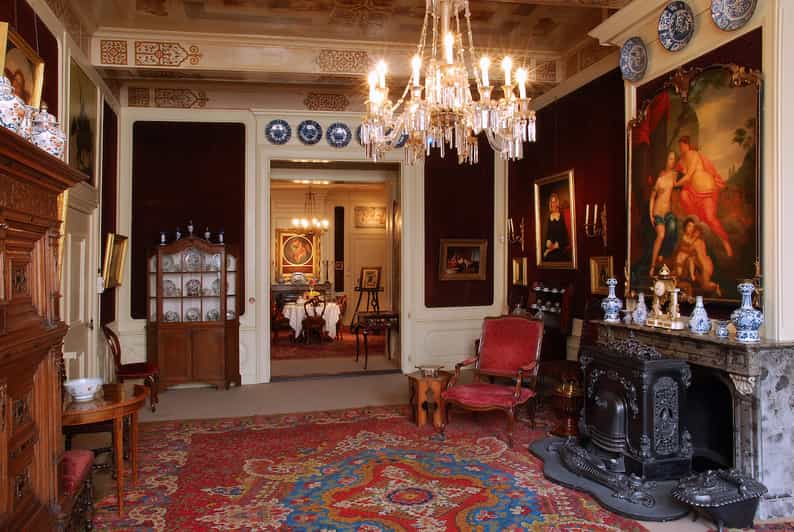
The salon also helps explain the comments about the house feeling lavish. You can expect richly decorated living rooms, portraits, paintings by Tetar van Elven and his contemporaries, and furnishings selected for display as well as use.
I would not approach this room expecting the clean, open arrangement of a modern gallery. The appeal lies partly in the density. Furniture, art, decorative objects, and ceiling decoration work together to show a period taste for a full and carefully appointed interior.
That can be a drawback for some visitors. If you prefer a simple presentation with large labels and plenty of open space, the salon may feel visually crowded. If you like finding small details, the same quality becomes the point.
Original furniture and the feeling of a lived-in home
The strongest feature here is the house itself. You are not simply seeing objects that once belonged to Paul Tetar van Elven. You are seeing those objects in the rooms where his domestic and artistic life took place.
The original furniture gives the interiors weight. A chair or cabinet in a historic house can tell you more than a photograph of the same period because it shows scale, placement, and relationship to the room. You can picture how the salon was used, how visitors were received, and how a collection became part of ordinary home life.
The Australian booking feedback specifically praised the original furniture and called the house unique and authentic. That is a fair description of the museum’s strongest quality. The objects do not feel detached from the person who owned them.
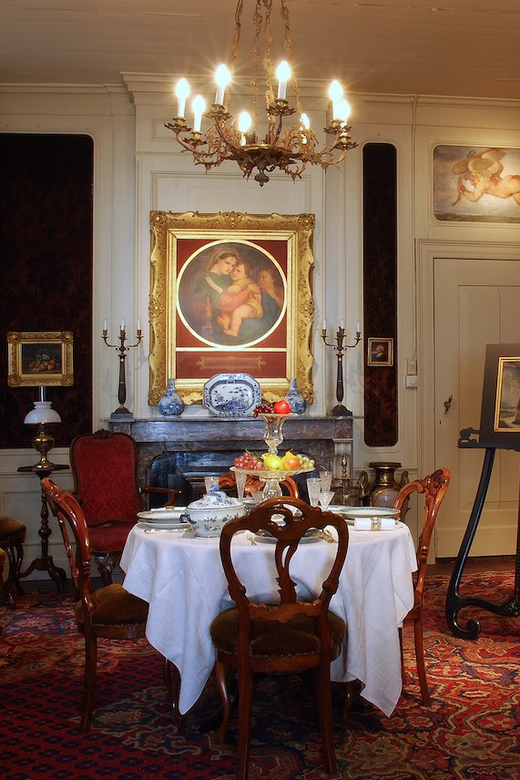
The house also preserves the presence of Tetar van Elven and his wife. The drawing room is arranged in a way that suggests a welcome rather than a distant display. You may find yourself reading the room as a social space first, then as an art collection second.
That personal scale makes this a good stop for you if grand museums sometimes blur together. A single home can be easier to remember than a long list of paintings in a major institution.
More Delft trips:
- From Amsterdam: Rotterdam, Delft & The Hague Guided Day Tour
★ 4.2 · 1,765 reviews - Delft: Canal Cruise with Guided Commentary
★ 4.4 · 990 reviews - Rotterdam, Delft, the Hague, Madurodam from Amsterdam
★ 4.0 · 793 reviews - Rotterdam, Delft and The Hague Small Group Tour from Amsterdam
★ 4.5 · 599 reviews
The studio, library, and working life of an artist
The studio adds a useful change of mood. The salon shows public taste and hospitality. The studio points toward Tetar van Elven’s work and personal habits.
You can expect to see his personal possessions there, along with paintings and objects linked to his life as an artist and teacher. The museum does not reduce him to a famous painting or one major commission. Instead, it presents the setting around his work.
That is valuable because artists are often explained through finished works alone. A studio can suggest the routines, references, and objects that supported those works. In this case, the old masters named on the ceiling and the art gathered throughout the house help connect the working artist to his influences.
The library provides another angle. Its antique books show that Tetar van Elven’s interests were not limited to pictures and decorative objects. Books help explain the study behind a 19th-century artist’s education and taste.
I would give yourself time to look beyond the most obvious paintings. The studio and library are the rooms that turn the visit from a tour of a fancy canal house into a portrait of a man’s working life.
Still, keep your expectations realistic. The information provided does not promise an extensive program of demonstrations or hands-on activities. This is primarily a viewing experience. You come to inspect the rooms and collection, not to take part in an art class.
Delft blue pottery and porcelain from the Far East
The pottery and porcelain collection adds a strong Delft connection. Tetar van Elven collected Delft blue pottery as well as porcelain from the Far East, and cabinets display his extensive holdings.
For you, this creates one of the clearest links between the house and the city. Delft blue is not just a souvenir style here. It appears as part of a serious collector’s home, surrounded by furniture, paintings, and other antiques.
The Far Eastern porcelain broadens the story. It shows how collecting crossed national borders and how decorative objects could carry both artistic and social value. In the house, these pieces are not presented as an isolated specialist subject. They form part of the way Tetar van Elven decorated and understood his surroundings.
The Australian visitor singled out the porcelain collection as a highlight. I can see why. Cabinets of pottery and porcelain give the house a visual rhythm, with repeated shapes, patterns, and colors that contrast with the paintings and darker historic furnishings.
If you already enjoy ceramics, allow extra attention for these cabinets. If pottery is not your main interest, do not skip them. They are among the best clues to Tetar van Elven’s collecting personality and to Delft’s long association with decorative ceramics.
One practical point: food and drinks are not included, and the museum itself is described as a house museum rather than a venue with a meal component. Plan to eat elsewhere in Delft. That is easy to combine with a central-city visit, but it is worth knowing before you arrive.
How the guided welcome shapes the visit
The activity lists English and Dutch as the available languages, with a host or greeter. Booking feedback also praised an enthusiastic guide and an exceptionally well-informed explanation of the house.
That human element can make a real difference in a small museum. Without context, a painted name on a ceiling is interesting. With context, you understand why Tetar van Elven chose those masters, who Abraham Gips was, and how the house changed before and after Tetar van Elven bought it.
The Dutch-language praise for an enthusiastic guide also suggests that the welcome can add warmth to the visit. Since English and Dutch are available, you can select the language that works best for you when checking availability.
I would treat the guide as an important bonus, while remembering that start times and availability should be checked before booking. The activity is valid for one day, but it is not presented as a fixed multi-hour route with a published sequence of timed stops.
The experience is therefore best for you if you appreciate explanation and conversation. It may be less suited to someone who wants to move through a museum entirely alone at a fast pace.
How much value do you get for $14?
The ticket costs $14 per person. That is not the cheapest quick stop in Delft, so value depends on what you want from a museum visit.
You get access to a rare kind of place: an authentic artist’s house with original contents, period interiors, paintings, books, furniture, and ceramics. The value is not based on the number of rooms. It comes from the fact that the rooms belong together.
For an art lover, the price is reasonable because the visit combines several subjects: 19th-century domestic life, artist education, old-master influence, Delft blue pottery, Far Eastern porcelain, antique books, and historic architecture.
For a visitor mainly interested in Delft’s canals and outdoor atmosphere, $14 may feel high for a small interior attraction. You should book it if you want a focused museum experience, not simply another quick photo stop.
The positive rating of 4.5 from six bookings supports the idea that the museum delivers a distinctive experience, though the number of ratings is small. I would give more weight to the specific praise about the house’s authenticity, original furniture, porcelain, and guide than to the score alone.
Flexible booking improves the value for a changeable day. You can reserve now and pay later, and cancel up to 24 hours in advance for a full refund. Those terms are useful if you are building a Delft schedule around weather, train times, or other museum visits.
Who should visit this canal house?
I would recommend the museum most strongly to:
- You if you enjoy historic houses more than large modern galleries.
- Art lovers interested in how artists lived, studied, and collected.
- Ceramic fans who want Delft blue pottery in a personal domestic setting.
- Visitors who enjoy antique furniture, books, portraits, and decorative interiors.
- Anyone looking for a quieter, more focused Delft experience.
- Couples and solo visitors who prefer a small museum with a clear identity.
Families can also find details to discuss, especially the painted ceiling and unusual collection. But the house may be less engaging for children who need interactive displays or a large open space.
It is also not the best match if you want a museum built around one internationally famous masterpiece. The pleasure here comes from the whole home and the way the collection works together.
Tips for getting more from the visit
Take your time in the salon, then look up at the ceiling before moving on. The names of the old masters are easy to treat as background decoration, but they explain Tetar van Elven’s artistic loyalties.
Pay attention to transitions between rooms. The living areas, studio, and library each show a different side of the owner. I would resist the urge to rush toward the pottery cabinets and treat the rest as a short route to the ceramics.
Use the central location to make this part of a larger Delft walk. The museum is on Koornmarkt, so you can place it into a day of exploring the city rather than making a separate trip only for this attraction.
Check the available starting times before you commit. The ticket is valid for one day, but the activity information asks you to check availability for times. English and Dutch are available, and an enthusiastic guide can add a lot to the story.
Finally, remember that this is an authentic historic house. Its charm comes with a more intimate, old-fashioned presentation than you might find in a large museum. Go in expecting rooms filled with objects, not a minimalist display.
Should you book the Museum Paul Tetar van Elven?
Book it if you want to see Delft through one artist’s home, collection, and daily surroundings. The original furniture, painted salon ceiling, studio, library, and Delft blue pottery make this far more specific than a standard city museum.
At $14, I think it offers good value for art lovers, architecture fans, and anyone who enjoys historic interiors. I would skip it only if your Delft schedule is already packed or if you prefer large museums with famous works and extensive displays.
The best reason to go is simple: this is a house with a personality. Paul Tetar van Elven’s tastes remain visible in the rooms, from the old-master names above you to the porcelain in the cabinets. That personal quality is what makes the museum worth fitting into your day.
FAQ
Where is the Museum Paul Tetar van Elven?
The museum is in the center of Delft, on Koornmarkt, in South Holland, Netherlands.
How much does admission cost?
The ticket costs $14 per person.
What does the ticket include?
The ticket includes entry to the Museum Paul Tetar van Elven.
Are food and drinks included?
No. Food and drinks are not included.
Which languages are available?
English and Dutch are available, with a host or greeter.
Can I cancel my booking?
Yes. You can cancel up to 24 hours in advance for a full refund. You can also reserve now and pay later.
Just added in Delft
- Historical Private Tour of Delft and Leiden including Transfer★ 5.0 · 4 reviews
- Gouda Cheese and Delft Blue: Full-Day Private Tour★ 5.0 · 4 reviews
- Workshop ‘Paint your own Delft Blue Tile!’★ 5.0 · 54 reviews
- Amsterdam: Rotterdam, Delft and The Hague Private Tour★ 4.0 · 23 reviews
- Private transfer from Schiphol airport to The Hague or Delft★ 5.0 · 1 review
- Private tour to Kinderdijk windmills and Delft from Amsterdam★ 5.0 · 6 reviews
- Visit the Girl with the Pearl Earring, The Hague & Delft City★ 5.0 · 63 reviews
- Rotterdam, The Hague, Delft Private Tour from Amsterdam★ 5.0 · 44 reviews
Museums, compared.

Moco Museum Amsterdam Entrance Tickets with Banksy & More
Read our review →


Amsterdam’s Weirdest Museum: Believe It or Not!
Read our review →

Browse the lists this tour appears in